
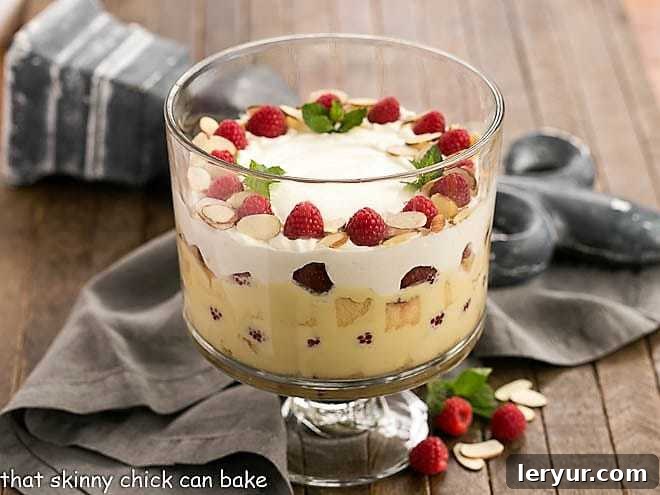
Indulge in a truly exquisite dessert that embodies generations of culinary tradition: the Traditional English Trifle. Crafted with tender pound cake, a luxurious Grand Marnier soak, silky creme anglaise, fluffy whipped cream, and bursts of fresh berries, this recipe promises pure bliss with every spoonful. My personal journey with trifle began decades ago during my parents’ year in Scotland, where I first encountered this delightful dessert. It was a simple, yet utterly unforgettable rendition featuring sponge cake, a splash of sherry, creamy Bird’s Custard, whipped cream, and fresh raspberries picked right from the garden. While my previous trifle recipes have often ventured into unconventional territory, this particular creation draws directly from those cherished Scottish memories, resulting in a magnificent Christmas Trifle that honors its classic British roots.
Why This Traditional English Trifle is a Must-Make
Last week, I had the pleasure of sharing this very traditional English trifle at a holiday luncheon with friends. Having experimented with countless trifles over the years, from an incredible Strawberry Cheesecake Trifle to a decadent Chocolate Brownie Trifle, I felt a strong pull to recreate something closer to the authentic taste I discovered in the British Isles. The enthusiastic reception from my friends confirmed it was a resounding success. Here’s why you absolutely need to try this recipe for your next gathering:
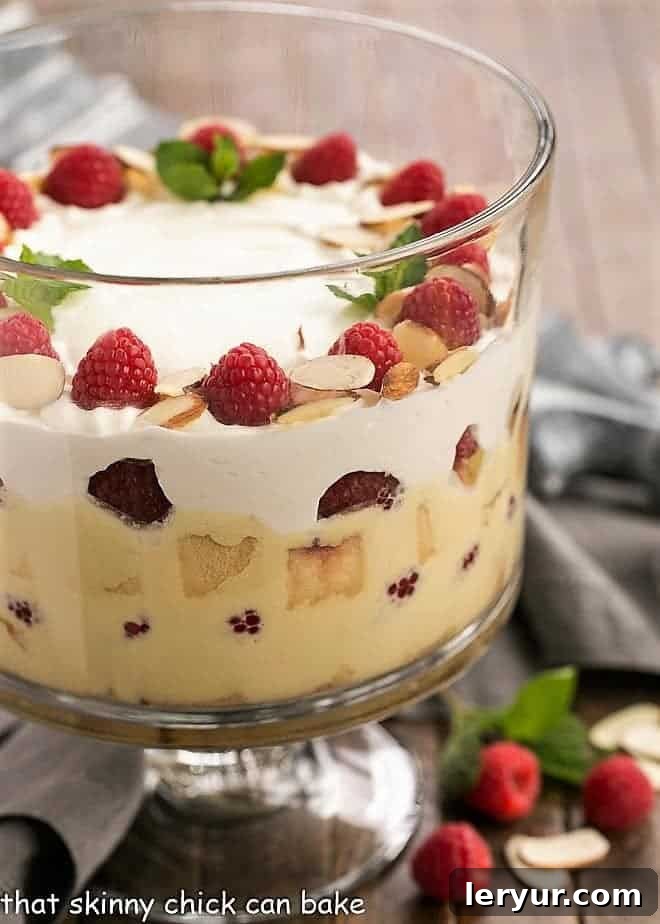
- Stunning Presentation: Served in a beautiful glass trifle bowl on a pedestal, the distinct layers of cake, custard, cream, and fruit create a visual spectacle that’s sure to impress your guests. It’s more than just a dessert; it’s a centerpiece.
- Harmonious Flavor & Texture: The exquisite combination of tender cake, smooth custard, light whipped cream, and vibrant fruit delivers a symphony of flavors and textures in every bite. It’s a truly comforting and luxurious treat that satisfies all the senses.
- Perfect for Any Crowd: This trifle recipe is generously portioned, making it an ideal choice for dinner parties, holiday feasts, or any occasion where you need to feed a larger group. It’s designed to be shared and savored amongst loved ones.
Essential Ingredient Notes for Your Perfect Trifle
Crafting the perfect traditional English trifle begins with understanding each component and its role. Here’s a breakdown of the key ingredients, along with traditional alternatives and helpful shortcuts:
- Pound Cake: While sponge cake or delicate ladyfingers are often considered traditional, I opted for a convenient shortcut by using a frozen Sara Lee pound cake, defrosted overnight in the refrigerator. Its dense, moist texture provides an excellent base.
- Grand Marnier: This orange-flavored liqueur is used to douse the cake, infusing it with a wonderful depth of flavor. For a truly classic approach, cream sherry is the traditional choice, offering a distinctively British touch. Feel free to adjust the amount to your preference for a more “boozy” trifle.
- Seedless Raspberry Jam or Jelly: A layer of sweet, fruity jam adds another dimension to the trifle. In Britain, “jelly” often refers to what Americans call Jell-O, so consider exploring that option for a more authentic touch if you prefer a gelatin layer. Ensure it’s seedless for a smoother texture.
- Fresh Raspberries: Bright, tart raspberries are a perfect complement to the rich layers. Other traditional garnishes can include candied or fresh fruits, chopped nuts, or even grated chocolate. Choose berries that are in season for the best flavor.
- Heavy Cream, Whipped: A generous topping of freshly whipped heavy cream is indispensable for a trifle. Mine is lightly sweetened to balance the richness of the other layers. This creamy cap adds an element of lightness and indulgence.
- Custard (Creme Anglaise): This is the soul of the trifle. You can prepare it from scratch for the freshest taste or use a high-quality box mix for convenience. Remember that traditional British custard is typically thinner than the thicker American-style pudding, designed to soak into the cake layers rather than sit firmly atop them.
Mastering the Art of Trifle Layering: Expert Tips for Success
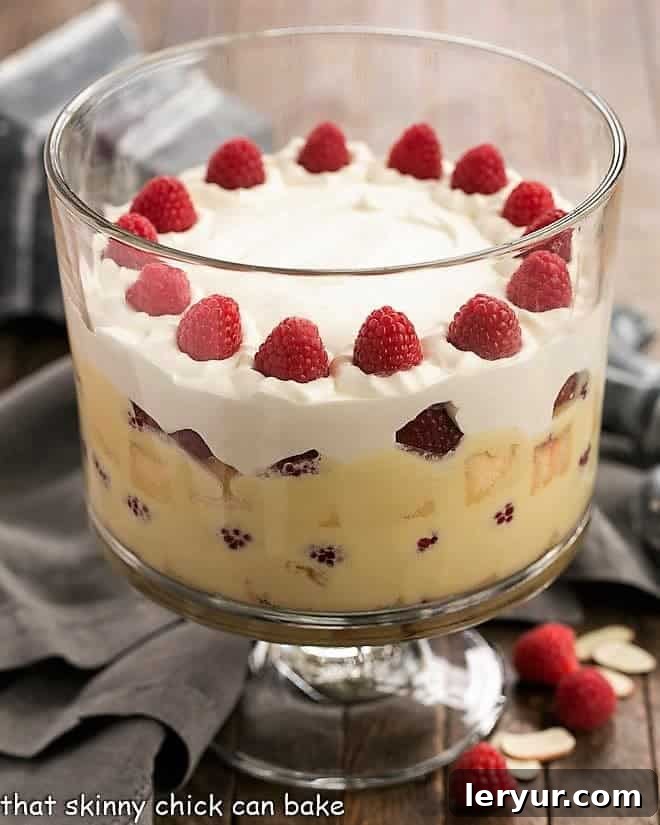
The beauty of a traditional English trifle lies in its carefully constructed layers. Composing this dessert with precision is what elevates a good trifle to an extraordinary one. Follow these expert tips to create a visually stunning and delicious Christmas Trifle or any trifle throughout the year:
- Precision in Layering is Key: You must layer each component with utmost care. If custard or jam smears the sides of your glass trifle bowl, the final presentation will lose its appeal. It’s much simpler to prevent a drip or smudge than to clean it up later – though I confess to having done the latter more than once! Work slowly and deliberately to keep your layers distinct.
- Start with a Solid Cake Base: Begin with a foundation of bite-sized cake pieces. This ensures easy serving and eating for your guests. If incorporating jam, you have two options: either spread a thin layer on each cake slice before placing them, or simply drop small spoonfuls evenly across the surface of the cake layer. Always select a jam flavor that beautifully complements the fruit you’re using in your trifle, such as raspberry jam with fresh raspberries.
- Embrace the Alcohol (or a Flavorful Alternative): Gently drizzle the cake layer with your chosen alcohol. This step is entirely optional but highly recommended as the cake absorbs the liqueur, softening its texture and infusing it with a wonderful flavor. Cream sherry is the quintessential choice for trifles, but other delightful liqueurs can work just as well. If you prefer to omit alcohol, orange juice makes an excellent, family-friendly substitute.
- The “Pudding” Layer – Custard or Creme Anglaise: Next comes the creamy layer, which can be a classic custard, a delicate creme anglaise, or a homemade or boxed pudding. Bear in mind that creme anglaise is more of a sauce-like consistency, so when pouring, aim for the center of the bowl to help maintain the visible separation of layers along the sides of the trifle bowl. For a true British experience, look for Bird’s Custard Powder, often found in the international aisle of larger supermarkets. It’s a fantastic shortcut that delivers authentic flavor. Another ingenious shortcut, suggested by Dorie Greenspan, is to use melted vanilla ice cream in place of creme anglaise if you’re looking for a quick and easy option. However, if seeing perfectly defined layers is your goal, a slightly thicker traditional custard will be more effective.
- Fruit and Whipped Cream: Follow with a layer of fresh fruit, then the “pudding” layer. Once you’ve completed your initial layers, add a generous layer of freshly whipped cream. There are no rigid rules regarding the exact order or number of layers; you can repeat the cake, liqueur, fruit, and custard layers once or twice depending on the size of your bowl and desired portions, finishing with a final flourish of whipped cream.
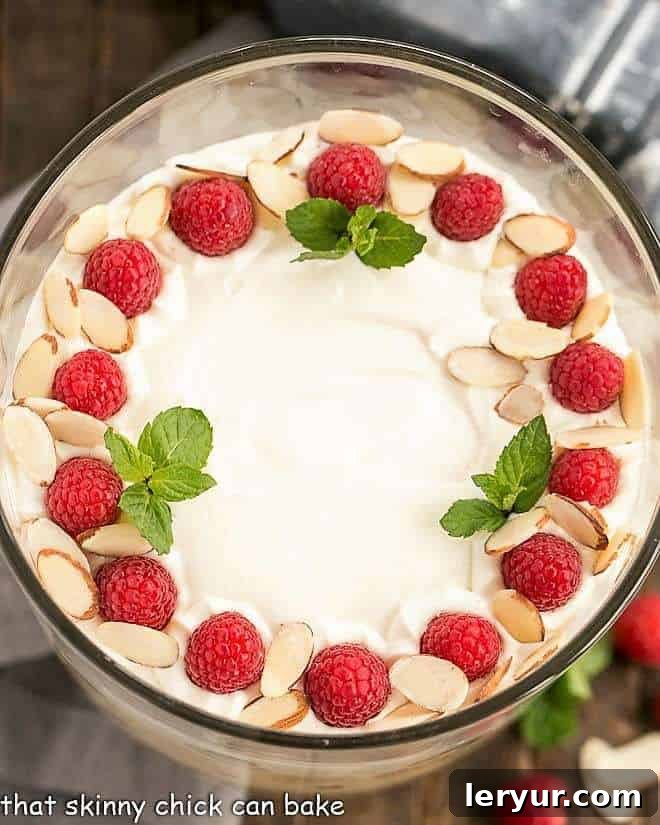
- The Finishing Touch – Garnishing: Garnish the top of your trifle with more fresh fruit, candied fruit, nuts, or anything that reflects the fillings within. For a festive Christmas Trifle, garnishing with vibrant red berries and fresh mint sprigs creates a wonderfully seasonal look.
- Chill for Perfection: After assembling, chill your trifle for at least a few hours before serving. This allows the flavors to meld beautifully and the cake to fully absorb the liquids, resulting in a more cohesive and delicious dessert.
The Enduring Charm of Trifle: A Brief History
The trifle, a dessert steeped in history and tradition, has graced British tables for centuries. Its origins can be traced back to the 16th century, with early recipes being relatively simple, often consisting of thick cream flavored with sugar, ginger, and rosewater. Over time, the dessert evolved, becoming more elaborate with the addition of alcohol-soaked stale cake, fruit, and increasingly, rich custard. The name “trifle” itself comes from the Old French word “trufle,” meaning “something whimsical or of little consequence.” Ironically, this “whimsical” dessert has become anything but insignificant, solidifying its place as a beloved centerpiece for celebrations and holidays. Its layered complexity and vibrant presentation continue to charm diners, making it a timeless classic that bridges generations with its comforting flavors.
Frequently Asked Questions About Traditional English Trifle
What Exactly Goes into a Trifle?
Traditional trifle ingredients typically include layers of sponge cake or ladyfingers soaked in sherry or another spirit, fruit jam, creamy custard, and a generous topping of whipped cream. It’s often garnished with additional fresh fruit, chopped nuts, or grated chocolate, offering a delightful interplay of textures and flavors in every spoonful.
How Should I Serve My Trifle?
The most common and visually appealing way to serve a trifle is in a glass trifle bowl or any clear glass bowl. This allows the beautiful, distinct layers to be showcased, adding to the dessert’s impressive presentation. For the most stunning effect, aim for layers that are as even as possible. Alternatively, for individual servings, you can use clear glasses or wide-mouthed jars. While it might be a little more challenging to prevent smudges on the sides, who doesn’t adore having their very own personal dessert?
Can Trifle Be Made in Advance?
Yes, absolutely! Making trifle the day before serving is highly recommended. This allows ample time for the cake to fully absorb the liqueurs and fruit juices, enhancing the depth of flavor and creating a beautifully moist texture. However, it’s best to hold off on adding the final whipped cream topping until the day of serving, as it can sometimes separate or lose its peak over extended periods in the refrigerator. Always ensure your partially assembled trifle is kept chilled in the refrigerator, especially because the custard contains eggs.
Why Is It Called a Trifle?
The name “trifle” originates from the Old French word “trufle,” which translates to “something whimsical or of little importance.” It’s quite an endearing name for a dessert that, despite its apparent simplicity in assembly, presents a complex and delightful experience of cake, spirits, jam, custard, cream, and fruit. Perhaps its whimsical nature refers to the playful combination of ingredients or the joyous occasion it often accompanies.
What’s the Secret to Perfectly Whipped Cream?
Whipping cream to perfection is simpler than you might think! Modern ultra-pasteurized whipping cream and heavy cream are quite forgiving and almost impossible to overwhip into a clumpy mess, unlike years ago. My top tip for achieving light and fluffy whipped cream is to place your mixing bowl (and even the whisk attachment, if using a stand mixer) in the freezer for about 15 minutes before you begin. A chilled bowl helps to keep the fat in the cream cool, which is crucial for achieving stiff peaks. Once the cream (and any sugar or vanilla) is in the cold bowl, whisk or beat until stiff peaks form. Stiff peaks mean the cream stands up straight when the beaters or whisk are lifted from the bowl, indicating it’s perfectly airy and ready to crown your trifle.
You May Also Enjoy These Delightful Recipes:
- Christmas Wreath Cookies from Real Housemoms – A festive treat for the holiday season.
- Buche de Noel – A classic chocolate yule log, arguably one of the most impressive Christmas cakes!
- 30+ Christmas Cookies – Perfect for holiday gifting, leaving for Santa, or gracing a festive buffet (if you don’t eat them all first!).
- Chocolate Mousse Cake with Lady Fingers – A luscious, no-bake dessert that’s effortlessly elegant.
- Strawberry Cheesecake Trifle – Another marvelous trifle recipe, this one featuring light angel food cake.
- Toffee Noel Nutballs – A delightful, crunchy bite.
- Cranberry Cheesecake Trifle – A seasonal twist on the classic trifle, perfect for fall and winter.
- Chewy Ginger Snap Cookies – A wonderfully spicy and comforting cookie.
- More Holiday Recipes – Discover a treasure trove of recipes for ALL holidays, including Christmas, Easter, Thanksgiving, 4th of July, and many more!
Stay connected through social media @ Instagram, Facebook, and Pinterest. Don’t forget to tag me when you try one of my recipes! And if you love the results, please consider giving it a 5-star rating!
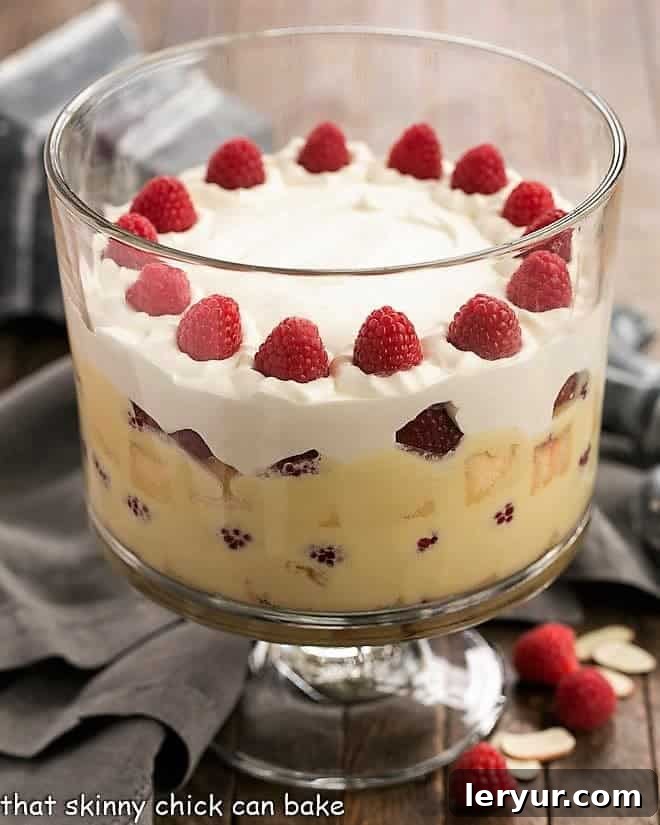
Traditional English Trifle
45 minutes
10 minutes
55 minutes
12-16 servings
A classic holiday trifle with raspberries, pound cake, creme anglaise, and whipped cream!
Ingredients
- 10 ounces pound cake (such as Sara Lee frozen pound cake)
- ½ cup seedless raspberry jam
- 12 ounces fresh raspberries (reserve a few for garnish)
- 2 cups heavy cream (for creme anglaise)
- ½ cup granulated sugar (for creme anglaise)
- 6 egg yolks
- 1 teaspoon vanilla extract (for creme anglaise)
- 2 tablespoons Grand Marnier (or more, to taste)
- 1 ¼ cups heavy cream (for whipped topping)
- ¼ cup powdered sugar (for whipped topping)
- ½ teaspoon vanilla extract (for whipped topping)
- Sliced almonds to garnish, if desired
Instructions
- Cut the pound cake into bite-sized cubes. Spread some jam on half of the cubes and arrange them evenly in the bottom of a trifle dish. Spread jam on the remaining cake cubes and set them aside for the next layer.
- Sprinkle half of the Grand Marnier evenly over the cake layer, allowing it to soak in. Then, scatter half of the fresh raspberries over the soaked cake.
- To prepare the creme anglaise, gently heat the 2 cups of heavy cream in a medium saucepan over medium heat until it just begins to simmer (do not boil). In a separate bowl, whisk together the egg yolks and ½ cup sugar until the mixture is thick and pale yellow.
- Slowly and gradually drizzle about half of the hot cream into the egg yolk and sugar mixture, whisking constantly to temper the eggs and prevent scrambling.
- Return the entire mixture to the saucepan and cook over low heat, stirring continuously, until the mixture thickens slightly and can coat the back of a spoon. Be very careful not to let it boil.
- Remove from heat and stir in 1 teaspoon of vanilla extract. For the smoothest texture, you can strain the creme anglaise through a fine-mesh sieve. Allow it to cool completely before assembling the trifle.
- Once the creme anglaise is cooled, carefully pour about half of it over the center of the first cake and raspberry layer in the trifle dish.
- Layer the remaining jam-covered cake cubes over the creme anglaise, followed by the rest of the Grand Marnier and fresh raspberries. Pour the remaining creme anglaise over this layer.
- For the whipped topping, whip the 1 ¼ cups of heavy cream with the ¼ cup powdered sugar and ½ teaspoon vanilla extract until soft peaks form. Gently spread the whipped cream evenly over the top of the trifle.
- Garnish the top with the reserved fresh raspberries and sliced almonds, if desired, for a beautiful presentation. Chill the trifle for at least a few hours (or overnight) before serving to allow the flavors to meld and the cake to fully moisten.
Notes
Inspired by “English Trifle to Die For” on allrecipes.com. This recipe can be adapted with different fruits or liqueurs to suit your taste.
Recommended Products
As an Amazon Associate, I earn from qualifying purchases.
- Egg Separator
- European Trifle Bowl with Pedestal
- KitchenAid 9-Speed Digital Hand Mixer
Nutrition Information:
Yield: 16
Serving Size: 1
Amount Per Serving:
Calories: 352Total Fat: 25gSaturated Fat: 13gTrans Fat: 1gUnsaturated Fat: 10gCholesterol: 135mgSodium: 87mgCarbohydrates: 30gFiber: 2gSugar: 21gProtein: 5g