
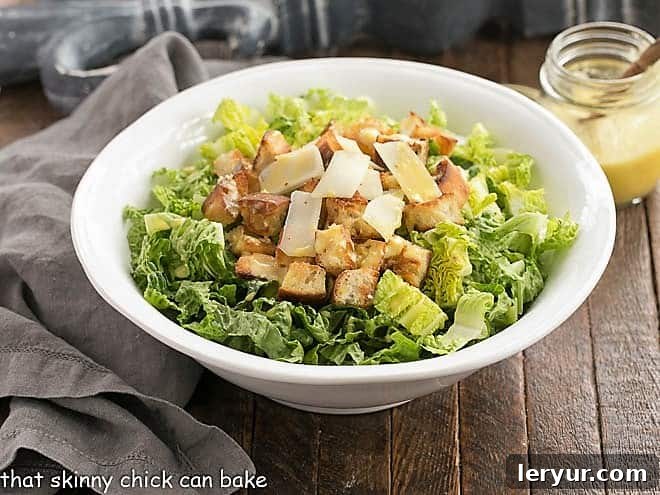
Craving that iconic restaurant-style Caesar salad but want to enjoy it in the comfort of your own home? Look no further! This recipe unveils the secret to the absolute Best Caesar Salad, featuring a luscious, creamy Caesar Salad Dressing made perfectly safe with a gently coddled egg. Prepare to transform your kitchen into a gourmet bistro and delight your taste buds with this timeless classic.

Why This Is the Best Caesar Salad You’ll Ever Make
Forget everything you thought you knew about making Caesar salad at home. This meticulously crafted recipe offers several compelling reasons why it stands head and shoulders above the rest, promising a truly authentic and incredibly delicious experience.
- Safety First: No Raw Egg Concerns. While traditional Caesar dressing often calls for raw egg, our recipe brilliantly uses a coddled egg. This simple technique gently cooks the egg just enough to eliminate any risk of salmonella, ensuring your dressing is both wonderfully creamy and completely safe for everyone to enjoy, without compromising on texture or flavor.
- Anchovies: The Secret to Unrivaled Umami (Without the Fishy Taste!). Many are hesitant about anchovies, but they are the undisputed secret ingredient to a truly authentic Caesar salad. In this recipe, anchovies are finely minced into a paste, dissolving completely into the dressing. They don’t lend a “fishy” flavor; instead, they provide a deep, savory umami note that is absolutely essential for the complex, rich taste of classic Caesar dressing. Even anchovy skeptics, like my husband Bill, won’t detect them, only an incredibly satisfying depth of flavor.
- Homemade Croutons: The Ultimate Game Changer. Store-bought croutons simply can’t compare. Our recipe emphasizes quick, easy homemade croutons that are perfectly crisp on the outside, slightly chewy on the inside, and infused with savory garlic and olive oil. These golden, crunchy gems add a textural contrast that elevates the entire salad, taking it from good to absolutely extraordinary. They are incredibly simple to make and are worth every minute for the superior experience they offer.
My husband, Bill, is a true Caesar salad aficionado. He’ll happily order it whenever it appears on a menu, provided there are no visible anchovies “staring up at him” and no mention of raw eggs. This recipe ensures his stringent criteria are met, making it a household favorite. If you appreciate classic salads, you might also enjoy my Classic Wedge Salad.
Key Ingredients for a Flawless Caesar Salad
Crafting the perfect Caesar salad begins with selecting the finest ingredients. Each component plays a vital role in achieving that signature balance of fresh, savory, tangy, and creamy flavors. Here’s a closer look at what you’ll need and why quality matters:
- Romaine Lettuce Hearts: Opt for crisp, fresh romaine hearts. The inner hearts are often more tender and sweeter, providing the ideal crunchy base for your salad. Their sturdy leaves hold up beautifully to the rich dressing without wilting too quickly. Slice them horizontally into bite-sized pieces for easy eating and optimal dressing distribution.
- Anchovy Fillets Packed in Oil: Don’t be intimidated by anchovies! When minced into a paste, they melt into the dressing, imparting a profound umami flavor that is characteristic of authentic Caesar. The oil they’re packed in also adds an extra layer of richness to the dressing.
- Grated Parmesan Cheese: This is a non-negotiable ingredient. Always choose freshly grated Parmesan cheese, preferably Parmigiano-Reggiano. The pre-grated variety in the green can contains anti-caking agents that compromise flavor and texture. Freshly grated Parmesan offers a sharp, nutty, and slightly salty kick that’s essential for the dressing and as a generous topping.
- Fresh Lemon Juice: The bright, tangy acidity of fresh lemon juice is crucial for balancing the richness of the dressing. It provides a vibrant zest that bottled lemon juice simply cannot replicate. Always squeeze your lemons just before use for the freshest flavor.
- Dijon Mustard: Beyond its subtly spicy flavor, Dijon mustard acts as a powerful emulsifier in the dressing. It helps bind the oil and egg yolk together, creating a smooth, stable, and wonderfully creamy consistency.
- Bread for Croutons: For the best homemade croutons, select a sturdy, day-old bread like ciabatta, a baguette, or even a good quality sourdough. Stale bread works best because it absorbs less oil and crisps up more effectively.
- Essential Kitchen Staples: Round out your pantry with basic but essential items such as freshly cracked black pepper, kosher salt, fresh garlic cloves (not powder!), high-quality extra virgin olive oil, and, of course, fresh eggs for coddling.
- Worcestershire Sauce (Optional): While a popular addition in some Caesar recipes for its umami depth, this particular rendition achieves its complex flavor profile without it. Feel free to experiment if you like, but know that our recipe is perfect as is.
Mastering Your Homemade Caesar Salad: Expert Tips and Tricks
Achieving restaurant-quality Caesar salad at home is within reach with a few expert insights. These tips will guide you in perfecting every element, from the creamy dressing to the crispy croutons, ensuring a truly unforgettable culinary experience.
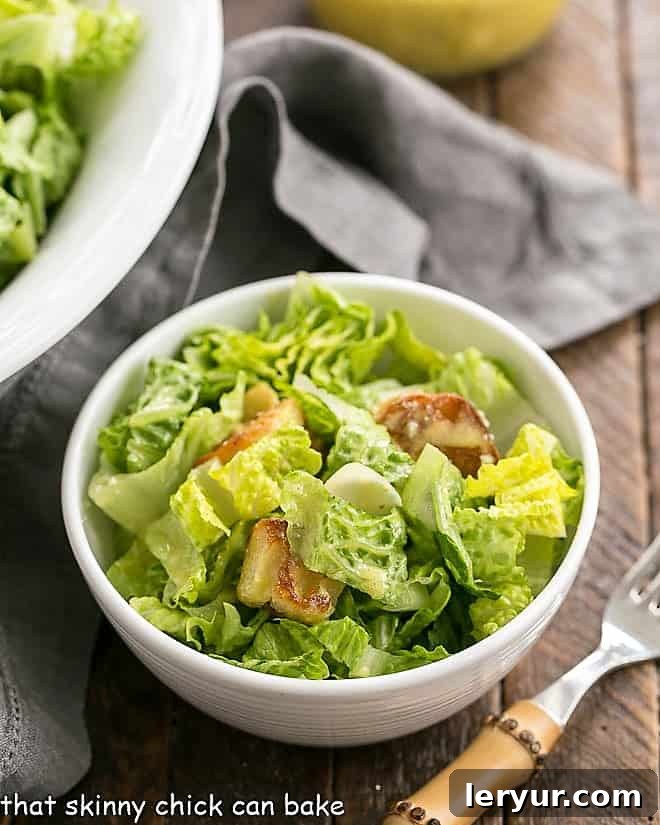
- PRO-Tip: Embrace the Wooden Salad Bowl Tradition. For the most authentic experience, consider using a wooden salad bowl. Traditionally, a dedicated wooden bowl would be rubbed with fresh garlic cloves before tossing the salad. This infuses a subtle, aromatic garlic essence into every bite. You might find that your bowl permanently takes on this lovely garlicky aroma – a badge of honor for any Caesar enthusiast! (Note: I’ve used a white bowl in my photos to better showcase the vibrant details of the salad).
- Don’t Skip the Anchovies (Seriously!). As mentioned earlier, anchovies are the secret weapon for deep, complex flavor. Don’t omit them or skimp! The trick is to create a fine paste by mashing them with a bit of kosher salt and a chopped garlic clove using the side of a chef’s knife. This method ensures they completely integrate into the dressing, providing incredible savory depth without any noticeable “fishy” taste or texture. Even staunch anchovy dislikers won’t know they’re there, only that the salad tastes incredibly rich and satisfying. If you’re an anchovy lover, feel free to add a few whole fillets as a garnish!
- Be Mindful of Salt Content. Remember that both the anchovy paste and freshly grated Parmesan cheese contribute significant salinity to the dressing. While a pinch of salt is necessary to help break down the anchovies into a paste, adjust any additional salt to taste. It’s always easier to add more salt than to fix an overly salty dish.
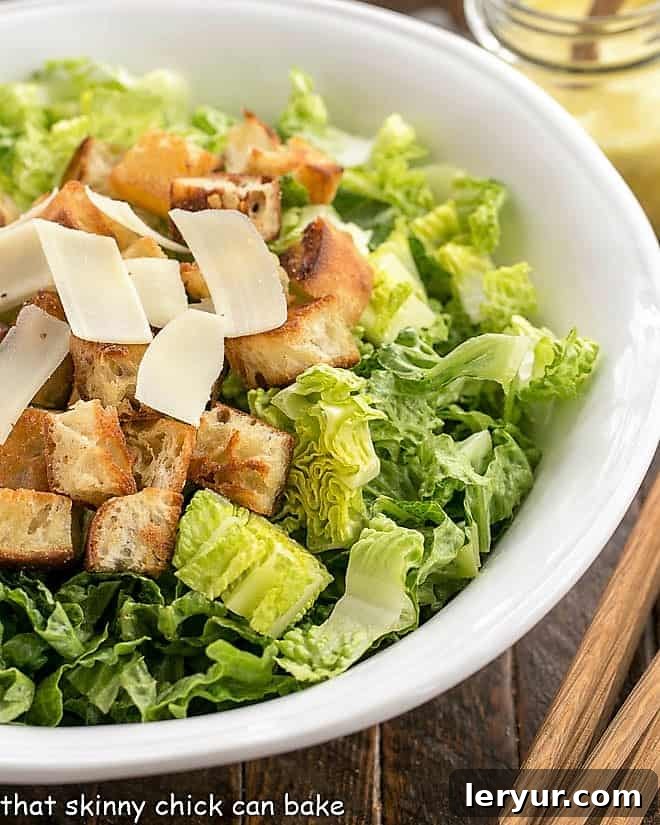
- PRO-Tip: Always Make Homemade Croutons. This is perhaps the easiest way to elevate your Caesar salad from good to gourmet. Store-bought croutons simply lack the fresh flavor and ideal texture.
How to Make Perfect Homemade Croutons:
- Choose Your Bread: Start with sturdy, day-old bread like ciabatta, a baguette, or sourdough. Cut the bread into 1-inch cubes.
- Heat the Fats: In a wide, heavy-bottomed pan over medium heat, melt 2 tablespoons of unsalted butter with 2 tablespoons of good quality olive oil.
- Garlic Infusion (Optional): For extra garlicky croutons, add a couple of peeled and halved garlic cloves to the oil/butter mixture as it heats. Remove them once fragrant and before they burn.
- Toast the Bread: Add the bread cubes to the pan. Sauté, tossing frequently, until all sides are golden brown and perfectly crispy. This usually takes about 5-8 minutes.
- Season: Lightly sprinkle with a pinch of salt if desired.
- Cool: Allow them to cool completely before adding to the salad to maintain their crispness. Store any leftover croutons in an airtight container at room temperature for up to 3-4 days.
These truly are SO much better than anything from a box!
- The Secret to Creamy, Safe Dressing: Coddled Eggs. While the classic Caesar dressing famously uses raw egg yolk, safety is paramount. The modern approach is to use a pasteurized egg, which has been gently heated to kill bacteria without cooking it, or to coddle an egg. Since pasteurized eggs can be hard to find, coddling is your best bet for a safe, velvety dressing.
How to Coddle an Egg for Caesar Dressing:
- Bring a small pot of water to a rolling boil.
- Prepare an ice bath: fill a mixing bowl with cold water and ice cubes, and set it next to your stovetop.
- Gently lower a raw egg (still in its shell) into the boiling water.
- Boil for exactly one minute.
- Immediately remove the egg with a slotted spoon and plunge it into the ice bath for 1-2 minutes to stop the cooking process.
- Once cooled, carefully crack the egg and separate the yolk. The yolk will be slightly thickened but still fluid and perfectly safe to use in your dressing. This method helps minimize the chance of bacterial contamination, making it ideal for homemade mayonnaise and aioli as well.
- Get Creative with Caesar Variations. This recipe is a fantastic foundation for experimentation! While the classic is perfect on its own, don’t hesitate to put your own spin on it:
- Greens: Swap out or mix romaine with baby kale or spinach for a different texture and nutritional boost.
- Added Crunch: Introduce toasted nuts (like walnuts or pecans) or sunflower seeds for extra texture.
- Veggies & Fruits: Incorporate avocado chunks for creaminess, halved grape tomatoes for a burst of sweetness, or even thinly sliced red onion for a sharper bite. Roasted bell peppers are also a delicious addition.
- Make it a Meal: Transform your Caesar into a hearty entrée salad by topping each serving with grilled chicken breast, roasted salmon fillets, seared shrimp, or even crispy bacon bits.
- Pasta Caesar Salad: For a unique twist, cook and cool your favorite pasta shape. Toss it with the homemade Caesar dressing, chopped romaine, and any of your preferred additions like cubed chicken, crispy bacon, cherry tomatoes, or cucumber for a fantastic side dish or light lunch.
Frequently Asked Questions About Caesar Salad
Despite its regal name and widespread popularity in Italian-American cuisine, the Caesar salad was not named after Julius Caesar, nor did it originate in Italy. This culinary legend was most likely developed in Tijuana, Mexico, by an Italian American restaurateur named Caesar Cardini. The prevailing story goes that in 1924, during a busy Fourth of July weekend, Cardini’s restaurant faced a shortage of ingredients. With limited supplies on hand, he creatively concocted a salad using what he had: romaine lettuce, garlic, croutons, Parmesan cheese, olive oil, and Worcestershire sauce. Interestingly, the original salad was designed to be eaten with the romaine leaves used as scoops to dip into the dressing. Anchovies were a later addition, likely introduced by Caesar’s brother, Alex Cardini, or another chef, around 1926. This fascinating origin story adds another layer of charm to this beloved dish.
While often perceived as a healthy “lettuce salad,” a classic Caesar salad, especially when generously dressed and loaded with homemade croutons and Parmesan, is not typically diet food. Restaurant versions, particularly, can sometimes reach nearly 500 calories or more per serving. Our homemade recipe offers a more controlled approach, clocking in at approximately 370 calories per serving, according to our nutrition calculator. The calorie count primarily comes from the olive oil in the dressing, the richness of the egg yolk, and the fats in the cheese and croutons. If you’re looking to reduce the calorie count, consider using slightly less dressing, opting for oven-baked croutons instead of pan-fried, or being mindful of the amount of Parmesan cheese. However, for an authentic and satisfying experience, the full-flavored version is well worth it as an occasional treat.
Coddling is a gentle cooking process often employed for eggs, resulting in a partially cooked, very soft egg. There are typically two methods. The first involves cracking an egg into a special coddling dish, then placing it in simmering water until it reaches the desired doneness. The second, and more common method for recipes like Caesar dressing, involves briefly submerging the whole egg in boiling or simmering water. For the single coddled egg required in this Caesar dressing recipe, here’s a step-by-step guide:
- Bring a small pot of water to a full, rolling boil.
- While the water heats, prepare an ice bath by filling a mixing bowl with cold water and ice cubes. Place it right next to your cooktop for easy access.
- Carefully lower one raw, room-temperature egg into the boiling water using a slotted spoon.
- Let the egg boil for precisely one minute. Do not overcook.
- Immediately remove the egg from the boiling water and transfer it directly into the prepared ice bath.
- Allow the egg to cool in the ice bath for one to two minutes. This rapid cooling stops the cooking process, preventing the egg from becoming fully hard-boiled.
- Once cooled, remove the egg from the ice bath, crack it open, and separate the yolk. The yolk will be slightly thickened but still runny and emulsifiable, making it perfect and safe for your dressing. This technique significantly minimizes the risk of bacterial contamination often associated with raw eggs. It’s a fantastic method to master for other recipes calling for raw egg, such as homemade mayonnaise or aioli.
Homemade croutons are an absolute must for the best Caesar salad; they are far superior to their store-bought counterparts. They offer a perfect crunch, fresh flavor, and absorb the dressing beautifully. Here’s a simple method to make them:
- Select Your Bread: Choose a sturdy, day-old bread like ciabatta, a baguette, sourdough, or even good quality rustic white bread. Stale bread works best as it prevents the croutons from becoming greasy.
- Cut the Bread: Slice the bread into uniform 1-inch cubes. Uniformity ensures even toasting.
- Prepare the Pan: In a wide, flat-bottomed skillet or frying pan, melt 2 tablespoons of salted butter with 2 tablespoons of good quality olive oil over medium heat. You can also add 1-2 crushed garlic cloves to the oil while it heats for extra garlicky flavor; remove them before adding bread if you don’t want them to burn.
- Sauté the Cubes: Add the bread cubes to the hot fat in a single layer if possible. If your pan isn’t large enough, work in batches to avoid overcrowding, which can steam the bread instead of crisping it.
- Toast Until Golden: Sauté the bread cubes, turning them frequently with tongs or a spatula, until all sides are evenly golden brown and wonderfully crispy. This process usually takes about 5-8 minutes, depending on the heat and bread type.
- Season: Once toasted to your liking, sprinkle with a pinch of salt if desired.
- Cool and Store: Transfer the croutons to a paper towel-lined plate to drain any excess oil and cool completely. Once cooled, they will be wonderfully crisp. Store homemade croutons in an airtight container at room temperature for up to 3-4 days. They’re fantastic for snacking, adding to soups, or of course, elevating your next Caesar salad!
Perfect Caesar Salad: The Recipe
This recipe provides step-by-step instructions to create an unforgettable Caesar salad at home, from the velvety dressing to the crisp romaine and crunchy croutons.
Prep Time: 10 minutes
Total Time: 10 minutes
Yield: 4 servings
Description:
A restaurant-worthy Caesar salad you can easily make at home, featuring a safe coddled egg dressing and irresistible homemade croutons.
Ingredients
For the Salad:
- 3 Romaine lettuce hearts, cut into bite-sized slices
- ⅓ cup freshly grated Parmesan cheese (may use shredded or shaved, too, for garnish)
- 1 cup homemade croutons (see instructions above for sautéing bread cubes in olive oil and butter, then lightly salting)
For the Creamy Caesar Dressing:
- 3 anchovy fillets packed in oil, chopped finely
- 2 garlic cloves, minced (plus 1 whole clove for rubbing the salad bowl, if desired)
- ¾ teaspoon kosher salt
- 1 egg yolk (from a coddled or pasteurized egg, separated as only the yolk is used), lightly whisked
- 2 tablespoons fresh lemon juice
- ¾ teaspoon Dijon mustard
- ⅛ teaspoon freshly ground black pepper
- ¼ cup extra virgin olive oil, plus 2 tablespoons for the dressing
Instructions
- Prepare the Bowl: If desired, rub the inside of a large wooden salad bowl vigorously with a cut garlic clove to infuse a subtle garlic aroma.
- Assemble Salad Base: Add the prepared romaine lettuce to the bowl. Top with homemade croutons and a portion of the freshly grated Parmesan cheese.
- Coddle the Egg: To prepare the egg yolk safely, bring a small pot of water to a boil. Gently submerge one raw egg (in its shell) into the boiling water for exactly 1 minute. Immediately remove and plunge it into an ice water bath for 1-2 minutes to stop the cooking. Carefully crack the egg and separate the yolk; set aside.
- Make Anchovy-Garlic Paste: On a cutting board, place the chopped anchovies, minced garlic, and kosher salt. Using the flat side of a chef’s knife, mash and chop the mixture repeatedly until it forms a smooth, uniform paste. This ensures the anchovies dissolve completely into the dressing.
- Emulsify the Dressing Base: In a medium-sized bowl, whisk together the lightly whisked coddled egg yolk, fresh lemon juice, and Dijon mustard. Gradually, very slowly, drizzle in the ¼ cup of olive oil while constantly whisking. Continue whisking until the mixture emulsifies and thickens to a creamy consistency, similar to mayonnaise.
- Combine Dressing Ingredients: Add the freshly ground black pepper and the prepared anchovy-garlic paste to the emulsified mixture. Whisk well until all ingredients are thoroughly combined and the dressing is smooth.
- Dress and Serve: Pour the homemade Caesar dressing over the prepared salad components in the bowl. Toss gently but thoroughly to ensure every leaf, crouton, and piece of Parmesan is coated with the luxurious dressing. Serve immediately and enjoy your perfectly homemade Caesar salad!
Notes
Recipe courtesy of my friend, Craig Thomson. As an Amazon Associate, I earn from qualifying purchases.
Nutrition Information:
Amount Per Serving (based on 4 servings):
- Calories: 369
- Total Fat: 33g
- Saturated Fat: 7g
- Trans Fat: 0g
- Unsaturated Fat: 24g
- Cholesterol: 64mg
- Sodium: 829mg
- Carbohydrates: 14g
- Fiber: 4g
- Sugar: 3g
- Protein: 7g
Explore More Delicious Salad Recipes
If you’ve enjoyed mastering this classic Caesar salad, you might be inspired to try some other fantastic salad creations. Here are a few more recipes to diversify your salad repertoire:
- Greek Salad with Salami from Never Enough Thyme
- Bright Citrus Spinach Salad
- Refreshing Summer Panzanella
- Delightful Brie Basil Strawberry Salad
- Simple Balsamic Vinaigrette Recipe
- The Best Homemade Blue Cheese Dressing
- Discover even more of my Top Salad Recipes
Stay connected and share your culinary adventures! Find me on social media @ Instagram, Facebook, and Pinterest. Don’t forget to tag me when you try one of my delicious recipes! If you love the results, please consider leaving a 5-star rating and a comment in the recipe section. Your feedback means the world!
© Liz Berg
Cuisine: American
/
Category: Salads