

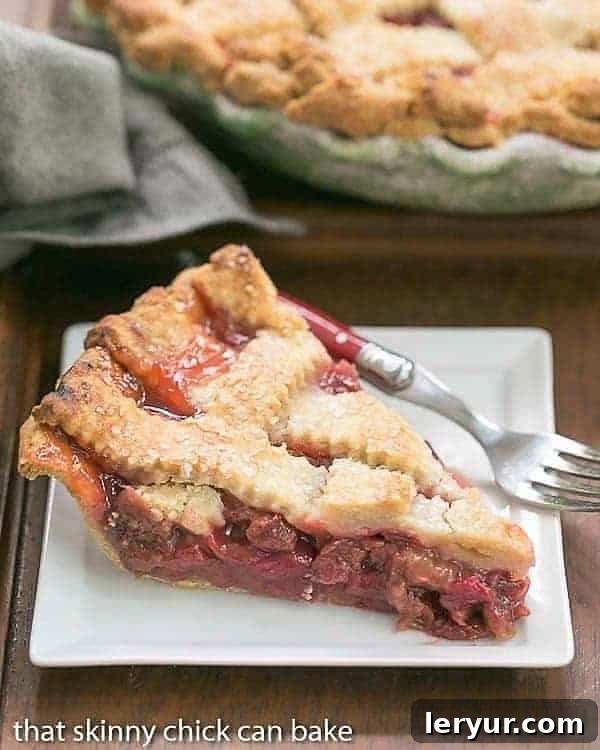
Experience the timeless charm of summer with this spectacular Classic Rhubarb Pie with a Lattice Crust. Beloved for generations, this double-crust pie delivers pure, unadulterated rhubarb flavor, making it a true taste of nostalgia and seasonal delight.
Each forkful of this homemade rhubarb pie whisks me back to childhood days, to a time when a sprawling rhubarb patch thrived in our backyard. The sheer excitement when my mom would surprise us with a freshly baked pie is a cherished memory. This recipe, with its delightfully simple filling, brilliantly showcases the true, vibrant flavors of this exceptional spring vegetable. No heavy custards are needed here – just the bright, tangy essence of rhubarb perfected with a hint of sweetness, encased in a buttery, flaky crust that truly sings of home.
Why This Classic Rhubarb Pie is a Must-Bake
If you’re fortunate enough to have access to fresh, vibrant rhubarb stalks, this pie recipe is the quintessential way to celebrate this unique seasonal ingredient. It’s more than just a dessert; it’s an experience, a delightful journey for your taste buds that will leave you craving more.
- Celebrate Fresh Rhubarb: This recipe is designed to let the distinct, tart flavor of rhubarb shine through. Often treated as a fruit in culinary applications, this “pie plant” transforms into something truly magical when baked, offering a unique profile that’s both refreshing and comforting.
- The Epitome of Summer Flavor: Every bite of this rhubarb pie is a burst of summer sunshine. Its bright, tangy notes evoke warm days and garden-fresh produce, making it an ideal dessert for picnics, family gatherings, or simply a quiet afternoon treat. It’s a nostalgic taste that brings joy to every palate.
- Perfect Sweet-Tart Harmony: There’s arguably no other dessert that achieves the exquisite balance of sweet and tart quite like a well-made rhubarb pie. The natural acidity of the rhubarb is expertly complemented by sugar, creating a harmonious symphony of flavors that is truly irresistible. It’s bold yet comforting, simple yet sophisticated.
- A Timeless Family Favorite: This classic recipe has stood the test of time for a reason. It’s the kind of pie that brings families together, creating new memories while honoring old traditions. The simple, honest ingredients and straightforward method ensure a consistently delicious result that everyone will adore.
Rave Reviews from Our Readers
From Patti via Pinterest: “It came out perfect! It was hard to wait for it to set but necessary. I used the tip on egg washing the bottom crust and loved how it came out! This recipe is a keeper.”
This kind of feedback fills our hearts with joy, confirming that the simple elegance and delicious outcome of this rhubarb pie recipe resonate with home bakers everywhere. It’s a testament to the timeless appeal of a well-executed classic.
Exploring Rhubarb: The Spring Gem & More Inspirations
My fondest culinary memories are often tied to my mom’s kitchen, especially when she’d pull a classic rhubarb pie from the oven. Flavored with just sugar and a whisper of butter, it was pure rhubarb ecstasy! The beauty of this recipe lies in its simplicity – no custard is needed to obscure the sheer, gloriousness of this often-underestimated ingredient. Rhubarb, with its vibrant stalks ranging from ruby red to pale green, heralds the arrival of spring and early summer, bringing a unique tartness that brightens any dish.
Beyond the classic pie, rhubarb’s versatility shines in many forms. If you find yourself with an abundance of this wonderful “pie plant,” consider trying these other delightful rhubarb creations:
- Rhubarb Crisp from The Recipe Rebel: A comforting dessert with a buttery crumb topping.
- Rhubarb Bread: A delightful quick bread perfect for breakfast or a snack.
- Rhubarb Muffins: Moist and tender, bursting with tart rhubarb pieces.
- Dorie Greenspan’s Rhubarb Upside-Down Cakes: An elegant and delicious twist on a classic.
Each of these recipes celebrates rhubarb in its own unique way, but none quite capture the nostalgic essence and satisfying simplicity of a traditional rhubarb pie.
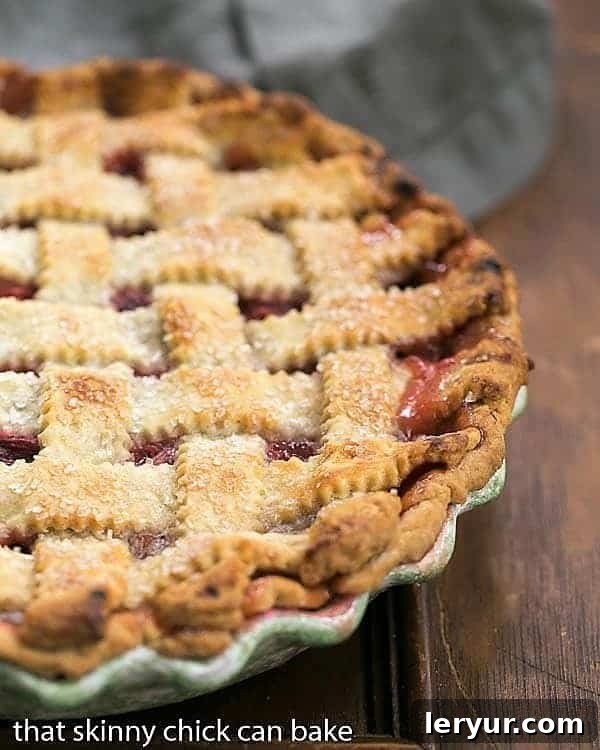
Mastering the Elegant Lattice Topping for Your Rhubarb Pie
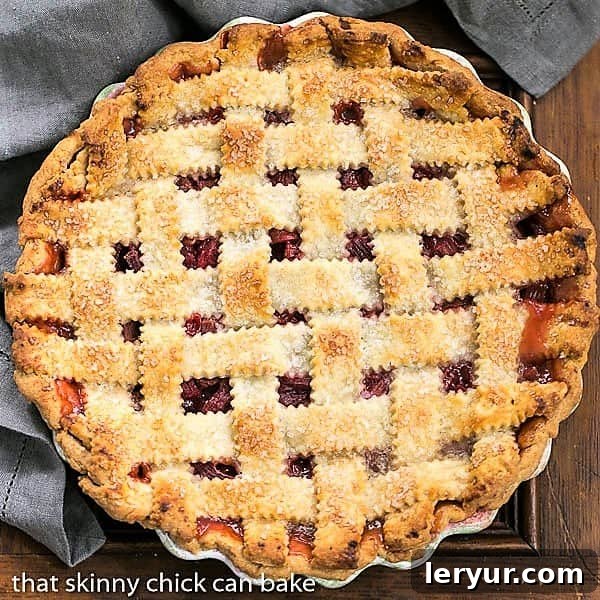
While a solid top crust is perfectly fine, creating a beautiful lattice crust is a wonderfully fun and rewarding way to elevate your classic rhubarb pie. Not only does it provide built-in air vents for steam to escape, ensuring a perfectly cooked filling, but it also adds a stunning, professional-looking presentation that will impress anyone lucky enough to receive a slice. For an even more exquisite finish, I like to brush the woven lattice with a touch of heavy cream and then sprinkle it generously with coarse sugar. This creates a shimmering, golden crust with a delightful crunch.
Crafting a lattice topping might seem intimidating at first, but it’s a simple technique that adds so much charm. Here’s a basic guide to creating this beautiful woven design:
- Begin by rolling out your top pie crust dough into an even circle. Using a pastry wheel or knife, cut the dough into even strips, typically ¾ to 1 inch wide.
- Lay half of your strips parallel across the filled pie, spacing them evenly. Don’t worry about them being perfectly aligned yet.
- Fold back alternate strips (e.g., every other strip) halfway. Place one of your remaining strips perpendicularly across the center, over the unfolded strips and under the folded ones.
- Unfold the folded strips over the perpendicular strip. Now, fold back the strips that were previously unfolded. Place another perpendicular strip parallel to the first, then unfold the strips over it.
- Continue this weaving pattern, alternating which strips you fold back, until your entire pie is covered with a beautiful woven lattice. Trim any excess dough from the edges and crimp the top and bottom crusts together to seal.
One of my dearest friends, upon taking her first bite of a lattice-topped pie, exclaimed, “This is definitely not Pillsbury!” While store-bought pie crusts are undeniably convenient in a pinch, there truly is nothing that compares to the tender, buttery, and flaky texture of a homemade pie crust. It makes all the difference in a classic pie like this one.
For a detailed visual guide, I’ve often referred to Simply Recipes’ comprehensive post on How to Make a Lattice Crust. Elise’s step-by-step photos provide an excellent demonstration of the technique, perhaps even better than I could describe in words alone!
Expert Tips for a Perfect Rhubarb Pie Every Time
Achieving pie perfection isn’t just about a great recipe; it’s also about a few insider tricks that can elevate your baking. Here are some invaluable tips to ensure your Classic Rhubarb Pie turns out flawlessly, from crust to filling:
- PRO-Tip: Prevent a Soggy Bottom Crust: The fear of a soggy pie crust is real! To create an effective moisture barrier, whip together one egg and 1 teaspoon of water to make a simple egg wash. Brush this mixture generously over your bottom pie crust before adding the rhubarb filling. As it bakes, this egg wash will create a protective layer, helping the crust stay crisp and flaky.
- PRO-Tip: Enhance Your Lattice Crust’s Golden Glow: Don’t let any leftover egg wash go to waste! After brushing your bottom crust, you can also paint the lattice topping with the remaining egg wash. This will help achieve a beautiful, even golden-brown color during baking. For an extra touch of sparkle and a hint of sweetness, sprinkle coarse sugar over the sticky egg-washed lattice before baking.
- Preheat with a Baking Sheet: For a wonderfully crisp bottom crust, place a rimmed baking sheet in your oven while it preheats. Once the oven is hot, carefully place your pie onto this preheated baking sheet. The direct heat from the hot baking sheet helps to instantly set the bottom crust, preventing sogginess. It also serves as a handy catch-all for any delicious juices that might bubble out of the pie.
- Monitor for Doneness: Knowing when your pie is perfectly baked is key. For a rhubarb pie with a lattice crust, look for pink juices bubbling vigorously from the openings in the lattice. This indicates that the rhubarb filling has softened and thickened properly. The crust should also be deeply golden brown.
- Patience is Key: Cool Completely: This is perhaps the most crucial tip for any fruit pie! It’s tempting to slice into a warm pie, but resist the urge. Allow your rhubarb pie to cool for at least 3 hours (or even longer) at room temperature before slicing. This essential cooling period allows the filling’s juices to fully set and thicken, ensuring clean, firm slices rather than a runny mess.
- Using Frozen Rhubarb: Fresh rhubarb is ideal, but frozen rhubarb works beautifully too! Simply ensure you defrost the frozen rhubarb completely before using it in the recipe. Drain any excess liquid that accumulates during thawing to prevent a watery filling.
- PRO-Tip: Create a Strawberry Rhubarb Pie: For a delightful twist, easily transform this into a Strawberry Rhubarb Pie. Just reduce the amount of chopped rhubarb to 3 cups and incorporate 2 cups of fresh strawberries, cut into halves or thick slices. The strawberries add a wonderful sweetness and vibrant color.
- Spice It Up with Cinnamon: If you enjoy warm spices, feel free to add about ¼ teaspoon of ground cinnamon to your rhubarb mixture along with the sugar and flour. Cinnamon beautifully complements the tartness of rhubarb and adds an extra layer of flavor complexity.
- Opt for a Solid Top Crust: If a lattice crust feels too intricate, you can absolutely top your pie with a solid crust. Just remember to cut a few slits or decorative vents into the top of the dough before baking. This allows steam to escape, preventing the crust from puffing up or cracking.
Frequently Asked Questions About Rhubarb Pie
Botanically speaking, rhubarb is officially classified as a vegetable because it is the stem (petiole) of the rhubarb plant, similar to celery stalks. However, in the culinary world, rhubarb is almost universally treated as a fruit due to its prevalent use in sweet applications like pies, tarts, crumbles, cakes, muffins, and even ice cream toppings. It’s known for its distinct tart flavor, which is why it typically requires a generous amount of sugar to balance its acidity in desserts. It’s crucial to remember that only the stalks of the rhubarb plant are edible; the leaves contain high levels of oxalic acid and other toxic substances and are poisonous. Always remove the leaves before preparing rhubarb for consumption.
When cooked on its own, rhubarb has a very pronounced tart, sour, and somewhat vegetal flavor, often compared to an unripe green apple or very tart berries. This strong acidity is precisely what makes it such a fantastic ingredient for desserts. When its tartness is balanced with the right amount of sugar and other complementary flavors, rhubarb transforms into a refreshing, bright, and tangy ingredient that becomes a favorite for spring and summer baking.
In most cases, it is not necessary to peel rhubarb stalks. The skin is generally thin and softens considerably during cooking. However, if you encounter very thick, fibrous, or tough stalks as you are cutting them, you might choose to lightly peel them with a vegetable peeler or a sharp knife. This can help prevent a “stringy” texture in your final pie. For the most part, preparing rhubarb for pie simply involves washing the stalks thoroughly and then chopping them into ½-inch to 1-inch pieces.
Classic rhubarb pies, which primarily contain fruit (or in this case, a vegetable treated as fruit) filling without custard, are quite stable. They can be safely stored at room temperature for up to 2 days, loosely covered. If you need to store it for a longer period, transfer your pie to the refrigerator, where it will keep well for up to 3 additional days. For optimal enjoyment, you might want to gently warm up individual slices in the microwave or a low oven to remove the chill before serving. It’s important to note that if your rhubarb pie recipe includes a custard or dairy-based filling, it would require immediate refrigeration to prevent bacterial growth. This pie also freezes exceptionally well for up to 3 months; simply defrost it overnight in the refrigerator before serving.
Yes, there are a few key tips for harvesting rhubarb that will help ensure a healthy plant and a continuous yield. Instead of cutting, gently pull the stalks from the base of the plant with a slight twisting motion; this encourages new growth. It’s important to only harvest a few stalks from each plant at a time, usually no more than a third of the plant’s stalks. Removing too many stalks at once can weaken the plant, limiting its ability to photosynthesize and gather energy for the following year’s crop. Always, always make sure to remove and discard the toxic leaves immediately after harvesting the stalks, before bringing them into your kitchen.
Discover More Delightful Pie and Dessert Recipes
If you’ve fallen in love with the art of pie making, or simply adore delicious homemade treats, we have a treasure trove of recipes waiting for you. From classic fruit pies to creamy indulgences, there’s something to satisfy every craving. Explore these other fantastic recipes to continue your baking adventure:
- Strawberry Cream Pie: A luscious and refreshing pie perfect for berry lovers.
- Freeze and Bake Blueberry Pie: A convenient and delicious option for enjoying blueberries year-round.
- Blueberry Peach Custard Pie: A delightful blend of fruits nestled in a creamy custard.
- Peach Crumb Pie: A juicy peach filling topped with a buttery, sweet crumb.
- Simple Strawberry Pie: A straightforward yet incredibly flavorful strawberry pie.
- Looking for the ultimate foundation for your pies? Check out this terrific Pie Crust Recipe that uses both butter and shortening for the perfect texture. And for another fantastic rhubarb treat, my Rhubarb Bars are absolutely phenomenal, too!
- Explore our extensive collection of Pie Recipes for endless inspiration.
- Dive into more sweet creations with our Best Dessert Recipes.
Stay connected with us and share your baking successes! Find us on social media @ Instagram, Facebook, and Pinterest. Don’t forget to tag us when you try one of our recipes! And if you love the results, please consider leaving a 5-star rating and a comment in the recipe card below – your feedback helps us grow and inspires other home bakers.
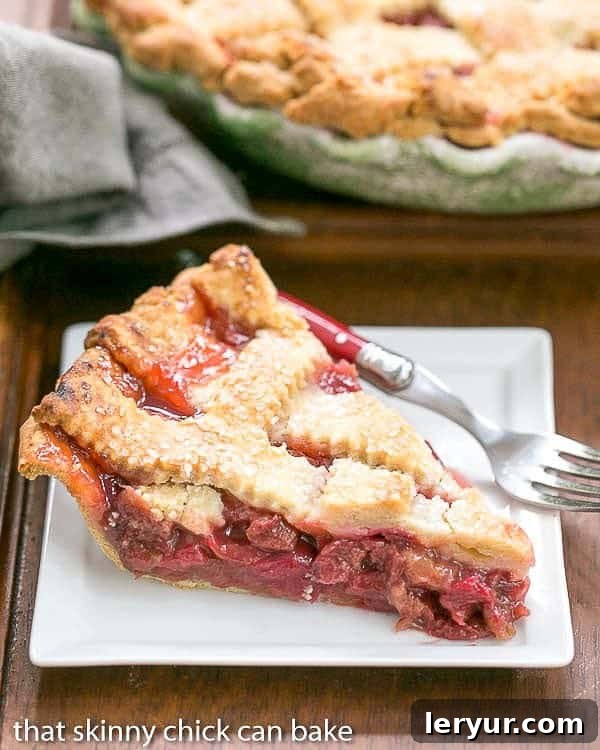
Classic Rhubarb Pie Recipe
1 hour
1 hour
2 hours
8 servings
A classic rhubarb pie from my childhood, topped with a beautiful, woven lattice crust, offering the perfect sweet-tart balance.
Rating: 4.8/5 stars (based on 102 reviews)
Ingredients
For the Pie Filling:
- 6-8 tablespoons all-purpose flour (as a thickener)
- 2 cups granulated sugar (adjust to your preferred sweetness)
- 1 tablespoon unsalted butter, cut into small pieces
- 4 cups fresh rhubarb, chopped into ½-inch to 1-inch pieces
- 1 double crust pie crust recipe* (homemade for best results, or good quality store-bought)
Instructions
- Preheat your oven to 450ºF (230ºC). If using, place a rimmed baking sheet in the oven while it preheats.
- In a large bowl, whisk together the flour and sugar until well combined. Add the chopped rhubarb and toss gently to ensure all pieces are coated.
- Roll out one half of your double crust pie dough and carefully place it into a standard 9-inch pie plate. If desired, brush the bottom crust with an egg wash (1 egg + 1 tsp water) to prevent sogginess. Pour the rhubarb filling mixture into the pie plate, spreading it evenly. Dot the top of the filling with the small pieces of butter.
- Roll out the second half of your pie dough. You can either cut this dough into strips to create a beautiful lattice topping (refer to “How to Make a Lattice Topping” above for guidance) or place the entire sheet of dough over the filling. If using a solid top crust, cut a few slits in the center for steam to escape.
- Trim any excess dough from the edges and crimp the two crusts together securely to seal the pie.
- Place the prepared pie on the preheated baking sheet (if using). Bake for 10 minutes at 450ºF (230ºC).
- After 10 minutes, reduce the oven temperature to 350ºF (175ºC) and continue to bake for an additional 30-50 minutes, or until the filling is bubbling thickly in the middle of the pie and the crust is golden brown. If the edges of the pie crust start to brown too quickly, loosely cover them with strips of aluminum foil.
- Once baked, remove the pie from the oven and place it on a wire rack to cool completely. This is critical! Allow the pie to cool for at least 3 hours, or until room temperature, to allow the filling to properly set before slicing and serving.
Notes
Recommended Products
As an Amazon Associate and member of other affiliate programs, I earn from qualifying purchases.
- Fluted Pastry Wheel
- French Rolling Pin
- Ceramic Pie Plate
Nutrition Information:
Yield:
8
Serving Size:
1 slice
Amount Per Serving:
Calories: 345Total Fat: 7gSaturated Fat: 3gTrans Fat: 0gUnsaturated Fat: 4gCholesterol: 4mgSodium: 104mgCarbohydrates: 70gFiber: 2gSugar: 51gProtein: 3g
HOW MUCH DID YOU LOVE THIS RECIPE?
Please leave a comment on the blog or share a photo on Pinterest