
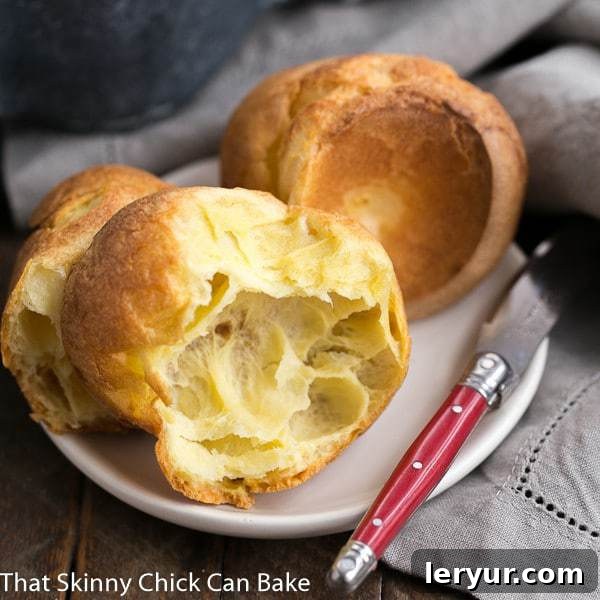
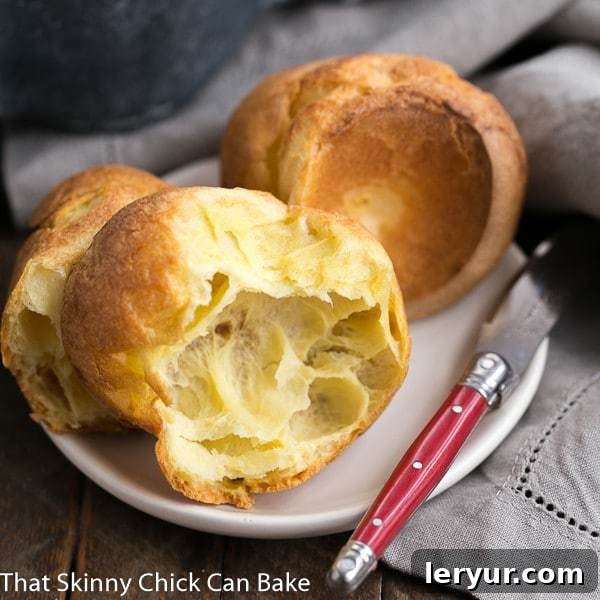
A truly perfect Popover Recipe transforms any meal into a special occasion, whether it’s a festive holiday dinner or a delightful weekend brunch. This foolproof recipe is a culinary gem, renowned for its consistent success and incredible flavor, making it an essential addition to your baking repertoire, especially during the holidays.
My cherished memories of popovers often center around my mother, whose passion for baking these airy treats was infectious. Decades ago, she bestowed upon me my very own popover pan, sparking a lifelong appreciation for this unique bread. Today, I’m thrilled to share with you How to Make Popovers using a timeless recipe perfected by the legendary food writer, Marion Cunningham. This classic approach ensures light, tender, and beautifully puffed popovers every single time.
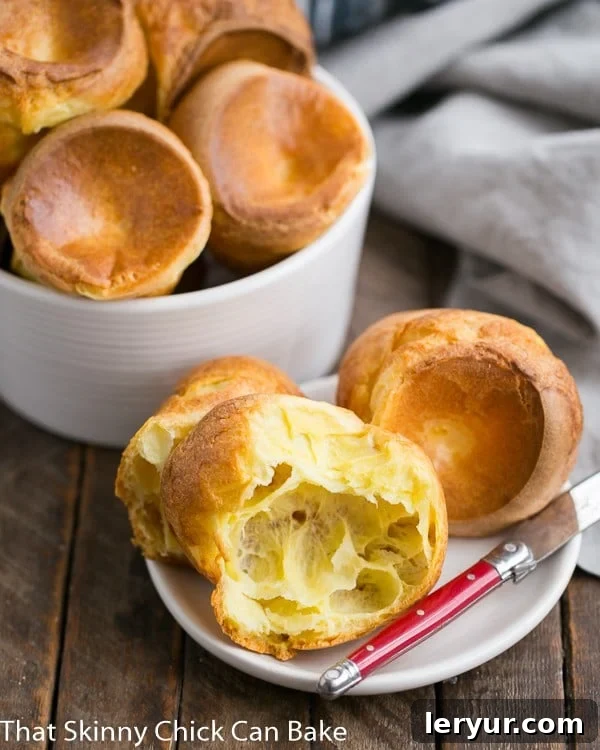
Why This Popover Recipe is a Must-Try for Every Home Baker
- This extraordinary popover recipe hails from the brilliant mind of Marion Cunningham, a revered food writer and cookbook author whose culinary insights have inspired generations. Her iconic Fannie Farmer Cookbook (affiliate link) was a staple in my childhood kitchen, and its wisdom continues to guide my baking. This recipe is a testament to her mastery, offering a foolproof path to popover perfection.
- Once you experience the sublime taste and texture of these classic popovers, you’ll find no reason to search for another recipe. This particular rendition is as consistently delicious and reliable as my mom’s beloved version, which she likely discovered in the pages of the venerable New York Times Cookbook. It’s truly a tried-and-true classic that delivers exceptional results every time.
- As the holiday season approaches, this versatile batter opens the door to another culinary delight: Yorkshire puddings. These savory cousins of popovers are traditionally made with the rich beef fat drippings from your holiday roast, transforming a simple bread into a magnificent accompaniment for festive meals. Mastering this popover recipe means you’re just a step away from creating memorable Yorkshire puddings for your holiday feast.
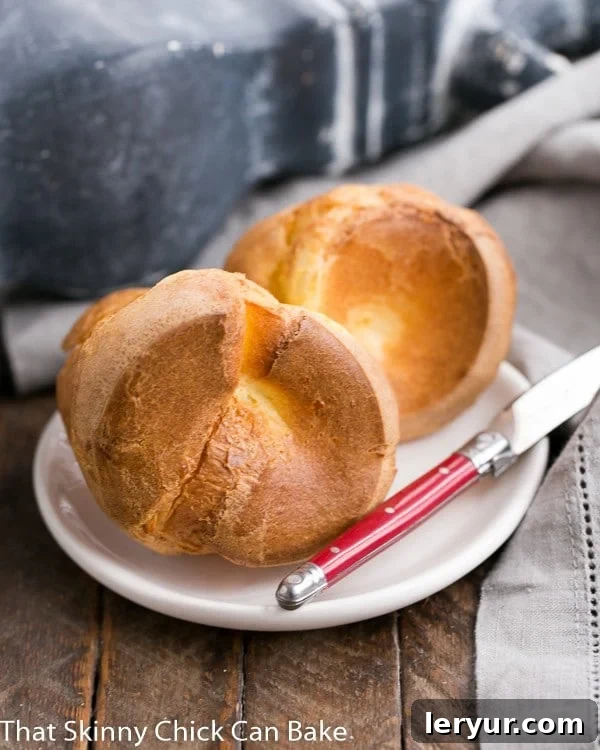
Expert Tips for Flawless Popovers: Unlocking the Secrets to a Spectacular Rise
My mother was an ardent devotee of popovers, her enthusiasm evident in the two cherished cast iron popover pans she gifted me. However, Marion Cunningham, with her characteristic ingenuity, provides excellent alternatives for those who don’t possess this specialized bakeware, ensuring everyone can enjoy these delightful breads.
- **Choosing Your Bakeware:** While a dedicated cast iron popover pan is ideal for achieving the signature deep, dramatic rise, don’t despair if you don’t own one. Standard muffin tins or individual custard cups can serve as perfectly acceptable substitutes in a pinch. The key is to ensure ample space between each baking vessel to allow for maximum air circulation and expansion.
- **Whipping Up the Batter with Ease:** This popover recipe is remarkably simple to prepare, requiring just a few basic ingredients: milk, eggs, salt, flour, and a touch of melted butter. The easiest way to achieve a smooth, lump-free batter is to combine all ingredients in a blender and process until uniform. This quick method ensures perfect consistency, setting the stage for an impressive rise.
- **The Importance of Accurate Flour Measurement:** For optimal texture and structure in your popovers, precise flour measurement is paramount. Avoid scooping flour directly from the bag, as this can compact it and lead to an excess amount. Instead, gently spoon the flour into your measuring cup, then level off the excess with an offset spatula or any straight-edged kitchen utensil. This method ensures you have exactly the right amount for a delicate and airy crumb.
- PRO-Tip: Straining for Smoothness: If, after blending, your batter exhibits any lingering lumps, a quick pass through a fine-mesh strainer will ensure a silky-smooth consistency. This small step can make a big difference in the final appearance and texture of your popovers, promoting an even, beautiful puff.
- **Allowing the Batter to Rest:** After mixing, it’s beneficial to let the batter rest as you preheat your oven. This resting period allows the gluten strands in the flour to relax, preventing a tough texture, and gives the moisture time to fully disperse throughout the batter. The result is a more tender popover with a better, more consistent rise.
- **Filling Your Cups Precisely:** When using custard cups, aim to fill each approximately ⅓ full. For standard muffin tins, about ¼ cup of batter per cup is ideal. If you find yourself with a small amount of leftover batter, simply divide it evenly among the existing cups. Remember, overfilling can hinder the signature “pop” and rise.
- **Preheating the Pan for Maximum Lift:** I often diverge slightly from some traditional recipes by preheating my popover pan in the oven before brushing it with melted butter and pouring in the batter. This technique, which I also employ for our holiday Yorkshire puddings, ensures an immediate blast of heat to the batter.
- PRO-Tip: The Power of a Hot Pan: Preheating the pan is a game-changer. It jump-starts the baking process by instantly creating steam within the batter, which is crucial for achieving that dramatic, sky-high rise. This method is especially effective when using a cast iron popover pan, as cast iron retains heat exceptionally well.
- **Utilizing Warm Milk for Better Puff:** Incorporating warm milk into your popover batter (ideally around 125° F) further encourages a spectacular puff. A warmer batter begins to steam more quickly in the hot oven, facilitating the leavening process. Conversely, cold batter will require more time to generate the necessary steam, potentially leading to a less impressive rise.
- PRO-Tip: Whip the Batter Right Before Baking: To maximize the airy texture and significant rise, whip your popover batter just before you’re ready to pour it into the hot pan. This helps incorporate precious air bubbles that are vital for leavening. Delaying this step can cause these crucial air bubbles to dissipate, resulting in denser popovers.
- PRO-Tip: The Delight of Yorkshire Puddings: For a savory treat, remember that Yorkshire puddings are essentially popovers prepared with the rich, savory drippings from a roast, most commonly beef. They are an absolutely perfect, traditional accompaniment to your holiday prime rib or any roast beef dinner, soaking up all the delicious flavors.
- **Optimal Oven Rack Placement:** To prevent the tops of your popovers from browning too quickly or excessively, always bake them on a rack positioned in the lower third of your oven. This allows for even heat distribution and a gradual, golden finish.
- **Mastering the Baking Temperature and the “No Peeking” Rule:** For the best results, begin baking your popovers at a high temperature of 425ºF for the initial 15 minutes. This intense heat quickly generates steam, causing them to puff dramatically. Then, reduce the oven temperature to 350ºF and continue baking for another 15 minutes to allow them to fully set and dry out. Crucially, DO NOT open the oven door during the entire baking process, as this will cause the popovers to collapse due to a sudden drop in temperature.
- **Serving and Storing Your Popovers:** Popovers are undeniably at their most glorious – light, crispy, and dramatically puffed – straight out of the oven. While they are best enjoyed fresh, you can hold them at room temperature for a few minutes. For longer storage, wrap them airtight and freeze for up to a month. Reheating them in a 350ºF oven for 10 to 15 minutes will make them taste good, but they will never quite recapture the magic of being freshly baked.
- PRO-Tip: Releasing Steam for Crisper Popovers: If you’re not planning to devour your popovers immediately, pierce each one with the tip of a knife as soon as they come out of the oven. This simple act allows trapped steam to escape, preventing moisture from building up inside and keeping the interior from becoming soggy as they cool.
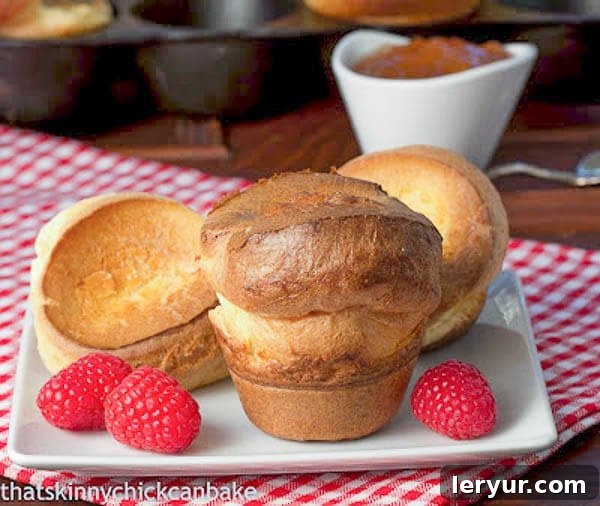
Frequently Asked Questions About Popovers
Popovers are a unique and delicious type of light, hollow roll, similar in size to a muffin. They are crafted from a simple batter primarily composed of eggs, milk, flour, and butter. The distinctive characteristic of a popover comes from the liquid in the batter, which rapidly converts into steam when subjected to high heat in the oven. This steam acts as the leavening agent, causing the batter to dramatically puff up and create its signature hollow, moist interior and crisp exterior. They are typically baked in specialized popover pans designed with extra deep cups to facilitate their impressive vertical rise.
The charming name “popover” perfectly describes the dramatic transformation these breads undergo during baking. As they cook in the hot oven, the batter rapidly expands, rising high above the edges of their baking cups and creating an impressive, often irregular, puffed shape. They quite literally “pop over” the sides of the pan, giving them their memorable and evocative name.
While Yorkshire puddings share a very similar batter composition with popovers, there’s a crucial distinction that sets them apart. Yorkshire puddings are traditionally baked in hot beef drippings that are placed in the bottom of each cup of the pan before the batter is added. This imparts a rich, savory flavor that makes them an iconic and popular accompaniment when the British serve roast beef. Popovers, on the other hand, typically use melted butter in the pan, resulting in a more neutral flavor profile that makes them versatile for both sweet and savory applications.
Popovers are, without a doubt, best enjoyed immediately after baking when their exterior is at its crispiest and their interior most tender. However, if you have leftovers, they can be stored in an airtight container at room temperature for up to 3 days. To serve them again, gently rewarm them in a moderate oven until heated through. For longer storage, popovers freeze exceptionally well. Place them in an airtight container or freezer bag, and they will keep for up to 3 months. Thaw them at room temperature before reheating in a 350ºF oven for 10-15 minutes for the best possible revived texture.
The versatility of popovers makes them a fantastic accompaniment to a wide array of dishes, or simply as a delightful treat on their own. For a classic sweet approach, serve them warm with a generous smear of butter, your favorite fruit jam, luscious preserves, or a dollop of spiced apple butter. They are also wonderful with honey, lemon curd, or even a drizzle of maple syrup. On the savory side, popovers pair beautifully with a hearty roast beef dinner (especially if made as Yorkshire puddings), stews, or even a simple bowl of soup. Their light, airy texture provides a wonderful contrast to richer main courses.
You May Also Like These Delicious Recipes:
- Classic Prime Rib Roast
- Elegant Holiday Lettuce Salad
- Festive Christmas Yule Log (Bûche de Noël)
- Irresistible Yeast Roll Knots
- Discover more Easy Bread Recipes for every occasion
Stay connected and be inspired through social media! Follow me @ Instagram, Facebook, and Pinterest. Don’t forget to tag me when you try one of my delicious recipes! And if you absolutely love the results and this Popover Recipe brought joy to your table, please consider giving it a 5-star rating in the recipe card below – your feedback means the world to me!
Perfect Popovers
10 minutes
45 minutes
55 minutes
10 servings
Discover the art of baking perfect popovers with this classic recipe from Marion Cunningham, featured in Baking with Julia by Dorie Greenspan. This recipe guarantees light, airy, and beautifully puffed results every time.
Ingredients
- 1 cup all-purpose flour
- 1 cup whole or 2% milk, at room temperature
- ½ teaspoon salt
- 3 large eggs, at room temperature
- 2 tablespoons unsalted butter, melted
Instructions
- Begin by properly positioning an oven rack on the lowest rung of your oven. Preheat the oven to a hot 425ºF (218ºC). This high initial temperature is key for a good rise.
- Prepare your baking vessels by thoroughly buttering or spraying nine ¾ cup glass custard cups or ten ½ cup muffin cups. If opting for custard cups, arrange them on a jelly-roll pan, ensuring generous space between each cup for optimal air circulation. If using muffin pans, you’ll need two 12-hole muffin tins. Fill alternate cups in each tin, leaving empty spaces, to provide every popover with ample room to puff and expand without hindrance.
- Combine all the ingredients into the container of a blender. Whirl until the mixture is completely smooth and free of any lumps. Alternatively, this can be achieved using a food processor or a bowl with a hand-held mixer. For absolute assurance, if the batter appears at all lumpy, pass it through a fine-mesh strainer to ensure a silky-smooth consistency.
- Proceed to bake the popovers: For custard cups, carefully pour approximately ⅓ of the batter into each cup, distributing any remaining batter evenly among them. If using muffin cups, use about ¼ cup of batter for each cup, filling alternate cups as previously described to allow maximum puffing space.
- Bake the popovers for 25 minutes at 425ºF (218ºC), without opening the oven door at any point. During this time, the popovers will dramatically puff, turn beautifully browned, and become crisp on the exterior. After 25 minutes, reduce the oven temperature to 350ºF (177ºC) and continue baking for another 15 to 20 minutes. This lower temperature helps to further dry out the interior, which, regardless of the method, will always retain a slightly custardy or doughy center, a hallmark of a classic popover.
- Serve your perfect popovers immediately to enjoy their ultimate crispness and airy texture.
Notes
For a delicious savory variation, you can transform these puffed quick breads into traditional Yorkshire puddings. Simply substitute the melted butter in the bottom of your popover pan with rich beef fat drippings from your roast. This simple swap will infuse them with incredible flavor, making them the ideal accompaniment to any roast beef dinner.
Nutrition Information:
Yield:
10
Serving Size:
1 popover
Amount Per Serving:
Calories: 100Total Fat: 4gSaturated Fat: 2gTrans Fat: 0gUnsaturated Fat: 2gCholesterol: 64mgSodium: 139mgCarbohydrates: 11gFiber: 0gSugar: 1gProtein: 4g
HOW MUCH DID YOU LOVE THIS RECIPE?
Please leave a comment on the blog or share a photo on Pinterest