
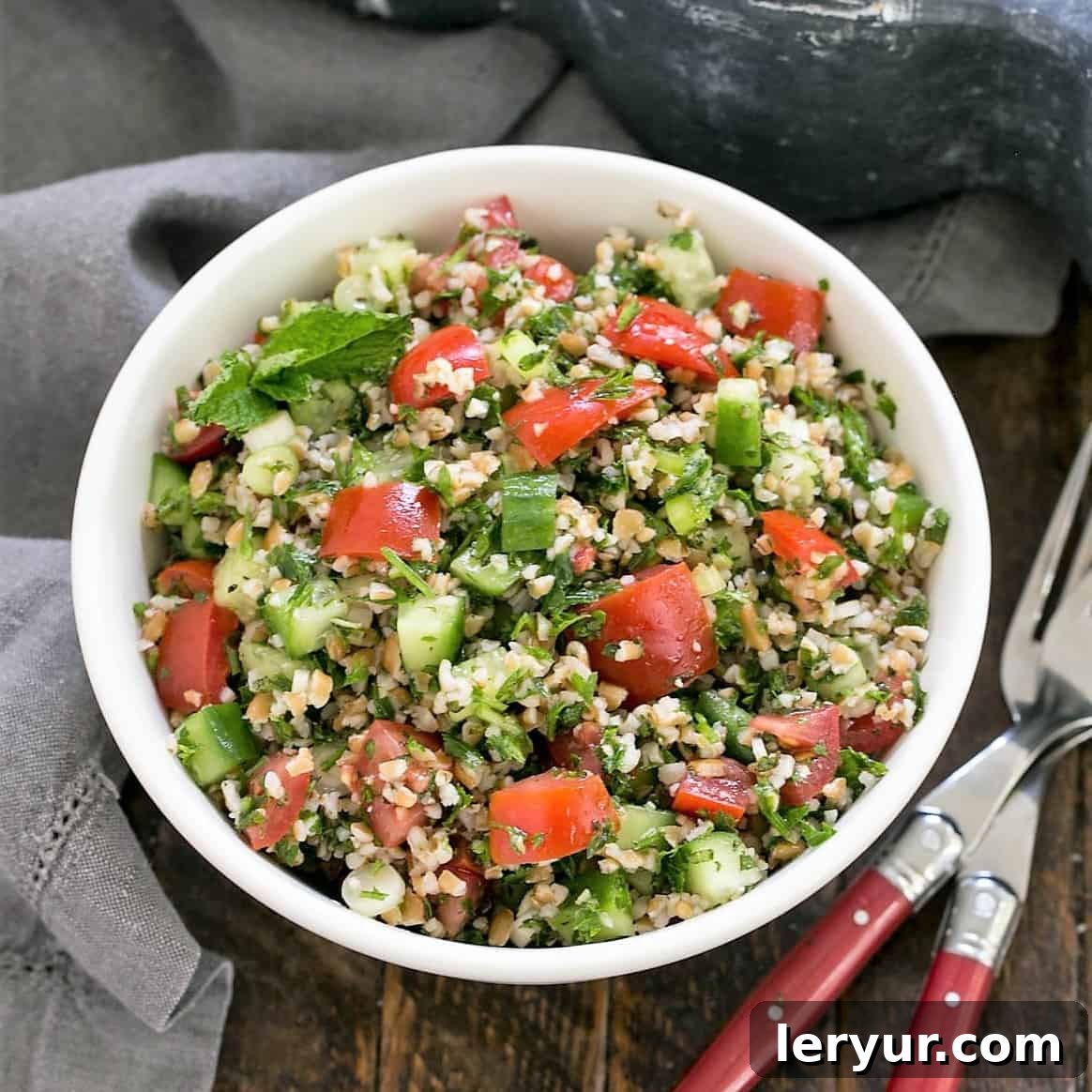
Authentic Tabbouleh Recipe: A Vibrant & Healthy Middle Eastern Salad
Discover the delightful flavors of the Middle East with this healthy, refreshing Tabbouleh Recipe. Crafted with wholesome bulgur wheat, an abundance of finely chopped fresh herbs, ripe tomatoes, crisp cucumbers, and pungent scallions, this salad is a true celebration of vibrant ingredients. What truly elevates this dish is its simple yet powerful lemon and garlic dressing, delivering a zesty punch that makes it an irresistible side or light main course.
My journey to appreciating Tabouli Salad Recipes wasn’t immediate. For years, I found certain versions overly tart or lacking depth. However, everything changed when I experienced Tabbouleh made in the peak of summer, utilizing the juiciest, sun-riripened tomatoes and a perfectly balanced lemon dressing. The transformation was remarkable, and this recipe captures that very essence, promising a dish that is both authentically flavorful and wonderfully fresh.
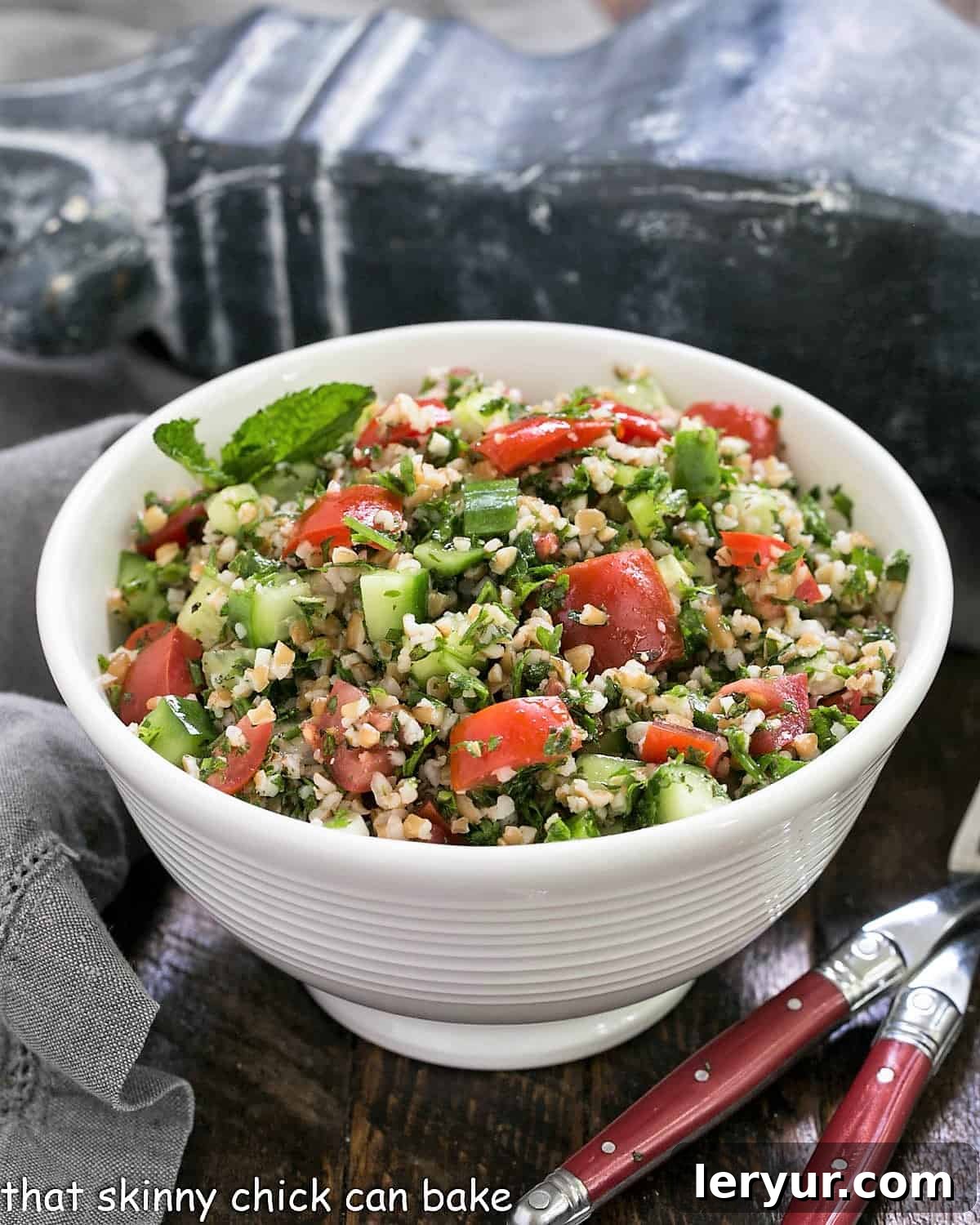
Why This Tabbouleh Recipe Will Become Your Favorite
There are countless reasons why this particular Tabbouleh recipe stands out and deserves a spot on your regular menu. It’s more than just a salad; it’s a wholesome experience:
- Incredibly Fresh and Effortless to Prepare: This salad shines thanks to its reliance on fresh, seasonal produce. With minimal cooking involved and straightforward steps, it’s a quick recipe to assemble, making it perfect for busy weeknights or impromptu gatherings. The vibrant colors and textures speak for themselves, promising a dish that tastes as good as it looks.
- Naturally Vegan and Exceptionally Healthy: Packed with plant-based goodness, this Tabbouleh is naturally vegan and aligns perfectly with a health-conscious lifestyle. It’s free from dairy and animal products, making it suitable for a wide range of dietary preferences while still delivering immense flavor and satisfaction.
- Nutrient-Dense and Fiber-Rich: Beyond its delicious taste, Tabbouleh is a powerhouse of nutrition. Whole-grain bulgur wheat provides essential fiber, aiding digestion and promoting satiety. Fresh vegetables and herbs contribute a wealth of vitamins, minerals, and antioxidants, supporting overall well-being. It’s a meal that truly nourishes your body from the inside out.
- A Versatile Culinary Delight: Whether served as a light lunch, a vibrant side dish, or part of a larger Mediterranean feast, Tabbouleh fits seamlessly into any meal. Its refreshing qualities make it an ideal choice for summer picnics, barbecues, or any occasion where you crave something light, flavorful, and satisfying.
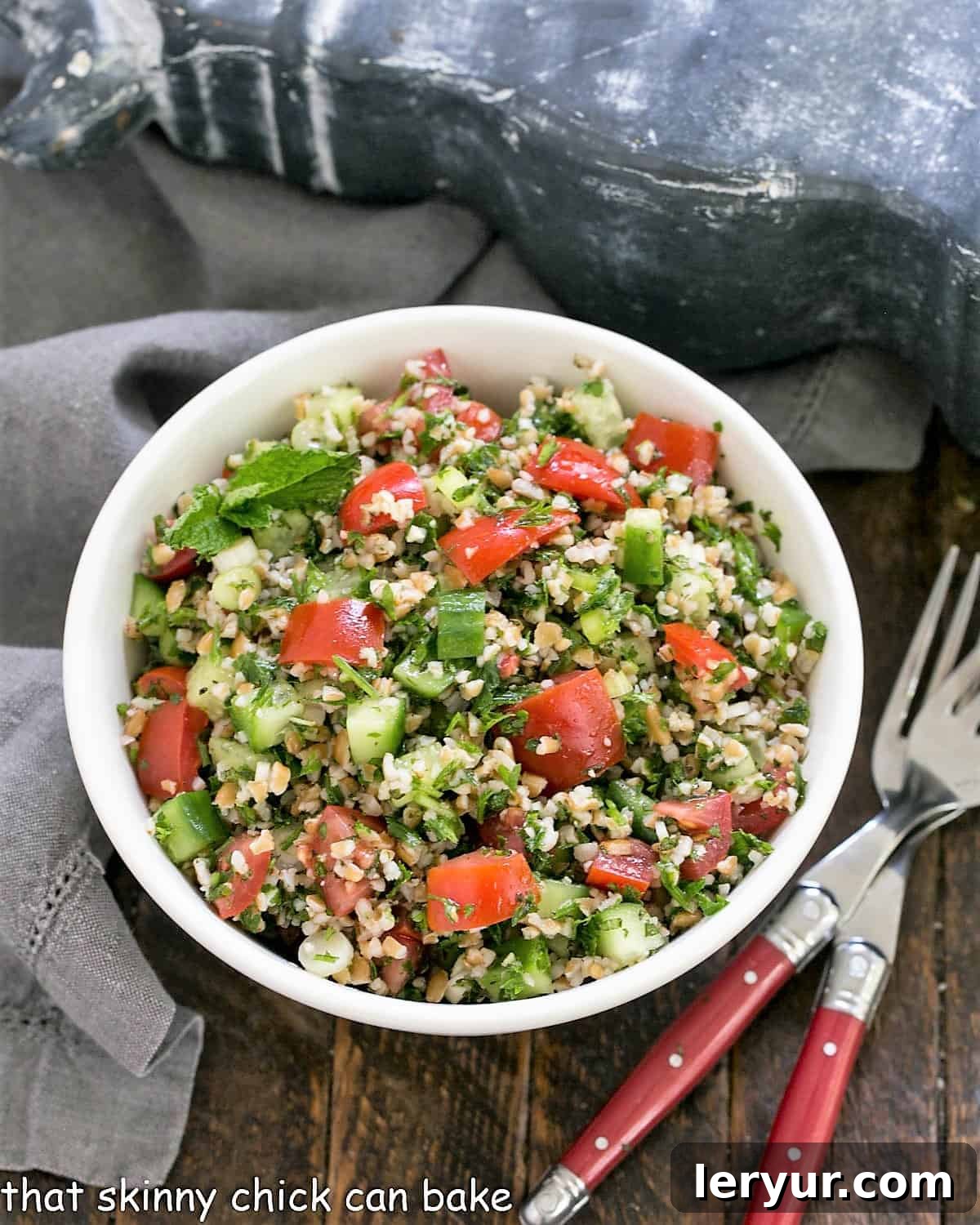
Mastering Tabbouleh: Professional Insights for Perfection
Having had the pleasure of preparing Tabbouleh on local television, I’ve refined this recipe to ensure every step contributes to its perfection. While my Quinoa Tabouleh Salad has been a go-to, this traditional bulgur version offers an equally delightful experience. Here are some expert tips to guide you:
- Optimal Bulgur Preparation for Fluffiness: While many recipes call for boiling bulgur, I’ve found that soaking it yields significantly fluffier grains, preventing it from becoming mushy. Always check your specific package instructions, but generally, soaking equal parts boiling water and bulgur wheat for about an hour allows it to fully hydrate and soften beautifully. Crucially, remember to drain any excess water thoroughly before adding it to your salad; this prevents a watery consistency and ensures all the flavors meld perfectly.
- Enhancing Vegetable Flavor and Texture: A simple trick to elevate the taste and texture of your chopped cucumbers and tomatoes is to lightly salt them before adding them to the salad. This process draws out some of their natural moisture, which not only concentrates their flavor but also contributes to a firmer texture. After salting, allow them to sit for a few minutes, then drain any released liquid. This step is key to avoiding a soggy salad and maximizing the freshness of these key ingredients.
- The Art of Mincing Parsley: The secret to preventing bitterness in Tabbouleh lies in how you prepare your parsley. Using a food processor to mince the parsley into very small, uniform pieces helps break down the cell walls more effectively than hand chopping, which can sometimes lead to a bitter taste. If you’re preparing the parsley ahead of time, spread the minced herb on paper towels to air dry. This removes excess moisture, preventing deterioration and maintaining its vibrant color and flavor if stored overnight in the refrigerator.
- Effortless Meal Prep: One of the best aspects of this whole-grain salad is its make-ahead potential. All the individual ingredients—the soaked bulgur, chopped vegetables, and minced herbs—can be prepped the day before. This allows for a quick and easy assembly on the day you plan to serve it, saving you precious time and reducing stress. Just store each component separately in airtight containers in the refrigerator.
- Preparing the Dressing in Advance: The lemon and garlic dressing can also be made ahead of time. Simply whisk all the dressing ingredients together and store it in an airtight container in the fridge. Keep in mind that extra virgin olive oil tends to solidify when chilled. To ensure a smooth, pourable dressing, remember to take it out of the refrigerator well in advance of tossing your salad, allowing it to come to room temperature.
- Perfect Pairing Possibilities: Tabbouleh is incredibly versatile and pairs beautifully with a wide array of dishes. It’s a quintessential accompaniment to any grilled entree, from chicken and lamb to fish and vegetables. It also complements traditional Middle Eastern main dishes such as falafel, shawarma, hummus, or kebabs, adding a refreshing contrast to richer flavors. Don’t hesitate to get creative with your meal pairings!
I distinctly remember a time when my family, particularly my husband Bill, was quite particular about trying new dishes. The mention of “bulgur” or “mint” in a salad would often deter him. On a particularly hot and humid Indiana day, I made this Tabbouleh, knowing I might be enjoying the entire batch myself. And indeed, I did! It was perfectly refreshing, a true lifesaver in the heat. To my delight, it was just as delicious, if not more so, as leftovers for the next couple of days, proving its enduring appeal.
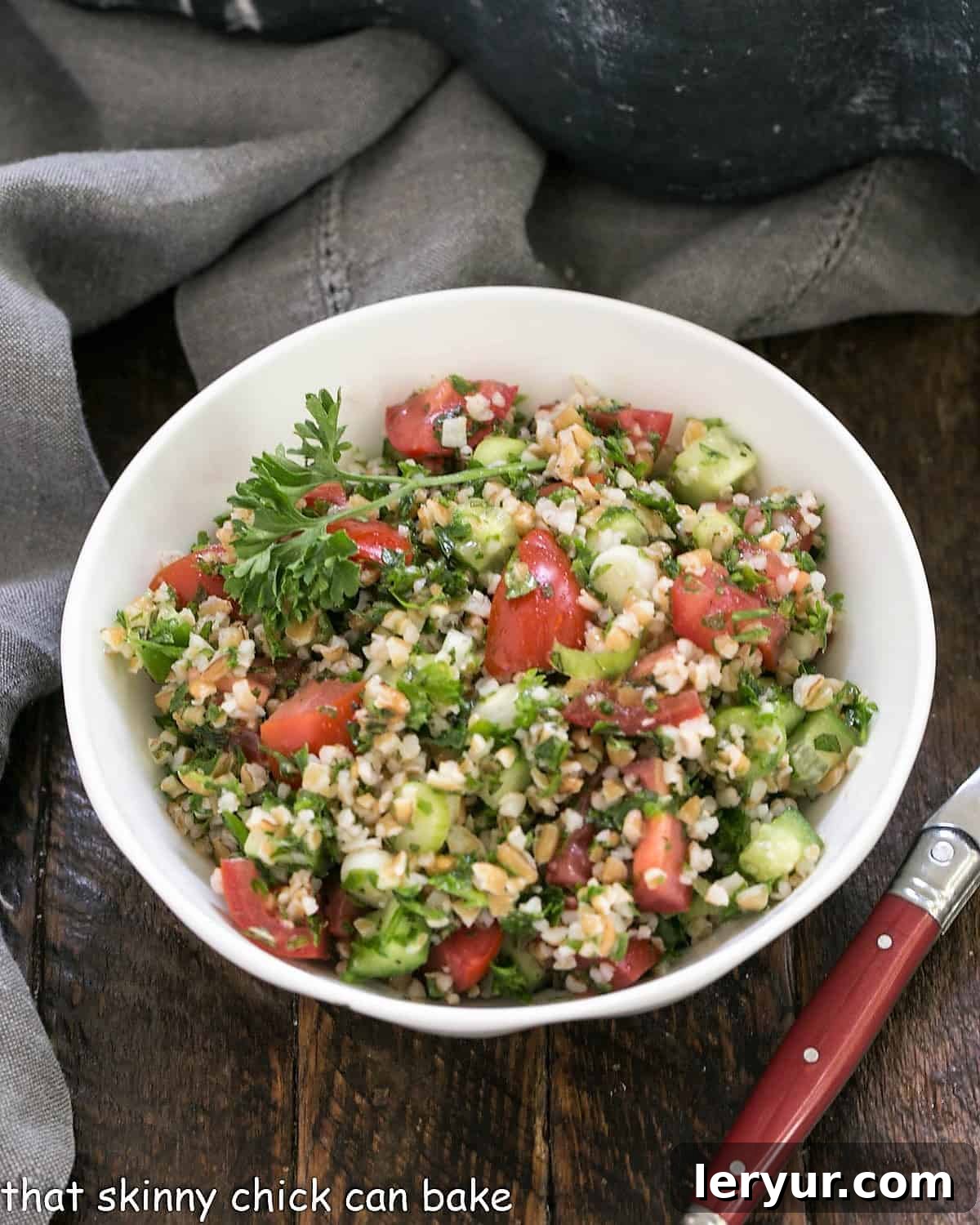
Key Ingredients and Their Wholesome Benefits
Each component of this Tabbouleh recipe plays a vital role in both flavor and nutritional value. Here’s a closer look at the stars of the dish:
- Bulgur Wheat: As the hearty foundation of Tabbouleh, bulgur is a whole grain that offers an excellent source of dietary fiber, crucial for digestive health. It also provides essential minerals like manganese, magnesium, and iron, contributing to energy production and bone health. Opt for fine or medium grain bulgur for the best texture in this salad.
- Tomatoes: These juicy gems are not just for flavor; they are rich in Vitamins A, C, and K, vital for vision, immune function, and blood clotting. Furthermore, tomatoes are loaded with lycopene, a powerful antioxidant known for its potential to protect against chronic diseases and promote skin health. Choose firm, ripe tomatoes for the best taste and texture.
- Cucumber: Offering a crisp, refreshing crunch, cucumbers are primarily composed of water, making them incredibly hydrating. They also contain valuable Vitamins C and K, along with minerals like Magnesium, Manganese, and Potassium. Their high water content, combined with antioxidants such as flavonoids and tannins, makes them a beneficial addition for detoxification and inflammation reduction.
- Parsley and Mint: These fresh herbs are the heart and soul of Tabbouleh. Parsley is an exceptional source of Vitamin K, essential for bone health and blood coagulation, and boasts high levels of flavonoids, which act as powerful antioxidants. Mint, with its distinct aroma and cooling sensation, is known to improve brain function and can significantly alleviate digestive symptoms like bloating and indigestion. Use flat-leaf (Italian) parsley for a more robust flavor, and always fresh mint.
- Scallions and Garlic: Eaten raw in the dressing, both scallions (green onions) and garlic contribute pungent flavors and remarkable health benefits. They are rich in fiber and contain beneficial phytonutrients and antioxidants that may help fight certain types of cancer, particularly stomach cancer, and bolster the immune system.
- Olive Oil: A cornerstone of Mediterranean cuisine, extra virgin olive oil is one of the healthiest fats available. It is predominantly composed of healthy monounsaturated fats, which are known to support heart health. Olive oil is also packed with powerful antioxidants and has been linked to numerous benefits, including decreasing blood pressure, reducing the risk of heart disease, lowering inflammation, and potentially playing a role in fighting Alzheimer’s disease and reducing the risk of Type 2 Diabetes.
- Lemon Juice: Freshly squeezed lemon juice brightens the flavors of the salad and dressing. It’s an excellent source of Vitamin C, a powerful antioxidant that supports the immune system and skin health. Lemon juice also aids in iron absorption from plant-based foods, improves digestion, and has even been shown to help prevent the formation of certain types of kidney stones.
Frequently Asked Questions About Tabbouleh
Tabbouleh, often spelled Tabouli, is a quintessential Middle Eastern salad with its roots firmly planted in Lebanon. It’s a vibrant, herb-heavy dish made primarily from bulgur wheat, finely chopped fresh parsley and mint, diced tomatoes, onions (often scallions), and seasoned with olive oil and lemon juice. Traditionally served cold, it’s celebrated for its refreshing taste and health benefits. While one source suggests pronouncing it “tuh-BOO-luh,” I, along with many others, commonly pronounce the last syllable as “lee,” a pronunciation that is widely accepted and understood.
The core ingredients of Tabbouleh include fine or medium grain bulgur wheat, an abundance of fresh parsley, fresh mint, ripe tomatoes, and green onions (scallions). The dressing is simple yet essential, typically made from extra virgin olive oil and freshly squeezed lemon juice. In this particular recipe, we enhance the dressing with a minced garlic clove, adding another layer of aromatic depth that complements the fresh vegetables and herbs beautifully.
Bitterness in Tabbouleh often stems from improperly prepared parsley. If the parsley isn’t minced finely enough, it can release compounds that contribute to a bitter taste. My advice is to chop it thoroughly, then use a food processor to pulse it until it reaches a very fine, uniform mince. Additionally, excessive moisture can contribute to bitterness or deterioration. If you’re preparing the parsley the day before, spread it out on paper towels to absorb any excess moisture before storing it in the refrigerator. This minimizes bitterness and preserves its freshness.
Once mixed with its dressing, Tabbouleh keeps remarkably well. You can store it in an airtight container in the refrigerator for up to 4 days. In fact, many people find that the flavors meld and deepen over time, making it even more delicious on the second or third day. Ensure it’s properly sealed to maintain freshness and prevent it from absorbing other odors in your fridge.
Absolutely! While traditional Tabbouleh uses bulgur, you can easily adapt the recipe to be gluten-free or to suit other preferences. Popular alternatives include quinoa, couscous (though not gluten-free), or even cauliflower rice. If using quinoa, cook it according to package directions and cool completely before mixing. For cauliflower rice, finely chop or process raw cauliflower and allow it to sit briefly to soften, or lightly steam it. The key is to achieve a similar fine grain texture to carry the fresh flavors of the herbs and vegetables.
Tabbouleh is best served chilled, making it an incredibly refreshing dish, especially in warmer weather. It’s wonderfully versatile as a side, accompanying grilled meats like chicken, lamb, or fish, as well as plant-based proteins such as falafel. It also makes a fantastic addition to a mezze platter alongside hummus, baba ghanoush, and warm pita bread. For a light lunch, enjoy it on its own or scooped into lettuce cups for an extra crunch. A garnish of a fresh mint sprig or a lemon wedge adds a lovely finishing touch.
Explore More Delicious & Healthy Salad Recipes:
If you enjoyed this vibrant Tabbouleh, you’ll surely love these other refreshing salad ideas from my kitchen and trusted culinary friends:
- Mango, Avocado, Black Bean Quinoa Salad from Jeanette’s Healthy Eating – A tropical and hearty plant-based delight.
- Superfoods Salad – Packed with nutrient-dense ingredients and a luscious vinaigrette.
- Guacamole Salad – All the flavors of your favorite dip, transformed into a fresh salad.
- Honey Lime Fruit Salad – A sweet and tangy burst of freshness, perfect for any occasion.
- Fresh Corn and Black Bean Salad – A vibrant and satisfying salad with a Tex-Mex twist.
- Discover More Best Salad Recipes – A collection of my favorite salad creations for every palate.
Stay connected and share your culinary adventures with me through social media! You can find me on Instagram, Facebook, and Pinterest. Don’t forget to tag me (@thatskinnychickcanbake) when you whip up one of my recipes! If you adore the results, please consider leaving a 5-star rating and a review in the recipe card below – your feedback means the world!
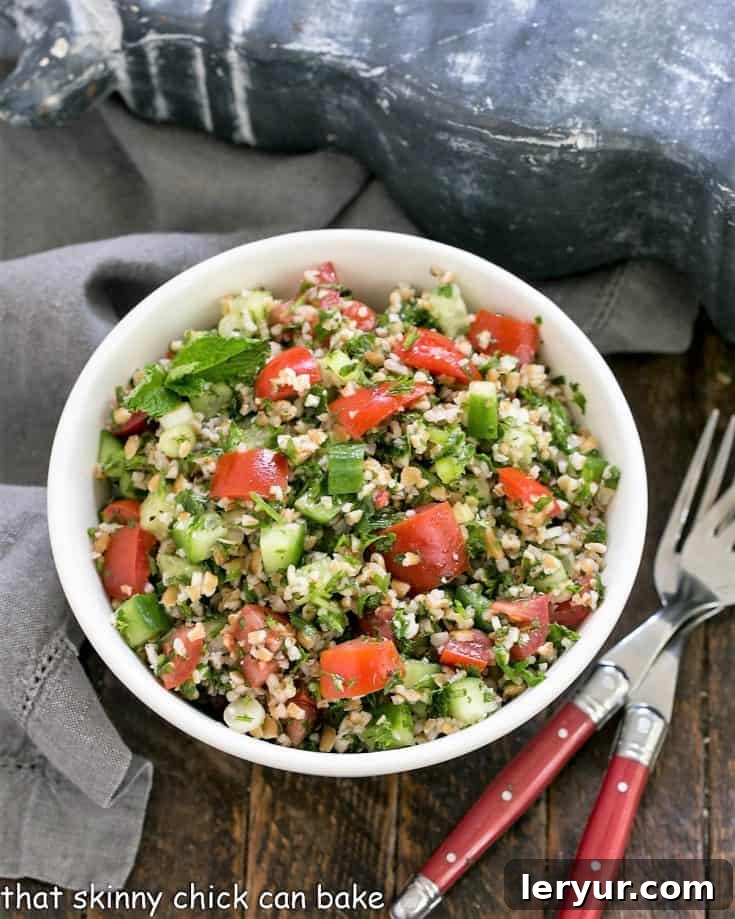
Best Tabbouleh Recipe
15 minutes
15 minutes
30 minutes
4
A healthy, refreshing whole-grain salad with fresh vegetables, herbs and a simple garlic lemon salad dressing.
Ingredients
- ½ cup bulgur wheat, cooked according to package directions
- 1 cup diced cucumbers, I used the mini Persian cucumbers
- 1 cup diced tomatoes, use garden tomatoes or grape/cherry tomatoes
- 1 teaspoon fine sea salt, divided
- 2 bunches curly parsley, process to a fine mince, stems included (I did not add it all to the salad)
- ½ cup minced fresh mint
- ⅓ cup thinly sliced green onions
- ⅓ cup extra virgin olive oil
- 3 tablespoons freshly squeezed lemon juice
- 1 minced garlic clove
Instructions
- Soak the bulgur in boiling water according to the package instructions. Drain off any excess water when it’s finished soaking.
- Combine the cucumbers and tomatoes in a bowl with ½ teaspoon of the salt.
- Toss and let rest for a few minutes.
- Process the parsley until it’s finely minced, and place it in the serving bowl.
- Add the cooled bulgur, minced mint, and thinly sliced green onion to the serving bowl.
- Drain any excess water off the salted cucumbers and tomatoes and add to the bowl with the other ingredients.
- Whisk together the olive oil, freshly squeezed lemon juice, minced garlic, and the remaining ½ teaspoon of salt in a separate small bowl.
- Pour about half of the prepared dressing over the salad ingredients in the serving bowl and toss gently to combine. Add more of the remaining dressing as desired, adjusting to your taste preferences.
- Taste the Tabbouleh for seasoning. Add more salt and/or lemon juice if desired, ensuring a perfect balance of flavors.
- Allow the Tabbouleh to rest for about 15 minutes before serving. This brief resting period allows the flavors to fully meld and deepen, enhancing the overall taste.
Notes
Keep covered, in the refrigerator for up to 4 days for optimal freshness and flavor.
Recommended Products
As an Amazon Associate and member of other affiliate programs, I earn from qualifying purchases.
- Food Processor
- OXO Cutting Board
- Santoku Knife
Nutrition Information:
Yield:
4
Serving Size:
1
Amount Per Serving:
Calories: 301Total Fat: 23gSaturated Fat: 4gTrans Fat: 0gUnsaturated Fat: 17gCholesterol: 25mgSodium: 643mgCarbohydrates: 15gFiber: 5gSugar: 5gProtein: 11g
Thatskinnychickcanbake.com occasionally offers nutritional information for recipes contained on this site. This information is provided as a courtesy and is an estimate only. This information comes from online calculators. Although thatskinnychickcanbake.com attempts to provide accurate nutritional information, these figures are only estimates.
Varying factors such as product types or brands purchased can change the nutritional information in any given recipe. Also, many recipes on thatskinnychickcanbake.com recommend toppings, which may or may not be listed as optional and nutritional information for these added toppings is not listed. Other factors may change the nutritional information such as when the salt amount is listed “to taste,” it is not calculated into the recipe as the amount will vary. Also, different online calculators can provide different results.
To obtain the most accurate representation of the nutritional information in any given recipe, you should calculate the nutritional information with the actual ingredients used in your recipe. You are solely responsible for ensuring that any nutritional information obtained is accurate.
HOW MUCH DID YOU LOVE THIS RECIPE?
Please leave a comment on the blog or share a photo on Pinterest