
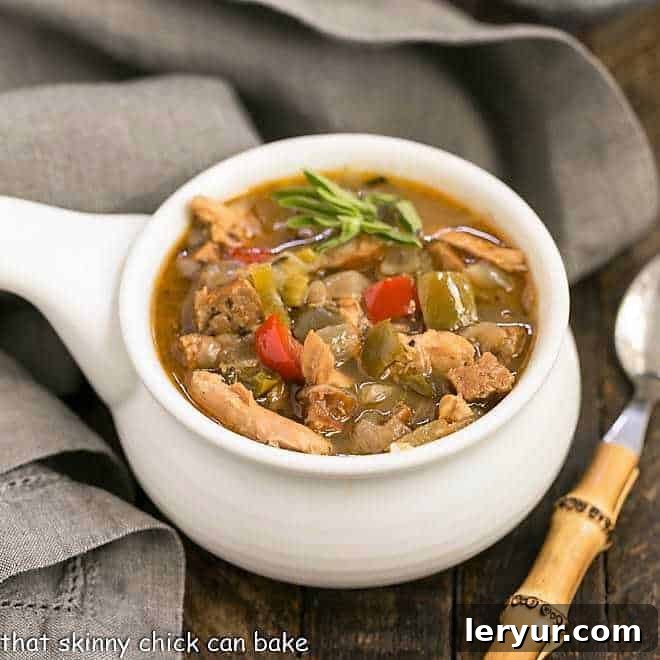
Experience the soul-warming essence of Louisiana with this robust and spicy Sausage and Chicken Gumbo. Brimming with aromatic bell peppers, savory Andouille sausage, tender shredded chicken, and fluffy rice, this authentic Cajun chicken stew brings the vibrant flavors of the bayou straight to your kitchen.
Whether you’re hosting a game day gathering or seeking a comforting meal on a chilly evening, this divine Cajun creation is an absolute must-try. It’s more than just a meal; it’s an invitation to savor a rich culinary tradition.
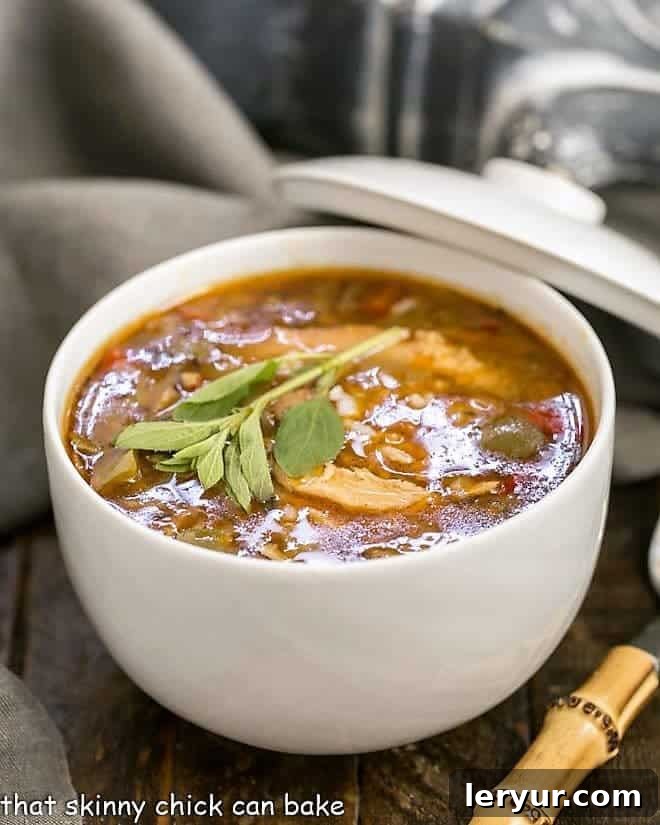
Authentic Sausage and Chicken Gumbo: A Taste of Louisiana
My culinary journey into the heart of Louisiana began many years ago, during my first visit to New Orleans. My knowledge of Cajun and Creole cuisine was rudimentary at best, but an unforgettable dining experience at Commander’s Palace, followed by a revelation at Mr. B’s Bistro, changed everything. It was there, amidst the bustling energy, that I first tasted their legendary Gumbo Ya Ya. Made with a deep, dark roux and an abundance of tantalizing spices, it bore a striking resemblance to the scrumptious Cajun chicken stew I now share with you. That trip ignited a passion for the complex, comforting flavors that define Louisiana cooking, and gumbo quickly became a beloved staple in my own kitchen.
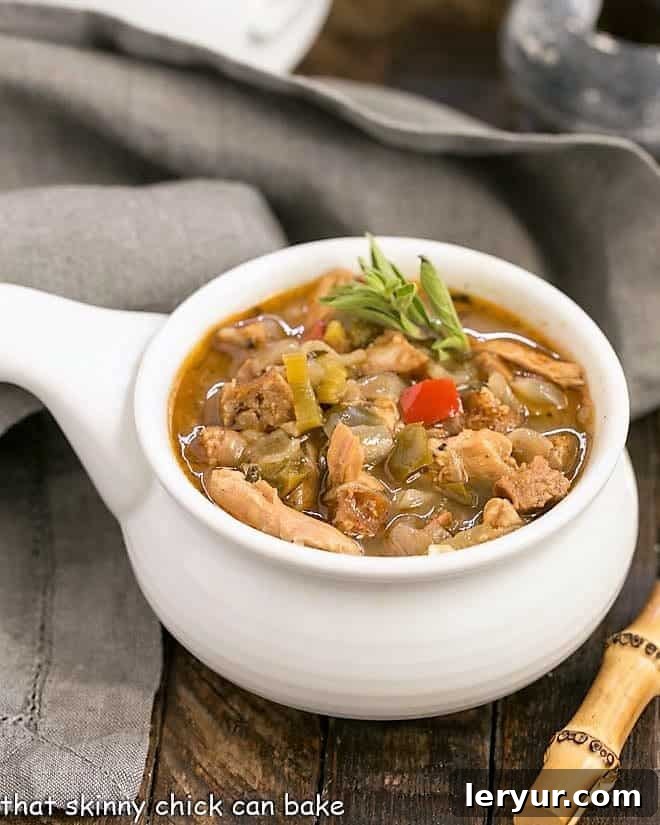
What Exactly is Gumbo? Unpacking a Louisiana Culinary Icon
The word “gumbo” itself hints at its rich heritage, believed to originate from the Louisiana French, possibly derived from either the Bantu word “kingombo” for okra, or the Choctaw word “kombo” for filé powder. What remains constant across its numerous variations is the foundational trio: a carefully prepared roux, a choice of meat or seafood, and the essential “holy trinity” of vegetables. The final touch, and a defining characteristic, is either okra or filé powder, both serving as traditional thickening agents that impart distinct flavors and textures.
The Holy Trinity: The Heart of Cajun and Creole Cooking
No discussion of authentic Louisiana cuisine is complete without mentioning the “holy trinity.” This aromatic foundation, comprising finely diced bell peppers (often green, but red and yellow can add sweetness), onions, and celery, is sautéed until tender, forming the flavorful base for countless dishes, including our beloved gumbo. It provides a sweet, savory, and slightly peppery depth that is irreplaceable.
Okra vs. Filé Powder: Choosing Your Thickener
While both okra and filé powder are used to thicken gumbo, they each contribute unique characteristics. Okra, a vegetable with a mucilaginous texture when cooked, provides a slight stickiness and a distinctive vegetal flavor. Filé powder, on the other hand, is made from the dried and ground leaves of the sassafras tree. It offers a subtle earthy, almost citrusy flavor and a silky consistency without the “slimy” texture some associate with okra. Traditionally, one or the other is used, though sometimes both are incorporated for a complex texture. For this specific recipe, we opt for filé powder to achieve that classic, smooth gumbo consistency and unique aroma. While filé powder can sometimes be a bit elusive in mainstream grocery stores, specialized spice shops or the international aisle often carry it, or you can find high-quality gumbo seasoning blends that list filé as a primary ingredient – a perfect solution if you’re in a pinch!
The Art of the Roux: The Soul of Your Gumbo
At the very core of any great gumbo lies the roux. Pronounced “roo,” this fundamental thickening agent, composed of equal parts fat and flour, traces its origins back to French cuisine over three centuries ago. It’s a simple concept – cooking the two components together until a thick paste forms – but mastering the roux is where the magic truly happens.
Understanding Roux Stages: From White to Dark
The depth of flavor and color of your roux is determined by how long you cook it. There are several stages, each with its own characteristics:
- White Roux: Cooked only for a few minutes until pale, it offers minimal flavor and maximum thickening power. Used in béchamel and other white sauces.
- Blonde Roux: Cooked a bit longer to a light golden color, resembling peanut butter. It develops a slightly nutty flavor and retains good thickening ability.
- Brown/Peanut Butter Roux: Cooked further to a rich tan or light brown hue. This stage develops a more pronounced nutty flavor and is often used in Creole dishes.
- Dark Brown/Chocolate/Brick Roux: This is the roux we aim for in our Sausage and Chicken Gumbo. Cooked until it reaches a deep mahogany or “chocolate” color, it develops an intensely rich, complex, nutty, and slightly bitter flavor profile. While its thickening power is reduced compared to lighter rouxs, its unparalleled depth of flavor is absolutely essential for an authentic Cajun gumbo.
Crafting the Perfect Dark Roux: Patience is Key
Achieving a dark brown roux requires patience, constant stirring, and a watchful eye. It’s a delicate balance; while you want to develop that rich, nutty flavor, burning the roux will render it bitter and unusable, spoiling the entire dish. The process typically involves continuously stirring flour into hot oil over medium heat for 10-20 minutes, sometimes even longer, depending on your stovetop and desired darkness. Scrape the bottom and sides of the pot diligently to prevent scorching. A properly cooked dark roux will have a smooth, glossy texture and a deep, enticing aroma. If you detect any burnt smell, it’s best to start over. This step, though demanding, is paramount to the authentic taste of your gumbo.
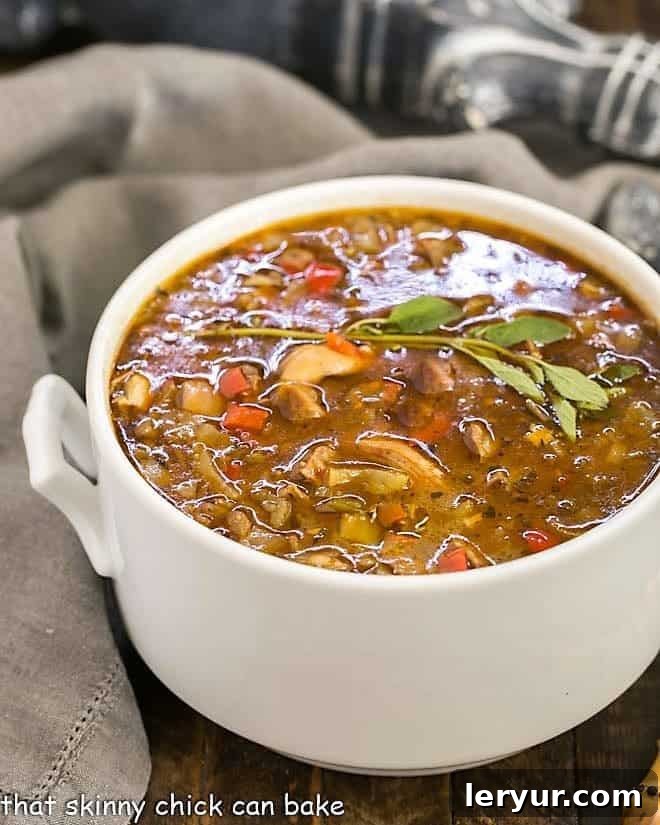
Essential Ingredients for Your Gumbo Mastery
Beyond the roux and the holy trinity, the selection of your main proteins and seasonings is crucial for a truly outstanding Sausage and Chicken Gumbo. Each ingredient plays a vital role in building the layered flavors that make this dish so iconic.
Andouille Sausage: The Spicy Kick
No Cajun gumbo is complete without authentic Andouille sausage. This smoked pork sausage, heavily seasoned with garlic, pepper, and other spices, provides a robust, smoky, and slightly spicy kick that is indispensable. Its fat renders beautifully into the gumbo, enriching the entire stew. Look for high-quality, authentic Andouille for the best flavor.
Chicken: Tender and Flavorful
For the chicken component, bone-in chicken breasts are preferred. Cooking the chicken with the bones adds an extra layer of flavor to the broth as it simmers. Once tender, the chicken is easily removed, shredded, and returned to the pot, ensuring every bite is moist and delicious.
Spices: The Cajun Flavor Profile
The characteristic warmth and complexity of Cajun gumbo come from a carefully balanced blend of spices. Cayenne pepper offers adjustable heat, while oregano, basil, and thyme provide an aromatic, herbaceous depth. Bay leaves infuse the stew with subtle, savory notes. Don’t be shy about seasoning generously and tasting as you go to achieve your preferred level of spice and savoriness.
Broth and Rice: Completing the Experience
A good quality chicken broth, whether homemade or canned, forms the liquid base of your gumbo. The richer the broth, the deeper the overall flavor of the stew. Finally, serving your gumbo over perfectly cooked white rice is non-negotiable. The rice absorbs the flavorful broth, providing a delightful textural contrast and making the meal wonderfully satisfying.
More Cajun, Creole, and Louisiana Inspired Dishes
My husband, Bill, and I have long admired the vibrant culinary culture of Louisiana. I remember vividly our early married days, captivated by Justin Wilson, “the Cajun Chef,” on PBS. His humor was infectious, and his cooking inspired us to explore the rich tapestry of Southern flavors. If you’ve been charmed by the allure of this Sausage and Chicken Gumbo, you’ll certainly want to explore these other fantastic Louisiana-style recipes. They are perfect for expanding your culinary repertoire and bringing more bayou brilliance to your table.
- Cajun Chicken Pasta from Spend with Pennies
- Chicken Jambalaya Soup from That Skinny Chick Can Bake
- Cajun Shrimp Boil Packets from Well Plated
- Bananas Foster from That Skinny Chick Can Bake
- Cajun 15 Bean Soup from Melissa’s Southern Kitchen
- Roasted Creole Edamame from That Skinny Chick Can Bake
- Crunchy Creole Roasted Chick Peas from Mama Loves Food
- Plus more Soup Recipes for every occasion!
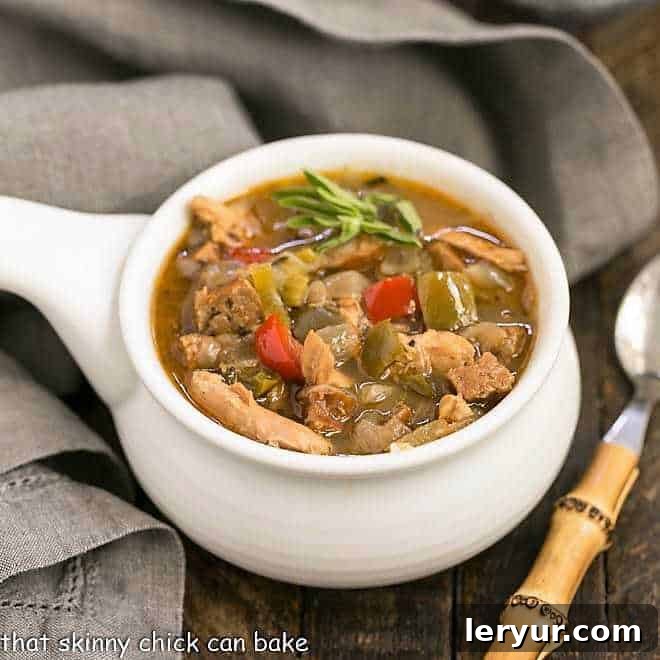
Sausage and Chicken Gumbo
30 minutes
2 hours
2 hours 30 minutes
10 servings
This Cajun chicken stew is a divine option for game day or dinner on a chilly evening! Adapted from Paul Prudhomme.
(Recipe rating: 4.9 stars based on 11 reviews)
Ingredients
- 3 tablespoons plus ¾ cup vegetable oil
- 2 ½ pounds bone-in chicken breasts
- Kosher salt and freshly ground black pepper
- 1 cup flour, divided
- 4 stalks celery, thinly sliced
- 4 large onions, diced
- 4 bell peppers, diced (I used 2 green and 2 red)
- 2 tablespoons minced garlic
- ½ to 1 teaspoon cayenne pepper (to taste)
- ¾ teaspoon oregano
- ¾ teaspoon basil
- ¾ teaspoon thyme
- 4 bay leaves
- 8 cups chicken broth, good quality canned or homemade
- 1 ½ pounds andouille sausage cut into slices, then quartered
- 1 tablespoon filé powder or gumbo seasoning with filé powder
- 4 cups cooked white rice
Instructions
- In a large pot, heat 3 tablespoons of the oil over high heat. Season the chicken generously with salt and pepper, lightly coat it with ¼ cup of the flour, and tap off excess. Brown the chicken on both sides, about 8 minutes total, ensuring a nice crust for flavor. Remove the chicken and set aside.
- Reduce the heat to medium-high. Add the celery, onions, and bell peppers (the holy trinity) to the pot and cook until soft, stirring occasionally, which usually takes about 8-10 minutes. This caramelizes the vegetables and builds a flavorful base. Remove the cooked vegetables and set aside.
- To make the essential roux, add the remaining ¾ cup oil to the same pot and let it warm up for a few minutes over medium heat. Slowly add the remaining ¾ cup of flour to the pan, whisking constantly to prevent lumps. Continue to cook, stirring without interruption, until the mixture transforms into a deep mahogany brown color, similar to chocolate. This process can take anywhere from 10 to 20 minutes, or even longer. Be diligent in scraping the bottom and sides to prevent scorching. Remember: if your roux burns, it will impart a bitter taste, so it’s crucial to discard it and begin again.
- Once the roux has reached its rich brown color, carefully add the cooked vegetables back into the pot. Incorporate the minced garlic, cayenne pepper, oregano, basil, thyme, and bay leaves. Stir all ingredients well to combine, and continue to cook for an additional 3 minutes, allowing the spices to bloom and meld with the roux and vegetables. Season with salt and pepper to taste.
- Gradually add the chicken broth to the pot, stirring constantly to ensure it blends smoothly with the roux and prevents clumping. Bring the mixture to a simmer. Add the browned chicken pieces and the sliced, quartered Andouille sausage to the pot. Continue to simmer, uncovered, for about 1 to 1 ½ hours, or until the chicken is fork-tender and practically falls off the bone. During this simmering period, periodically skim off any excess foam or fat that rises to the surface. Once the chicken is cooked, carefully remove the chicken and bones from the pot. Discard the bones and shred the chicken meat into bite-sized pieces before returning it to the gumbo.
- Bring the stew back to a gentle boil. Whisk in the filé powder gradually to prevent any clumping, stirring until it is completely dissolved and the gumbo begins to thicken. Taste the gumbo for seasoning and adjust with additional salt and pepper as necessary, ensuring the flavors are perfectly balanced.
- Serve your rich and flavorful Sausage and Chicken Gumbo hot, ladled generously over mounds of cooked white rice. For an extra touch of Louisiana authenticity, consider garnishing with fresh green onions or a sprinkle of chopped parsley.
Notes
The Andouille sausage will render a considerable amount of grease into the stew. If you prepare this gumbo a day in advance (which often enhances the flavors!), you can easily remove the chilled, solidified fat from the surface before reheating. This also helps in achieving a lighter, cleaner finish to your gumbo.
Nutrition Information:
Yield:
10
Serving Size:
1
Amount Per Serving:
Calories: 1013Total Fat: 73gSaturated Fat: 11gTrans Fat: 1gUnsaturated Fat: 56gCholesterol: 143mgSodium: 1476mgCarbohydrates: 39gFiber: 2gSugar: 6gProtein: 49g
HOW MUCH DID YOU LOVE THIS RECIPE?
Please leave a comment on the blog or share a photo on Pinterest
Why You’ll Adore This Sausage and Chicken Gumbo
This Sausage and Chicken Gumbo isn’t just a recipe; it’s an experience. It’s the culmination of rich culinary history, expert technique, and a genuine love for robust, comforting food. From the deep, nutty flavors of the dark roux to the smoky spice of the Andouille sausage and the tender succulence of the chicken, every spoonful tells a story of Louisiana’s vibrant culture.
It’s a dish that demands a little time and patience, particularly when perfecting the roux, but the reward is immeasurable. The complex layers of flavor only deepen over time, making it an excellent choice for meal prep or entertaining. Whether you’re new to Cajun cooking or a seasoned enthusiast, this gumbo promises to deliver an authentic, hearty, and utterly delicious taste of the South.
So, gather your ingredients, set aside an afternoon, and embark on a culinary adventure that will warm you from the inside out. Your taste buds will thank you for this authentic journey into the heart of Louisiana’s most famous stew.