
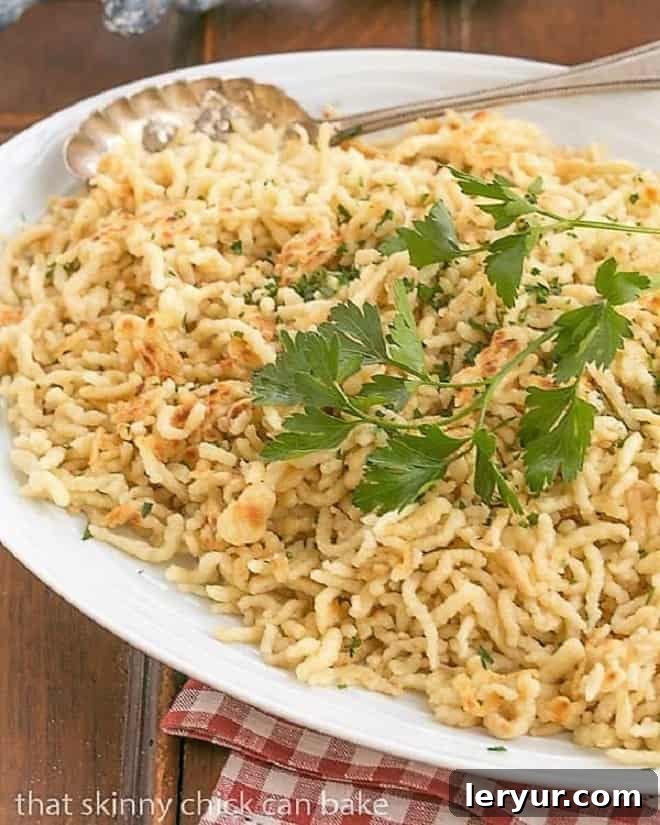
Spaetzle is a cherished and surprisingly easy-to-make German egg noodle that offers a delightful culinary journey. It serves as a delicious and comforting alternative to common side dishes like potatoes or rice, bringing a taste of authentic German tradition directly to your kitchen. Learning how to make spaetzle from scratch is a breeze, promising a rewarding experience for home cooks of all skill levels.
This comprehensive guide and straightforward Spaetzle Recipe will empower you to create these tender, chewy noodles using just four simple, readily available ingredients. Far more than just a side, homemade Spaetzle is a versatile addition that can elevate almost any meal, from rich, saucy main courses to simple, butter-fried delights, making it a must-try for anyone seeking comforting, flavorful cuisine.
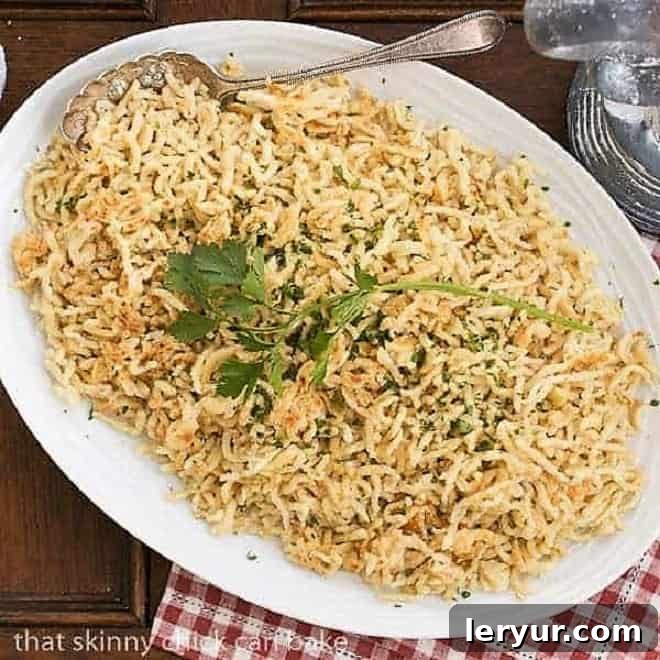
Why Homemade Spaetzle Deserves a Spot on Your Table
There’s an undeniable joy and a distinct culinary advantage that comes with preparing a dish from scratch, and Spaetzle exemplifies this perfectly. Beyond the sheer pleasure of cooking, here are several compelling reasons why these traditional German egg noodles should become a staple in your recipe repertoire:
- Unmatched Freshness and Superior Flavor: The difference between store-bought and homemade Spaetzle is truly remarkable. Freshly made noodles boast a vibrant, authentic taste and a perfectly tender-chewy texture that commercial varieties simply cannot replicate. By making them yourself, you control the quality of each ingredient, resulting in a superior product that will delight your family and impress your guests. The subtle eggy richness and comforting bite are profoundly enhanced when served fresh from your kitchen.
- Crafted from Simple, Accessible Ingredients: You won’t need to embark on a quest for obscure or expensive items to create authentic Spaetzle. The recipe relies on just four fundamental components: flour, eggs, water, and salt. These are common pantry staples that most home cooks already have on hand, making Spaetzle an incredibly accessible, budget-friendly, and spontaneous dish to prepare whenever the craving strikes.
- Achievable Without Special Equipment (Initially!): While an authentic Spaetzle press can certainly streamline the process and help create uniform noodles, it is by no means a necessity for making delicious homemade Spaetzle. This guide will explore several effective alternative methods using common kitchen tools, proving that anyone can master this traditional German delicacy. However, once you experience the sheer delight and ease of making these noodles, you might find yourself eager to invest in a dedicated press to make future batches even quicker and more enjoyable.
- A Versatile Culinary Canvas: Spaetzle’s mild yet satisfying flavor profile makes it an incredibly versatile side dish. It complements a wide array of cuisines, from traditional German hearty fare to modern, creative dishes. Its ability to absorb sauces and flavors makes it an excellent foundation for many meals.
Tried and True Spätzle Noodles: A Journey into German Culinary Tradition
My first true, hands-on encounter with the delightful art of Spaetzle making was an unforgettable experience, thanks to the generosity and expertise of my wonderful neighbors, Steve and Shelli. With countless batches perfected over the years, they had truly honed their craft, transforming a simple recipe into an elegant and rhythmic culinary process. When they extended an invitation for a personal demonstration, I eagerly accepted, knowing I was about to learn from seasoned masters of this cherished German tradition.
Steve proudly presented his grandmother’s authentic Spaetzle press – a treasured tool steeped in generations of German culinary heritage. Watching him and Shelli work in tandem was akin to observing a perfectly choreographed dance. They had established a seamless tag-team system for every stage: skillfully pressing the dough, expertly boiling the fresh noodles to perfection, and then carefully rinsing them. Each movement was precise, yet fluid, reflecting years of practice and a profound respect for the dish they were creating.
When my turn came to transform the silky, elastic dough into delicate noodles, I was genuinely struck by how incredibly straightforward the core process could be. Under their patient and encouraging guidance, I quickly grasped the rhythm of pushing the dough through the press, marveling as the small, charming “sparrows” (as these noodles are affectionately called) descended into the bubbling, salted water. The brief boil, followed by an immediate and refreshing cold rinse, proved to be the critical step in achieving that perfect, coveted chewy-tender texture. My friend, Susan, and I spent a truly delightful afternoon mastering this German staple, creating batch after batch of perfectly formed and utterly delicious noodles. I extend my deepest gratitude to Steve and Shelli for generously sharing their expertise, their treasured family press, and for providing such a fun, educational, and truly memorable culinary experience!
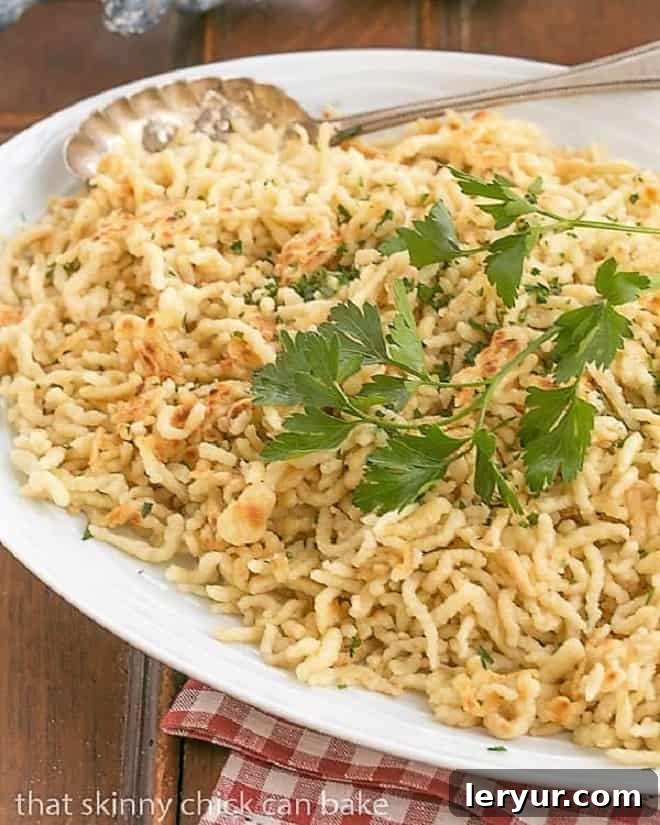
Understanding Spaetzle: What Makes These German Noodles Special?
More than just a delicious side dish, Spaetzle holds a significant and warm place within German culinary culture. To truly appreciate its charm and versatility, it’s beneficial to delve a little deeper into its rich origins, distinctive characteristics, and the simple elements that make it so beloved.
Origins and Regionality: A Culinary Heritage
Spaetzle, often spelled “Spätzle” with the German umlaut, predominantly originates from the southwestern regions of Germany, particularly the historical Swabia region (encompassing parts of modern-day Baden-Württemberg and Bavaria). Here, it’s often revered as a regional specialty, if not a national dish. Its roots are humble, emerging as a staple peasant food centuries ago. It was a clever, resourceful way to transform basic, readily available ingredients into a filling, versatile, and satisfying component of daily meals. Over generations, its popularity spread, evolving from a simple subsistence food to a widely adored comfort dish enjoyed across Germany and increasingly around the world.
The Distinctive Texture and Flavor Profile
What truly sets Spaetzle apart from other types of pasta or noodle varieties is its unique and wonderfully satisfying texture. It is famously and distinctly chewy, yet simultaneously tender and soft, offering a delightful mouthfeel that perfectly absorbs and cradles sauces and flavors. The generous inclusion of eggs in the dough plays a crucial role, contributing to its rich, slightly savory flavor profile and its characteristic golden hue. Unlike many thin, delicate pastas, Spaetzle possesses a hearty substance and a robust structure, making it an ideal accompaniment to substantial, flavorful main dishes.
The Simple Ingredients Behind the Magic
The culinary magic of Spaetzle lies paradoxically in the profound simplicity of its components. The core ingredients are few, but their quality and proper combination are key to success:
- Flour: Typically, all-purpose wheat flour is the foundational ingredient, providing the essential structure and body for the noodles. Some regional variations might use a mix of flours for different textures.
- Eggs: The star ingredient, eggs are abundant in Spaetzle dough. They impart its distinctive richness, contribute to its beautiful golden color, and act as a powerful binding agent, significantly influencing its unique chewy and elastic texture.
- Water or Milk: These liquids are incorporated to bring the dough to the ideal, pourable consistency. While water is common, some recipes or preferences call for milk, which can add a touch more tenderness and a slightly richer flavor to the finished noodles. Often, a combination of both is used.
- Salt: An indispensable flavor enhancer, salt is crucial not only within the dough itself but also generously added to the boiling water, seasoning the noodles from the inside out and boosting their overall taste.
This minimalist approach means that the inherent quality and freshness of each ingredient truly shine through in the final dish, making homemade versions exceptionally superior.
How to Serve Spaetzle: Endless Culinary Possibilities
One of Spaetzle’s most celebrated attributes is its incredible versatility in the kitchen. It possesses the remarkable ability to effortlessly transform from a humble side dish into a central component of a hearty, satisfying meal. Here are some delectable ways to enjoy and serve your freshly made homemade German egg noodles:
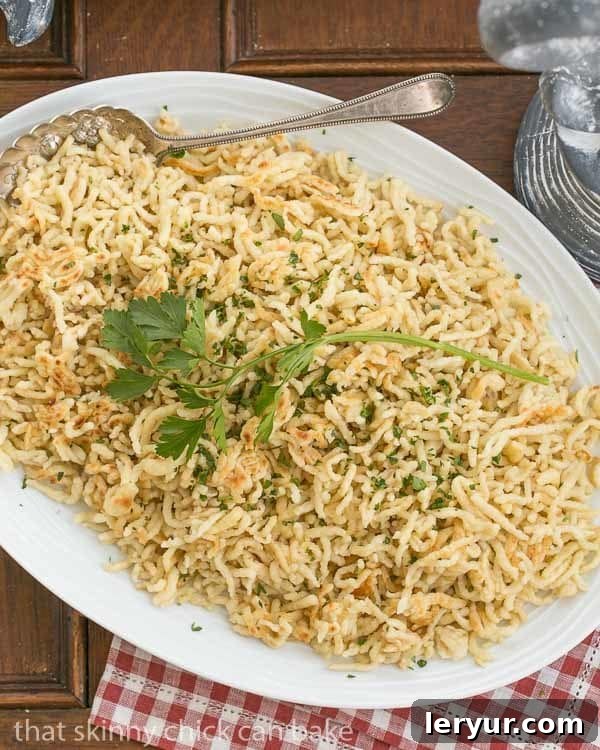
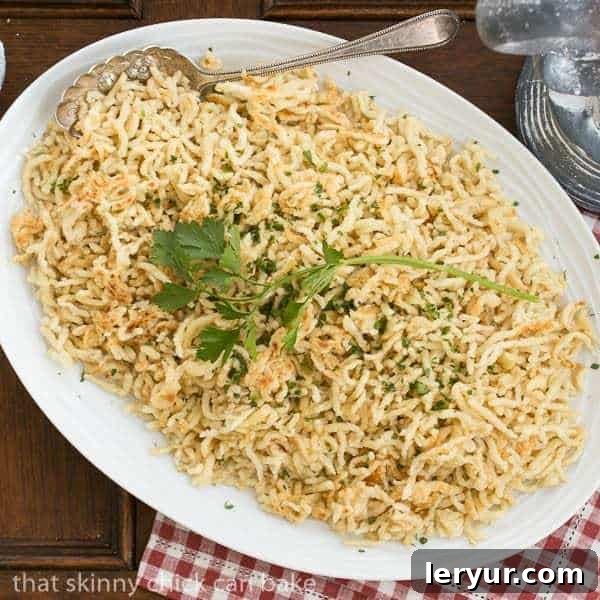
- The Classic Butter-Fried Delight: Perhaps the most common and undeniably one of the most delicious ways to savor Spaetzle is simply by frying it in butter. Begin by melting a generous knob of unsalted butter in a large skillet over medium heat. For an extra layer of flavor, allow the butter to brown slightly until it develops a nutty aroma and a golden hue (this is known as “beurre noisette”). Add your cooked Spaetzle to the skillet and fry, stirring occasionally, until the noodles are beautifully golden brown and delightfully crispy on the edges, while remaining wonderfully tender within. This method creates an irresistible duality of textures and imparts a rich, savory depth of flavor. Serve it proudly as an exquisite alternative to rice, potatoes, couscous, or any standard pasta side.
- The Ultimate Base for Hearty, Saucy Dishes: Spaetzle’s robust texture and impressive ability to absorb and hold onto liquids make it an ideal foundation for rich, flavorful main courses. It truly excels when paired with traditional German comfort foods such as succulent braised short ribs, hearty beef or chicken stews, aromatic goulash, or alongside classic dishes like Wiener Schnitzel, Jägerschnitzel, or slow-cooked Sauerbraten. The noodles act like perfect little sponges, capturing every drop of savory pan juices or luscious gravy, ensuring that every single bite is packed with an explosion of flavor.
- A Versatile Noodle Substitute: Consider Spaetzle as your go-to, character-rich alternative for any dish that traditionally calls for egg noodles or even various other forms of pasta. Its satisfying chewiness and unique shape make it a wonderful and intriguing swap in creamy chicken casseroles, comforting pasta bakes, or even a unique, German-inspired take on mac and cheese. Experiment with it in your favorite recipes to add a new dimension!
- Sweet Pairings for a Delightful Contrast: While most often enjoyed in savory contexts, Spaetzle can also beautifully complement sweet notes, creating a delightful contrast. A traditional German pairing involves serving it alongside Homemade Applesauce, balancing the richness of the noodles with a fruity tartness. Other fruit compotes, such as plum or cherry, or even lightly stewed fruits, can also create a surprisingly delicious and comforting combination.
- Käsespätzle: Germany’s Answer to Mac and Cheese: For an absolute crowd-pleaser and the ultimate comfort food experience, transform your homemade Spaetzle into the iconic Käsespätzle. This hearty dish is essentially Germany’s version of macaroni and cheese. Layer your freshly cooked Spaetzle with generous amounts of grated melting cheese (traditional choices include Emmental, Gruyère, or Bergkäse), and copious quantities of deeply caramelized onions. Bake until the cheese is wonderfully bubbly and golden, often topped with an extra sprinkle of crispy fried onions for added texture. It is incredibly satisfying and a true celebration of flavor.
Mastering Homemade Spaetzle: Expert Tips & Tricks for Perfection
Creating perfect homemade Spaetzle is a truly rewarding culinary endeavor, and incorporating a few expert tips can significantly enhance your results, helping you achieve that ideal texture, shape, and flavor:
- Achieve the Optimal Dough Consistency: The consistency of your Spaetzle dough is perhaps the most crucial factor. It should be thick enough to maintain its shape as it passes through a press or colander, yet still wonderfully sticky and elastic. When lifted with a spoon, it should slowly sag and drop, rather than run off quickly or cling stubbornly. If your dough appears too runny, gradually incorporate a little more flour, a tablespoon at a time. Conversely, if it’s too stiff, add a touch more water or milk, a teaspoon at a time, until the desired consistency is reached. Remember to beat the batter vigorously and thoroughly until it’s smooth, elastic, and visibly shows small air bubbles, which indicates proper gluten development.
- Prevent Sticking to Your Spaetzle Maker: If you’re utilizing a dedicated Spaetzle press, board, or ricer, a simple trick can prevent frustrating sticking. Occasionally spritz the tool with a little cold water or a light mist of non-stick cooking spray (such as Pam) between batches of dough. This lubrication ensures a smoother, more consistent formation of your noodles as they drop into the boiling water.
- Cook in Small Batches for Optimal Results: To prevent your delicious noodles from clumping together and to maintain a consistent boiling water temperature, it is absolutely essential to cook your Spaetzle in small to medium batches. Overcrowding the pot will significantly lower the water temperature, leading to undercooked, gummy, and sticky noodles. The noodles cook very quickly; once they float to the surface of the water (typically within 1-2 minutes), they are perfectly cooked and ready to be removed.
- The Irresistible Magic of Browned Butter: While simply frying your cooked Spaetzle in melted butter is undeniably delicious, elevating it with browned butter (also known as “beurre noisette”) takes the flavor profile to an entirely new dimension. The rich, nutty notes that develop as butter browns impart an exquisite depth of savory flavor and contribute to delightfully crispy edges, while the centers remain wonderfully tender and chewy. This duality of textures and flavors is truly a culinary treat.
- Make Ahead and Store with Ease: Spaetzle is an excellent candidate for meal preparation, allowing you to enjoy homemade goodness even on busy days! After boiling and rinsing the noodles in cold water, ensure they are thoroughly drained. Once cooled, transfer them to an airtight container or a robust Ziploc bag and store them in the refrigerator for up to 2-3 days. To reheat, simply toss them in a hot skillet with a little butter until they are warmed through and lightly re-browned, or add them directly to your simmering saucy dish.
- Generously Salt Your Boiling Water: Just as with any good pasta, Spaetzle benefits immensely from being cooked in generously salted boiling water. This crucial step seasons the noodles from the inside out, significantly enhancing their overall flavor and ensuring they are delicious even before any sauce or butter is added.
Frequently Asked Questions About Spaetzle
The pronunciation of Spaetzle can vary slightly depending on the specific German dialect or regional accent, but generally, there are three commonly accepted ways to articulate this delightful word: SHPEHT-sluh, SHPEHT-sehl, or SHPEHT-slee. The “ä” with the umlaut is a crucial element in German pronunciation, often producing a sound similar to the “e” in “bed” or “eh.” The spelling also exhibits some variation in English, sometimes appearing as “Spaetzel” without the umlaut, yet always referring to the same delicious and unique German egg noodle.
The charming German word “Spaetzle” (or “Spätzle”) translates quite literally to “Little Sparrow.” The precise origin and reasoning behind this whimsical name are not entirely clear, but culinary historians and enthusiasts have proposed a few endearing theories. One popular notion suggests that the small, often somewhat irregularly shaped noodles, as they are pressed or scraped into the bubbling hot water, might have visually resembled tiny birds or sparrows taking flight. Another theory posits that the traditional method of holding the soft dough in two hands, or perhaps scooping it with two spoons during its creation, might have evoked the image of cradling a small bird. Regardless of its exact etymological roots, the name undoubtedly adds a touch of rustic charm and poetic flair to this humble yet profoundly delicious dish, connecting it to nature and tradition.
Fear not, the absence of a dedicated Spaetzle maker should absolutely not deter you from experiencing the joy of homemade Spaetzle! While I personally believe that investing in a proper Spaetzle press (many excellent options are available, often linked in recipe cards) is truly worth it for the ease and uniformity it provides, there are several highly effective and traditional alternatives using common kitchen tools:
- Colander or Large-Holed Slotted Spoon: This is a very popular and straightforward method. Simply position a colander with relatively large holes or a robust large slotted spoon directly over your pot of boiling, salted water. Spoon small portions of the Spaetzle dough into the colander or spoon, then use a sturdy spatula or a dough scraper to firmly push the dough through the holes, allowing the small pieces to drop directly into the bubbling water below.
- Potato Ricer: A potato ricer is another excellent and highly effective tool for producing delicate, beautifully uniform Spaetzle. Load the prepared dough into the ricer, then press it directly into the boiling water. The fine perforations of the ricer create perfectly consistent and slender noodles.
- Cutting Board and Knife (The Authentic Traditional Method): For those who wish to embrace the truly authentic and oldest method, a flat cutting board and a simple knife are all you need. Place a small amount of Spaetzle dough onto one end of a wet cutting board. Holding the board at a slight angle over the boiling water, use the back of a knife or a dough scraper to rapidly and skillfully scrape thin strips or small, irregular lumps of dough directly into the hot water. This traditional method yields more rustic, delightfully varied shapes, which many connoisseurs consider to be the most authentic and charming.
- Coarse Grater: Similar in principle to the colander method, you can utilize a coarse grater held securely over the boiling water. Carefully push the dough through the larger holes of the grater to form your noodles.
Feel free to experiment with these accessible methods to discover which one works best for your personal comfort, kitchen setup, and desired noodle texture!
Explore More Delicious Recipes and Noodle Creations
If you’ve thoroughly enjoyed the process of making and the exquisite taste of this authentic German Spaetzle, we encourage you to explore other delightful noodle and pasta creations from our culinary collection and trusted sources:
- Chicken Noodle Soup with Homemade Noodles from The Food Charlatan
- Spaghetti Carbonara
- Ricotta Gnocchi
- Straw and Hay Pasta
- Discover even more incredible Homemade Pasta Recipes
Stay connected with us for a continuous flow of culinary inspiration and delicious recipes! You can find us and our latest creations on Instagram, Facebook, and Pinterest. We absolutely adore seeing your culinary adventures, so please don’t forget to tag us when you try one of our recipes! And if you’re utterly thrilled with the delicious results, we would be incredibly grateful if you could take a moment to give it a 5-star rating in the recipe card below. Your valuable feedback truly helps us share more mouth-watering content with our community!
Authentic Homemade Spaetzle (German Egg Noodles)
20 minutes
5 minutes
25 minutes
6 servings
Learn how to make perfect, tender-chewy German Spaetzle from scratch with this easy-to-follow recipe. Using just four simple ingredients, you’ll create a versatile and delicious side dish that’s far superior to anything store-bought. Inspired by traditional family methods shared by Steve and Shelli Moss, this recipe guides you through every step to achieve authentic results. Serve it golden-fried in butter or as a comforting base for hearty stews.
Ingredients
- 3 cups all-purpose flour
- 1 cup water, or a mix of water and milk (plus more to thin if needed)
- 3 large eggs
- 1 1/2 teaspoons fine sea salt
- Butter, for frying the cooked Spaetzle (optional, but highly recommended for flavor)
Instructions
- In a large mixing bowl, combine the flour, water (or water/milk mix), eggs, and salt. Beat vigorously with a strong wooden spoon or a stand mixer fitted with a dough hook for at least 5-7 minutes. Continue until the batter is smooth, elastic, and shows small air bubbles. The dough should be thick, sticky, and slowly fall from the spoon, not run off quickly.
- Bring a large pot (approximately 4 quarts or more) of generously salted water to a rolling boil. While the water heats, prepare your Spaetzle press or chosen alternative (colander, ricer, or cutting board) by rinsing it with cold water to help prevent the dough from sticking.
- Working in small to medium batches to avoid overcrowding the pot, carefully press or scrape the batter slowly into the boiling salted water. For shorter noodles, hold your press or tool 2-3 inches above the water. For longer noodles, hold it 4-5 inches above the water.
- Cook the Spaetzle for approximately 1-2 minutes. As soon as the noodles rise to the surface of the water, they are fully cooked. Promptly scoop them out with a large slotted spoon or a spider strainer and immediately transfer them to a bowl of cold water (or rinse under cold running water) to halt the cooking process and prevent them from sticking together.
- Thoroughly drain off any excess cold water from the noodles. At this stage, they are ready to be served immediately, or you can prepare them for storage.
- Repeat the entire process of pressing, boiling, rinsing, and draining with the remaining batter until all of your Spaetzle dough is used. If you are not serving the noodles immediately, allow them to cool completely. Then, store them in an airtight container or a reliable Ziploc bag in the refrigerator for up to 2-3 days.
- When you are ready to serve, melt a generous amount of butter in a large skillet over medium heat. For enhanced flavor, allow the butter to brown slightly until it develops a fragrant, nutty aroma (this is known as beurre noisette). Add the cooked Spaetzle to the skillet and fry, stirring gently, until they are golden brown and thoroughly heated through. Serve hot, optionally garnished with fresh parsley or chives.
Nutrition Information (Per Serving):
Yield:
6
Serving Size:
1 (approx. 1 cup)
Approximate Amount Per Serving (without additional butter for frying):
Calories: 376
Total Fat: 9g
Saturated Fat: 3g
Trans Fat: 0g
Unsaturated Fat: 5g
Cholesterol: 117mg
Sodium: 664mg
Carbohydrates: 61g
Fiber: 3g
Sugar: 0g
Protein: 12g
HOW MUCH DID YOU LOVE THIS RECIPE?
Please leave a comment on the blog or share a photo on Pinterest