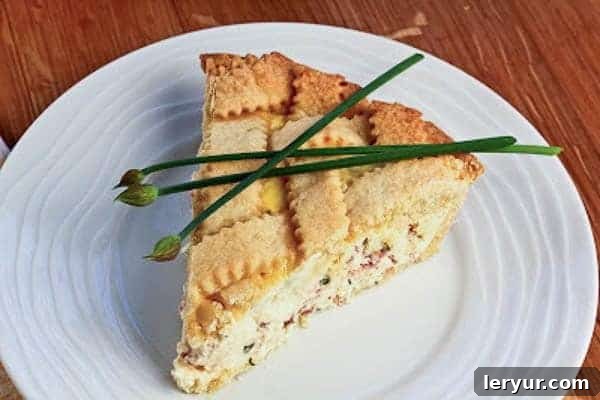
Italian Pizza Rustica: A Timeless Savory Pie for Easter and Beyond
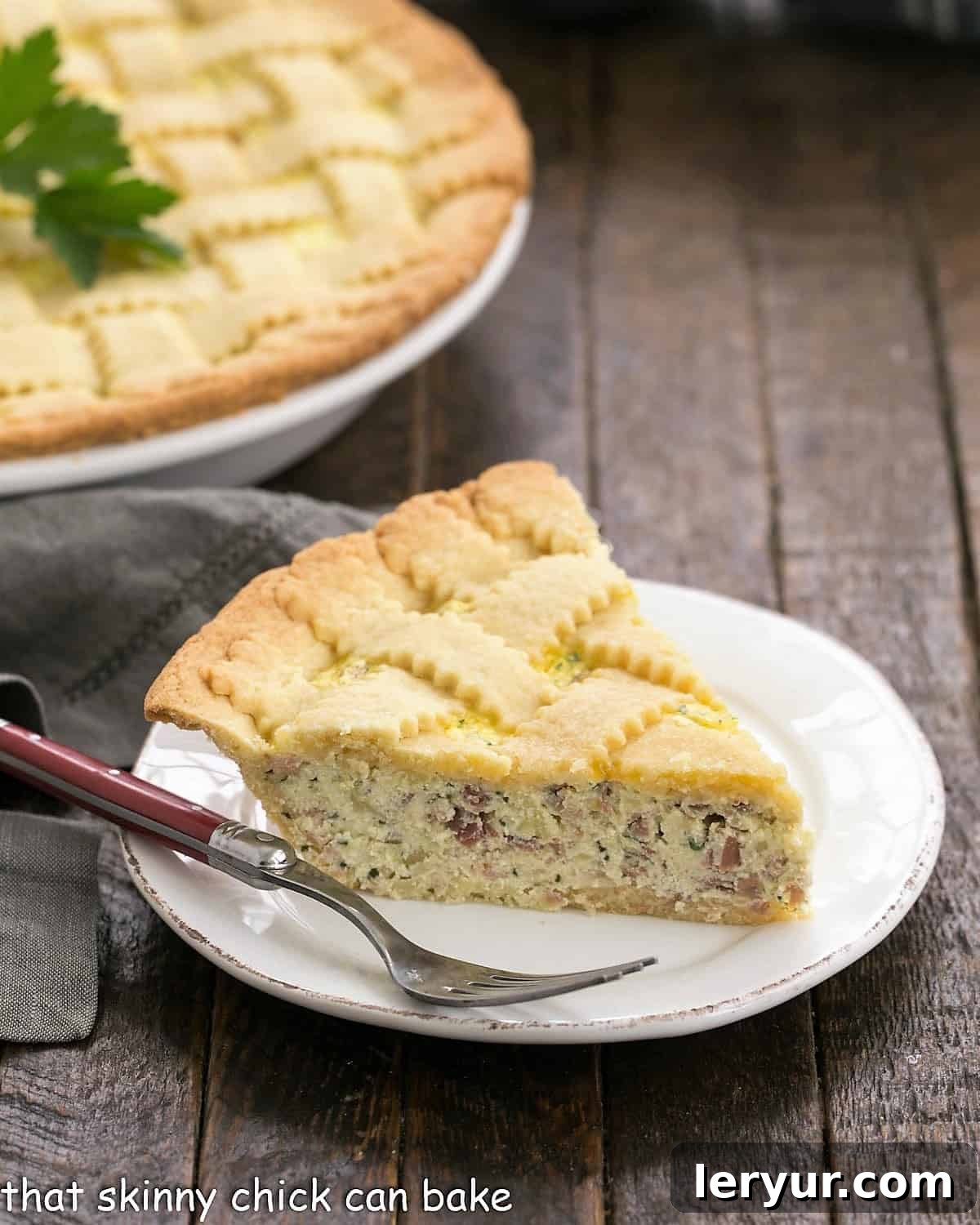
Experience a true taste of Italy with this exquisite Italian Pizza Rustica, a savory pie featuring a slightly sweet, tender pastry crust generously stuffed with a rich and flavorful filling of creamy ricotta, farm-fresh eggs, melting mozzarella, and savory prosciutto.
Also known as Rustico Pizza or the revered Italian Easter Pie, this culinary masterpiece is lovingly encased in a delicate, buttery pastry. From the very first bite, this out-of-the-ordinary pie promises an unforgettable gastronomic journey, making a delicious statement that captivates your senses.
Why You Must Indulge in This Classic Italian Easter Pie
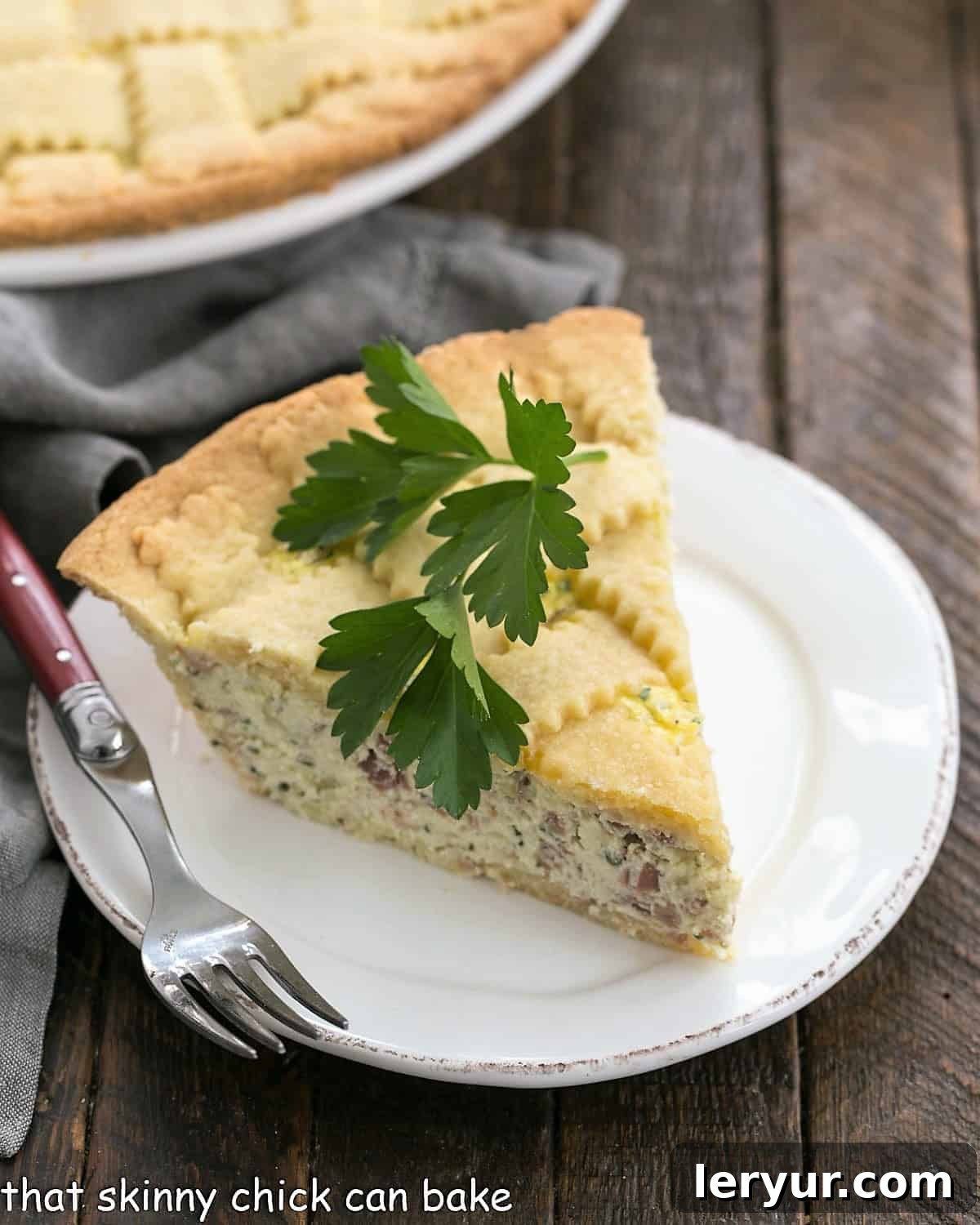
There are countless reasons why this particular Italian Pizza Rustica recipe stands out and deserves a special place in your kitchen. It’s more than just a dish; it’s an experience, a tradition, and a testament to the joy of homemade goodness.
-
A Masterpiece from a Baking Guru
This authentic Italian Pizza Rustica recipe comes directly from the renowned baking expert, Nick Malgieri, a true guru in the culinary world. Over the years, countless home bakers and professionals have relied on his unparalleled insights to perfect their craft, from delicate apple pies to rich cheesecakes. Following his meticulous guidance ensures a result that is nothing short of spectacular, promising a savory pie that will impress even the most discerning palates. Malgieri’s deep understanding of ingredients and techniques shines through, making this a foolproof recipe for a truly special occasion. His methods prioritize both flavor and texture, guaranteeing a perfect balance in every slice.
-
More Than Just a Meal: A Culinary Tradition
Hailing from the vibrant culinary traditions of Naples, Italy, this classic Italian Easter Pie is far more than mere sustenance; it’s a cherished celebration in food form. While traditionally prepared and served as a substantial appetizer during Easter festivities, its rich flavors and hearty nature make it incredibly versatile. Many families, including ours, find it equally delightful served for breakfast, brunch, a light lunch, or even an elegant supper. Its unique ability to be enjoyed warm, at room temperature, or even cold makes it an ideal dish for large gatherings, holiday buffets, picnics, or simply as a delicious, make-ahead meal that gracefully transcends specific meal times. It’s a dish that embodies the spirit of gathering and sharing joy.
-
The Irresistible Harmony of Crust and Filling
Prepare for an unforgettable taste experience, starting with the tender, buttery crust that forms the perfect, golden embrace for the luxuriant filling. The addition of eggs to the pastry dough imparts a delicate richness and makes it remarkably pliable and easy to roll, ensuring a beautiful presentation with minimal effort. But the true magic undeniably lies within: a harmonious, creamy blend of fresh ricotta, savory, thinly sliced prosciutto, and melt-in-your-mouth mozzarella, all seasoned to perfection with aromatic spices. Each bite delivers a symphony of textures and flavors – from the crisp pastry to the soft, cheesy interior, complemented by the salty notes of cured meat. It’s a testament to the simplicity and richness of authentic Italian ingredients, culminating in a dish that genuinely makes a statement from the very first taste.
Expert Tips for Crafting Your Perfect Pizza Rustica
Achieving a truly exceptional Italian Pizza Rustica is simpler than you might think, especially with a few key insights from seasoned bakers. These tips will help you create a pie that’s both delicious and visually stunning.
-
Prepare Ahead for Ease
One of the best ways to simplify your baking process is to prepare the pastry crust in advance. The dough can be made a day or two before you plan to bake. Simply wrap it tightly in plastic film and store it in the refrigerator. This allows the gluten to relax, making the dough even more tender and easier to roll out when you’re ready to assemble your pie. Remember to bring the dough to room temperature for about 30 minutes before working with it to ensure optimal pliability.
-
Sweetness Level: Tailor to Your Taste
The original recipe suggested ⅓ cup of sugar for the pastry, but for a savory pie like Pizza Rustica, many prefer a slightly less sweet crust. We’ve found that reducing the sugar to ¼ cup provides the perfect balance, offering just a hint of sweetness that complements the rich, savory filling without overpowering it. Feel free to experiment within this range to find your ideal sweetness, as both amounts yield excellent results for this traditional Italian Easter Pie.
-
Presentation Matters: Crusting Techniques
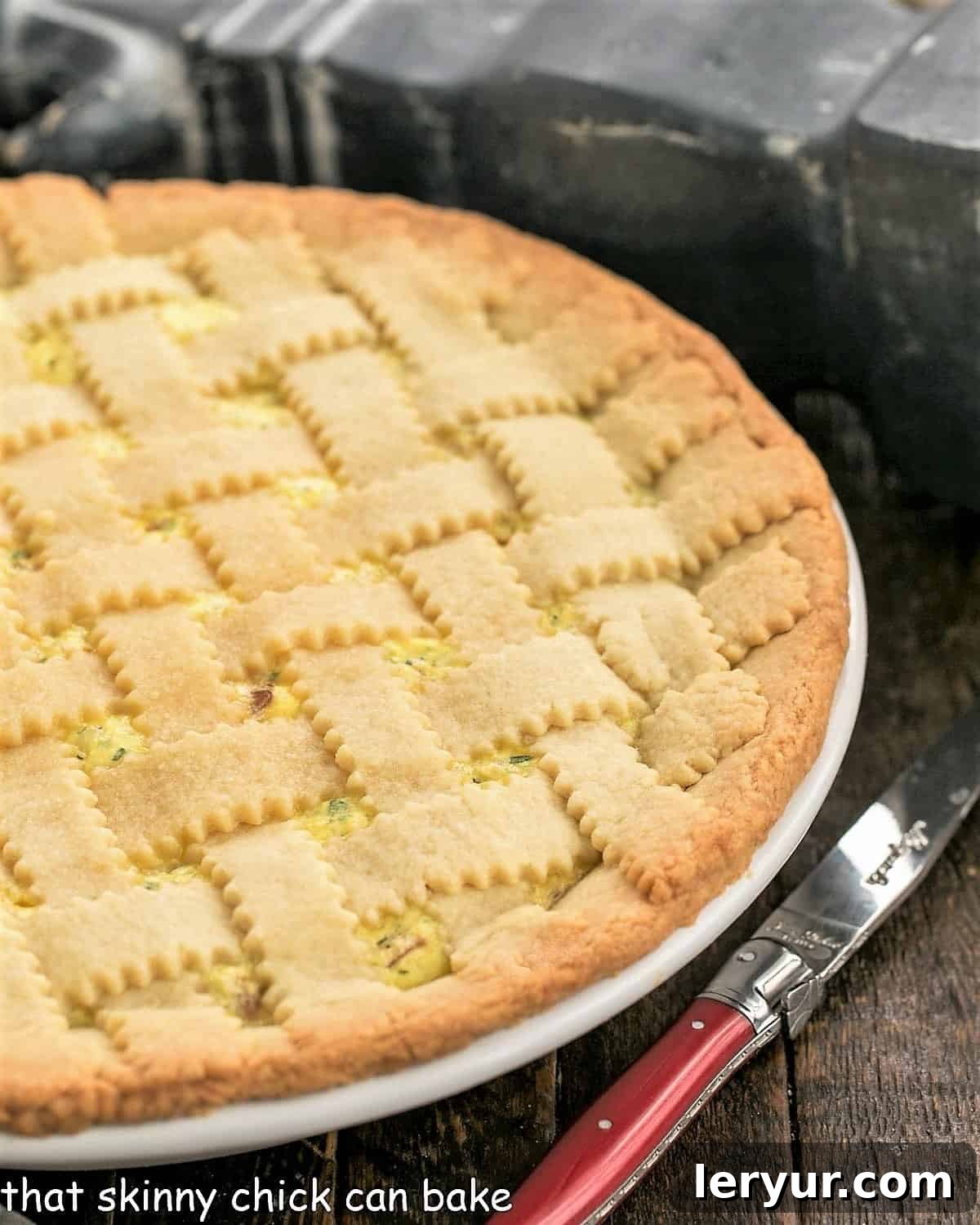
While a simple straight-edge finish for your pie crust is elegant and pretty, consider using a decorative crimp pastry cutter for an extra festive touch. This small detail can elevate the visual appeal of your Easter Pie, making it even more special for holiday celebrations. The intricate lattice top itself is a showstopper, but a beautifully crimped edge provides a polished frame for your culinary artwork. Don’t shy away from experimenting with different pastry cutter designs to add your personal flair.
-
Customize Your Savory Filling
The beauty of a traditional Pizza Rustica lies in its adaptability. While our recipe features prosciutto, the authentic spirit of this Italian savory pie encourages customization. Feel free to incorporate other favorite Italian cured meats such as savory sausage, spicy pepperoni, or rich soppressata. You can use a single type of meat or create a delightful medley. This flexibility allows you to tailor the filling to your family’s preferences, making each rendition uniquely yours while honoring its rich Italian heritage.
-
Cheese Choices: Traditional and Alternative
When it comes to cheese, the choices enhance the regional character of your Pizza Rustica. While classic Pecorino Romano cheese offers a distinct, sharp, and salty flavor that is truly traditional, grated Parmesan cheese can be used as a delicious and more readily available alternative. For the melt-in-the-mouth component, fresh mozzarella is excellent, but provolone cheese can also be a fantastic substitute, lending a slightly sharper, more robust flavor to the creamy ricotta base. Don’t hesitate to mix and match or use what you love most.
-
Achieving the Ideal Bake
Knowing when your Pizza Rustica is perfectly baked is crucial for optimal texture and flavor. The pie should bake until the crust is golden brown and the filling appears beautifully puffed and set in the center. A significant advantage of crafting a lattice crust is that it provides a visual window into the filling, allowing you to easily monitor its progress. If the crust begins to brown too quickly, you can loosely cover the edges with foil to prevent over-browning while the center continues to cook to perfection.
How to Make a Traditional Italian Pizza Rustica
Crafting this delightful Italian Easter Pie is a rewarding experience, combining simple techniques with incredible flavors. Follow these steps to bring this savory masterpiece to life in your kitchen.
-
Crafting the Flaky Pastry Dough
Begin by preparing your pastry dough in a food processor. This method ensures a quick, uniform mix and a tender crust. Once processed, lightly knead the dough to bring it together, then divide it, wrap it securely in plastic, and allow it to rest. This resting period is crucial as it allows the gluten to relax, making the dough much easier to roll out evenly and preventing it from shrinking during baking.
-
Preparing the Rich, Savory Filling
While your dough rests, turn your attention to the heart of the pie: the filling. In a medium bowl, combine all the filling ingredients, including the creamy ricotta, eggs, grated cheeses, and shredded prosciutto. Use a rubber spatula to gently mix everything together until it’s smoothly incorporated and well blended. Ensure no pockets of unmixed ingredients remain, as a uniform filling guarantees consistent flavor in every bite.
-
Assembling Your Easter Pie
Before assembly, prepare your pie plate by buttering it thoroughly to prevent sticking and aid in browning. Next, roll out the larger portion of your rested dough to create the bottom crust. Carefully fit this rolled dough into your prepared pie plate, pressing it gently against the bottom and up the sides. Don’t worry if it tears; simply press the dough back together. Trim any excess dough from the edges using the dull side of a knife for a neat finish. Then, spoon your rich, savory filling into the pie shell, spreading it evenly to create a level top.
-
Weaving the Iconic Lattice Top
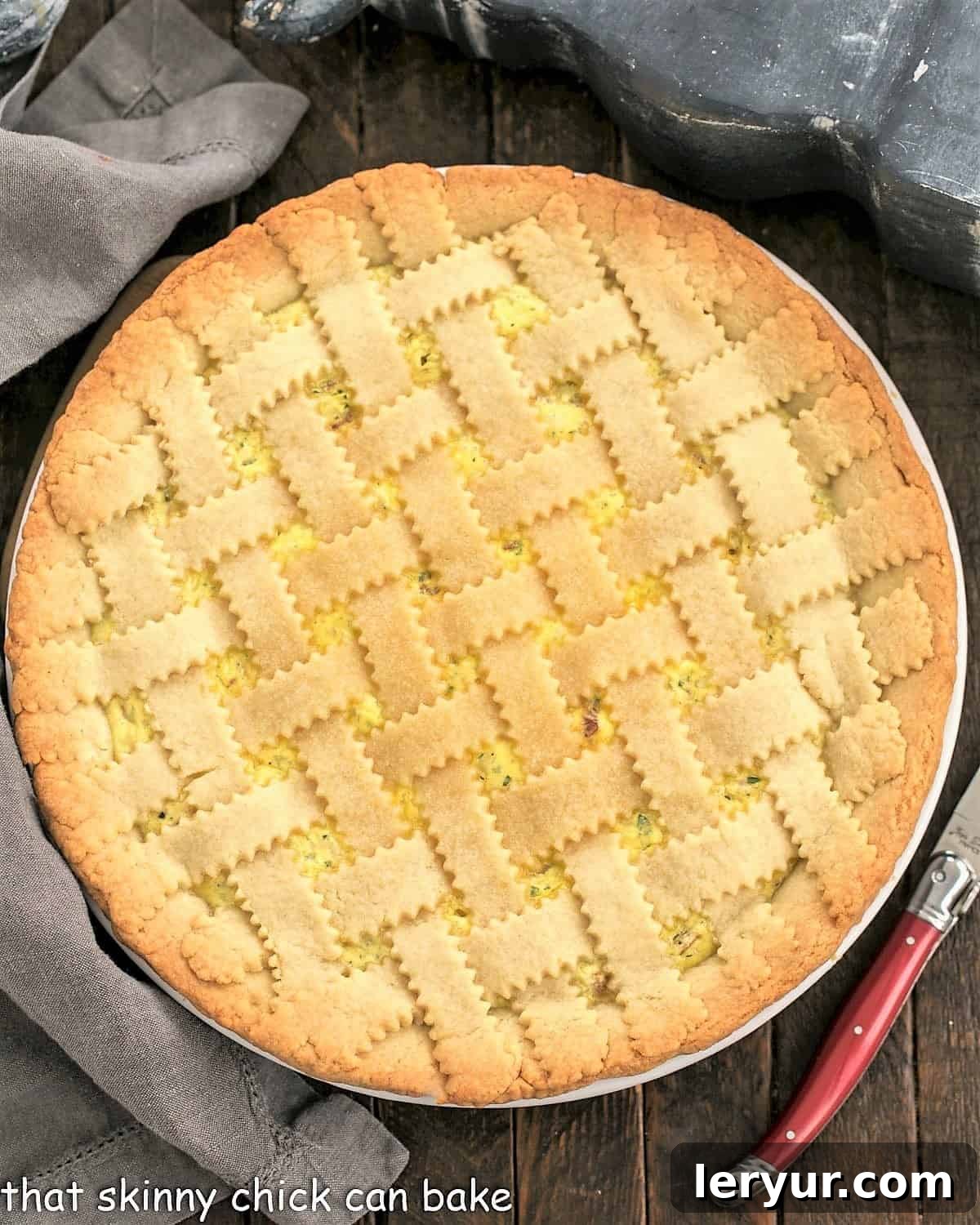
For the signature look of Pizza Rustica, you’ll create a beautiful lattice top. Roll out the remaining dough into a square and cut it into 12-14 even strips using a pizza or pastry cutter. Begin by laying half of these strips parallel across the top of your pie. Then, arrange the remaining strips perpendicular or at a slight diagonal to the first set, weaving them over and under the initial strips. This classic weaving technique creates the distinctive lattice pattern. For a detailed guide on this step, you can refer to resources like how to weave a lattice crust. Once woven, trim the ends of the strips flush with the edge of the pan and pinch them gently to seal, ensuring a perfect crust.
The Authentic Italian Pizza Rustica Recipe
This recipe yields 8 generous servings of savory Italian goodness and takes approximately 1 hour and 10 minutes from start to finish (30 minutes prep, 40 minutes cook time).
Ingredients:
For the Dough:
- 2 cups all-purpose flour
- ⅓ cup sugar
- ½ teaspoon baking powder
- ¼ tsp salt
- 1 stick (4 oz / 113g) cold, unsalted butter or 4 oz (113g) cold lard, cut into 8 pieces
- 2 large eggs, lightly beaten
For the Filling:
- 1 pound (approx. 450g) whole milk ricotta
- 3 large eggs
- ¼ cup freshly grated Pecorino Romano cheese
- ¼ pound (approx. 113g) mozzarella cheese, grated
- ¼ pound (approx. 113g) thinly sliced prosciutto, shredded
- 2 tablespoons chopped fresh parsley
- ¼ teaspoon freshly ground black pepper
Instructions:
- For the Dough: Combine the flour, sugar, baking powder, and salt in the work bowl of a food processor, fitted with the metal blade. Pulse a few times to thoroughly mix the dry ingredients.
- Add the cold butter or lard pieces to the flour mixture. Pulse 15 to 20 times, or until the mixture resembles coarse cornmeal. With the machine running, slowly add the lightly beaten eggs and process until the dough forms a cohesive ball around the blade, typically within about a minute.
- Remove the dough from the processor and knead it gently on a clean surface, folding it over itself until it becomes smooth, about 1 to 2 minutes. Wrap the dough tightly in plastic film and set it aside to rest. (If you’re not baking immediately, the dough can be wrapped well and refrigerated for up to 3 days. Bring to room temperature before rolling.)
- For the Filling: In a medium bowl, scoop the ricotta cheese and stir until it is smooth with a rubber spatula. Add the remaining filling ingredients one at a time – eggs, Pecorino Romano, mozzarella, prosciutto, fresh parsley, and black pepper – stirring well after each addition until the mixture is completely blended and uniform.
- Assembly: Position an oven rack in the lower third of your oven and preheat the oven to 350ºF (175ºC). Generously butter a 9-inch glass pie plate. (If using a metal pie plate, increase the oven temperature to 375ºF/190ºC, as metal conducts heat differently).
- Divide the rested dough into two pieces, with one piece being roughly twice as large as the other. Take the larger piece, knead it briefly into a disk, and then roll it out on a lightly floured work surface into a 12-inch circle.
- Carefully transfer the rolled dough to the prepared pie plate and gently press it against the bottom and up the sides. Minor tears can be easily patched by pressing the dough back together. Use the dull side of a knife to trim any excess dough, making it even with the rim of the pie plate.
- Scrape the prepared filling into the dough-lined pie shell and spread it out evenly to create a smooth, level top.
- Take the remaining, smaller piece of dough. Knead and shape it into a block, then roll it into a 9-inch square. Using a pizza or pastry cutter, or a thin, sharp knife, cut the dough into 12 even strips. To form the lattice top, lay 6 of the strips across the pie at approximately 1 ¼-inch intervals. Then, crisscross the remaining 6 strips over and under the first set, placing them diagonally or perpendicularly to create a woven pattern. Trim the ends of the strips even with the edge of the pan and gently pinch them to seal them to the bottom crust.
- Baking: Bake the Italian Pizza Rustica for 35 to 40 minutes, or until the pastry crust is beautifully golden brown and the filling appears firm and slightly puffed in the center.
- Cooling & Serving: Once baked, transfer the pie to a wire rack and allow it to cool completely before slicing and serving. This allows the filling to set properly, ensuring clean slices.
- Storage: Leftovers can be kept well-covered with plastic wrap or foil in the refrigerator for up to 4 days. Ensure the pie is not left at room temperature for more than 2 hours.
Nutrition Information (Per Serving):
Amount Per Serving:
- Yield: 8 servings
- Serving Size: 1 slice
- Calories: 510
- Total Fat: 31g
- Saturated Fat: 15g
- Trans Fat: 0g
- Unsaturated Fat: 15g
- Cholesterol: 186mg
- Sodium: 703mg
- Carbohydrates: 35g
- Fiber: 1g
- Sugar: 9g
- Protein: 21g
Frequently Asked Questions About Italian Pizza Rustica
Delve deeper into the world of Italian Pizza Rustica with these common questions, providing further context and tips for enjoying this traditional dish.
Pizza Rustica, often synonymous with Italian Easter Pie, is a traditional savory stuffed pie that hails from various regions of Italy, particularly Naples. It typically features a rich, flaky, and slightly sweet pastry crust that encases a hearty, flavorful filling. This filling is usually a decadent blend of creamy ricotta cheese, eggs, and a variety of Italian cured meats such as prosciutto, smoked ham, savory sausage, and spicy pepperoni, along with other complementary cheeses like mozzarella and Pecorino Romano. It’s a significant celebratory dish, especially popular during the Easter holiday, marking the end of Lent.
This beloved Italian savory pie is known by several names across different regions and families, reflecting its widespread appeal and slight variations. Besides its most common names, Pizza Rustica and Italian Easter Pie, it is also frequently referred to as Rustico Pizza, Pizzagaina (particularly in Italian-American communities), Pizza Ripiena (which translates to “stuffed pizza”), or Pizza Chiena (meaning “full pizza” in some dialects). Each name points to the rich, hearty nature of this magnificent dish.
The historical roots of Pizza Rustica are deeply embedded in the vibrant culinary traditions of Southern Italy. This iconic Easter pie is widely believed to have originated in Naples, with its presence in Italian kitchens traceable as far back as the 17th century. It developed as a quintessential dish for Easter, symbolizing the celebratory end of the Lenten fast, when rich ingredients like meats and cheeses, previously abstained from, could once again be enjoyed with gusto.
One of the many charms of Pizza Rustica is its incredible versatility in serving temperature. This savory pie can be enjoyed warm, at comfortable room temperature, or even chilled. Traditionally, it is most often served at room temperature, making it a perfect, substantial appetizer or a centerpiece component of an elaborate Easter brunch or holiday buffet. Its ability to hold up well and be served without needing to be piping hot makes it an ideal dish for entertaining and large family gatherings.
When stored properly, Pizza Rustica maintains its freshness and deliciousness for several days. If the pie is not left at room temperature for longer than two hours after baking, it will keep very well in the refrigerator for 4 to 5 days. To ensure its quality and prevent it from drying out or absorbing refrigerator odors, always keep it tightly covered with plastic wrap or aluminum foil. This makes it an excellent make-ahead option for busy holiday periods.
Further Culinary Inspirations: Recipes You Might Also Love
If you enjoyed making and tasting this savory Italian Pizza Rustica, you might also be interested in exploring these other delightful recipes perfect for any occasion, especially holidays:
- Spinach Torta Rustica: A delightful vegetarian take on the savory pie concept, packed with fresh spinach and cheeses.
- Braided Easter Bread: A beautiful and symbolic sweet bread, often adorned with colored eggs, perfect for your holiday table.
- White Chocolate Easter Bark: A simple yet elegant sweet treat, ideal for spring festivities or as a thoughtful homemade gift.
- Herb Crusted Rack of Lamb: An impressive and flavorful main course, perfect for a special occasion dinner.
- Explore more of our Best Holiday Recipes to complete your celebratory feast with other beloved dishes and desserts.
Stay connected with us and discover more delicious recipes! Find us and follow @ on Instagram, Facebook, and Pinterest. We absolutely love seeing your culinary creations, so please don’t forget to tag us when you try one of our recipes! And if you loved the results of this Italian Pizza Rustica, we would be incredibly grateful if you could share your feedback by leaving a 5-star rating and a comment in the section below.