
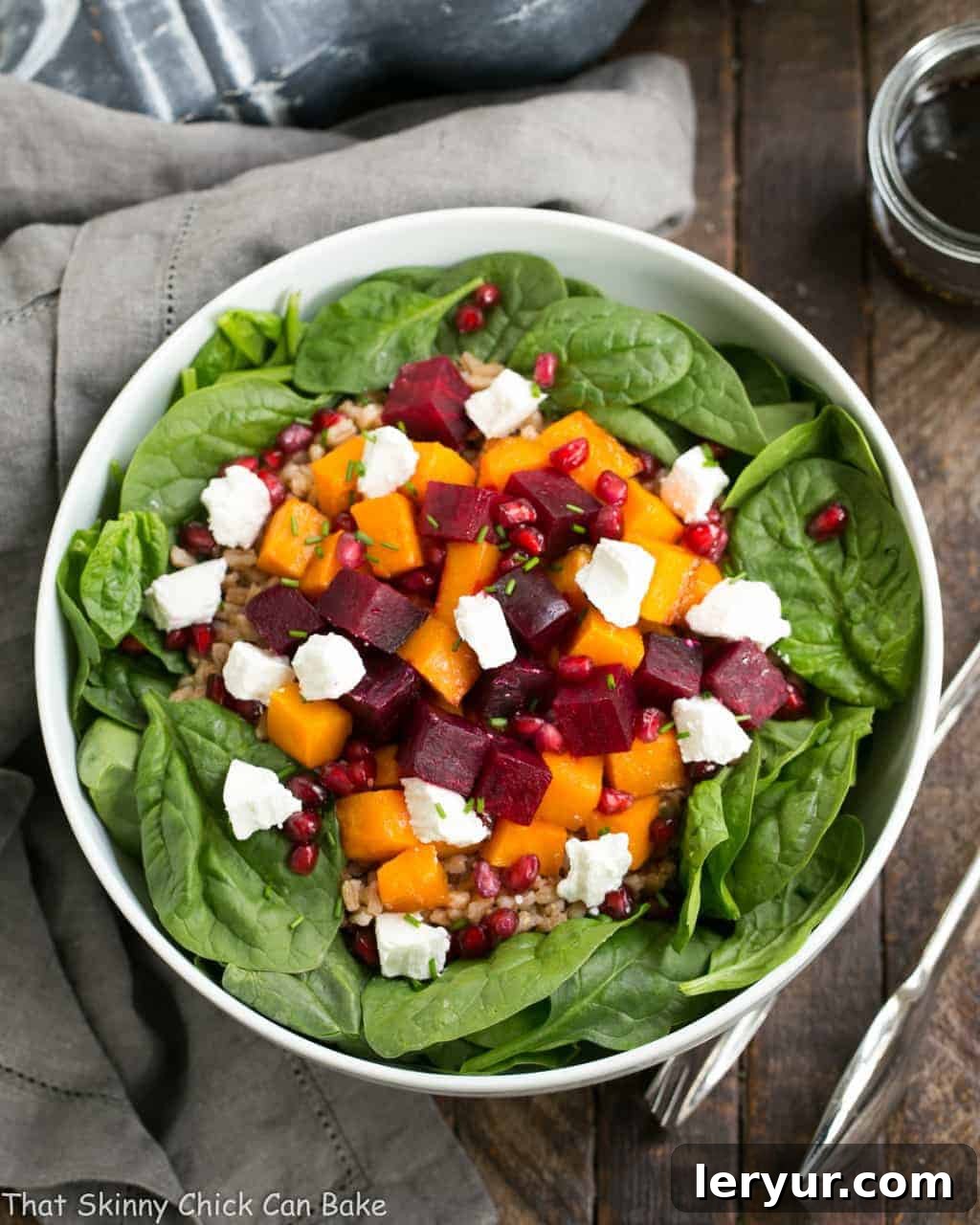
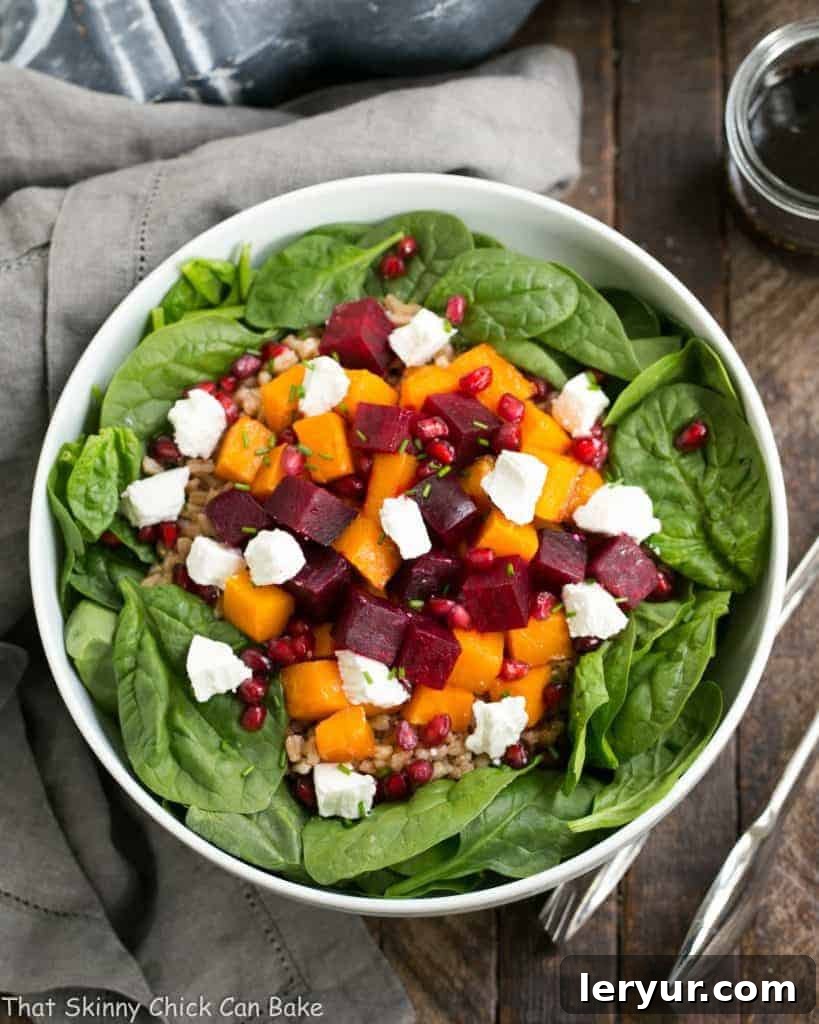
Discover the ultimate autumn delight with this Roasted Fall Vegetable Salad with Maple Balsamic Vinaigrette. It’s a vibrant, hearty side dish that promises to elevate your seasonal menu!
This post is brought to you in partnership with Rubbermaid. As always, all opinions expressed are my own and reflect my genuine experience with their products.
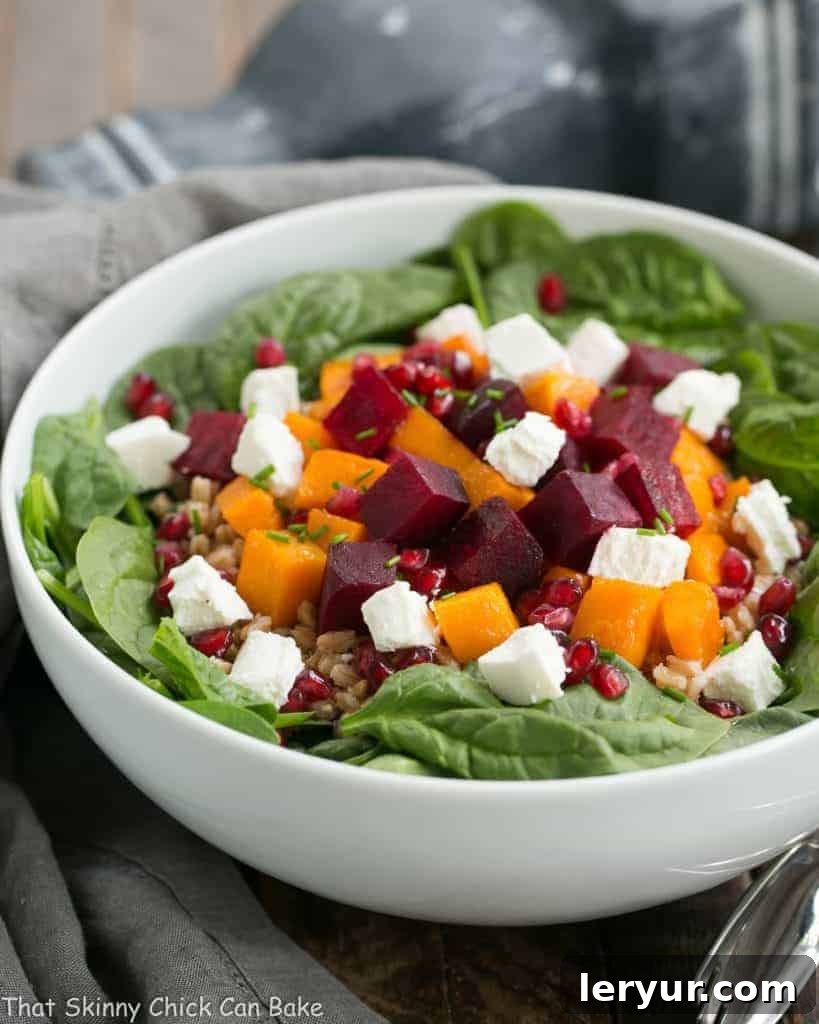
Roasted Fall Vegetable Salad with Maple Balsamic Vinaigrette: Your Perfect Autumn Dish
As the vibrant produce of summer fades and the garden beds empty, there’s a unique joy in embracing the earthiness and warmth of fall vegetables. This season ushers in an abundance of root vegetables and squashes, perfect for transforming into comforting and flavorful dishes. My personal favorite? A hearty, scrumptious roasted fall vegetable salad. This particular rendition features the sweet notes of roasted butternut squash and the rich, earthy flavor of beets, beautifully layered with tender baby spinach, nutty farro, and creamy goat cheese. The entire ensemble is then perfectly complemented by an incredible homemade Maple Balsamic Vinaigrette, adding a touch of autumnal sweetness and tang that truly ties all the flavors together.
Why This Roasted Fall Vegetable Salad Will Become Your New Favorite
This isn’t just any salad; it’s a celebration of autumn’s bounty, designed to be both satisfying and incredibly flavorful. Imagine sweet, caramelized butternut squash cubes mingling with tender, ruby-red beets, each roasted to perfection. These warm, comforting vegetables provide a delightful contrast to the fresh, crisp baby spinach. The inclusion of farro adds a wonderful chewiness and a subtle, nutty flavor that makes the salad truly substantial, while crumbled goat cheese introduces a creamy texture and a delightful tang that cuts through the richness of the roasted vegetables. Every bite is an experience, combining sweet, savory, earthy, and tangy notes into a harmonious symphony of fall flavors. It’s an ideal dish for a cozy family dinner, a festive holiday gathering, or even a sophisticated packed lunch.
The Stars of the Show: Roasted Butternut Squash and Beets
Roasting is truly where these vegetables shine. Butternut squash, with its naturally sweet and slightly nutty flavor, develops a beautiful caramelization when roasted, enhancing its inherent sweetness. It’s also packed with vitamins A and C, and a good source of fiber. Beets, on the other hand, offer a distinct earthy sweetness and a gorgeous, jewel-toned color that makes the salad visually stunning. Beyond their beauty, beets are nutritional powerhouses, rich in folate, manganese, and powerful antioxidants. Roasting them gently in foil brings out their best texture and flavor, making them tender and deeply flavorful. This combination not only tastes incredible but also adds a significant boost of nutrients to your meal.
The Nutty Goodness of Farro and Fresh Spinach
Farro, an ancient grain, is a fantastic addition to this salad. It boasts a satisfying chewiness and a mild, nutty flavor that pairs wonderfully with the roasted vegetables. Unlike some grains, farro holds its shape well and absorbs flavors beautifully, making it an excellent base for a hearty salad. It’s also a great source of fiber and protein, contributing to the salad’s overall satiety. The bed of fresh baby spinach provides a crisp, verdant element, balancing the warmth of the roasted ingredients. Spinach is incredibly versatile and nutritious, offering vitamins K, A, and C, as well as iron and magnesium. Its mild flavor ensures it complements, rather than overpowers, the other robust ingredients.
The Creamy Tang of Goat Cheese
No fall salad would be complete without a touch of creamy indulgence. Goat cheese is the perfect candidate here, offering a unique tangy flavor and a soft, crumbly texture that contrasts beautifully with the firm roasted vegetables and chewy farro. Its distinctive taste elevates the salad, adding a sophisticated dimension that you’ll absolutely adore. If goat cheese isn’t your preference, feta cheese or even a mild blue cheese could make for delightful alternatives, each bringing its own unique character to the dish.
Crafting Your Signature Maple Balsamic Vinaigrette
The Maple Balsamic Vinaigrette isn’t just a dressing; it’s the magical element that brings all the diverse flavors of this salad into perfect harmony. This simple yet sophisticated vinaigrette is incredibly easy to prepare and uses pantry staples. The rich, sweet notes of pure maple syrup provide a delightful counterpoint to the bold, tangy character of balsamic vinegar. A hint of Dijon mustard adds a subtle zest and acts as an emulsifier, helping to create a smooth, unified dressing when slowly whisked with good quality olive oil. A pinch of salt balances the sweetness and acidity. This vinaigrette doesn’t just coat the salad; it infuses every ingredient with an extra layer of autumnal warmth and brightness, making each forkful an absolute pleasure. You’ll find yourself making extra to drizzle over other salads, roasted vegetables, or even grilled meats.
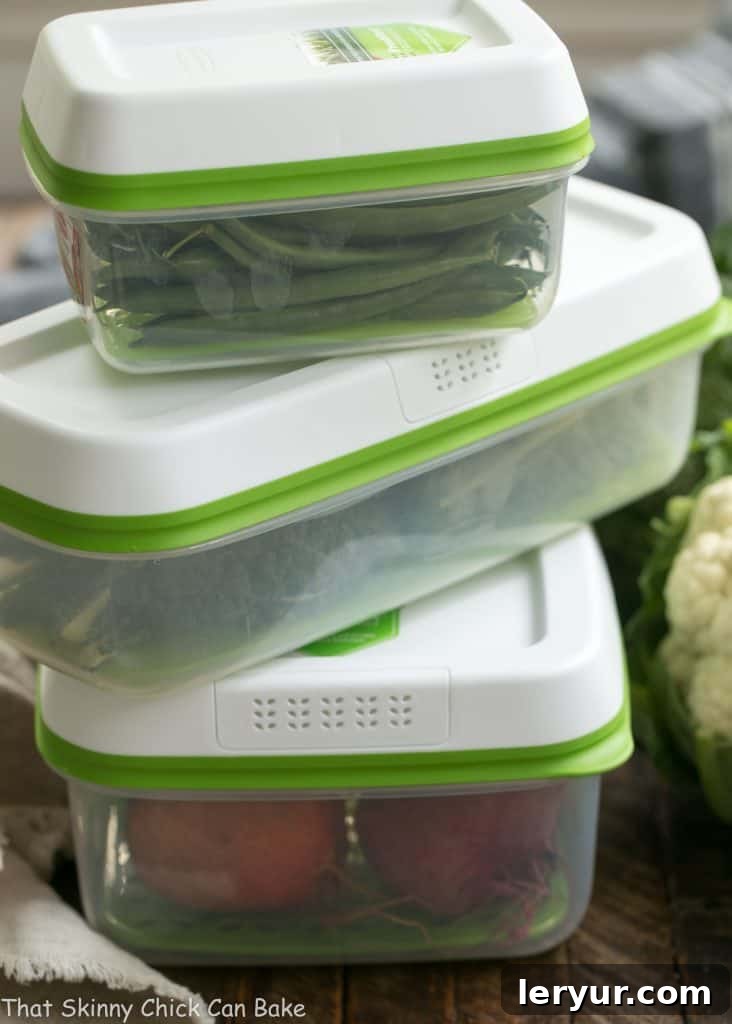
Say Goodbye to Spoilage: The Genius of Rubbermaid FreshWorks Produce Savers
Do you ever get frustrated when your fresh produce spoils faster than you can use it? That vibrant bag of baby spinach wilting just days after purchase, or those beautiful berries growing mold? It’s a common kitchen woe, and honestly, it drives me nuts! We invest in fresh ingredients for healthier meals, only to see them go to waste. But what if there was a simple, effective solution to extend the life of your fruits and vegetables significantly? I’m thrilled to share one of my favorite kitchen game-changers that has truly transformed how I store produce: the Rubbermaid FreshWorks Produce Saver.
My Experience with FreshWorks: A True Game-Changer
I’ve been an enthusiastic user of Rubbermaid FreshWorks Produce Savers since I first discovered these ingenious containers. As someone who relies heavily on baby spinach for daily salads and omelets, I can attest that it now lasts at least twice as long in my FreshWorks containers compared to its original packaging. No more frantic cooking or discarding half-eaten bags! The moment I return from the grocery store, my berries—those notoriously delicate and pricey gems—go directly from their store container into a FreshWorks Produce Saver. The difference is truly astounding; they maintain their freshness and firmness for significantly longer, saving me money and preventing food waste.
Unveiling the Innovative FreshWorks Technology
The secret behind FreshWorks lies in its smart design, engineered specifically to create an optimal environment for preserving produce freshness. This isn’t just about airtight storage; it’s about active preservation:
- FreshVent Technology: Each FreshWorks lid features patented FreshVent technology. This unique design intelligently regulates the flow of oxygen and carbon dioxide, allowing produce to breathe optimally. This custom microclimate significantly slows down the ripening process, preventing premature spoilage that often occurs in standard containers or original packaging.
- CrispTray Innovation: At the bottom of every FreshWorks container, you’ll find a raised CrispTray. This clever tray elevates your produce away from any moisture that accumulates at the bottom. By preventing direct contact with condensation, it ensures proper airflow all around the food, reducing sogginess and preventing the growth of mold and bacteria.
- Scientifically Proven Results: Studies have shown remarkable results. For instance, strawberries stored in FreshWorks containers have been observed to stay fresh for up to 80% longer compared to being left in their original store packaging. We all know the heartbreak of strawberries that barely last 24 hours – FreshWorks solves that problem!
- Effortless Convenience: One of the best features? There’s no need for any extra steps like washing or cutting your produce before transferring it into the FreshWorks containers. You can simply move items directly from your grocery bags, saving you time and effort while still maximizing their shelf life.
Rubbermaid has also expanded the FreshWorks collection, introducing new sizes optimized for specific produce items, such as green beans, asparagus, and even tomatoes. Of course, their versatile design means you can store a wide array of other fruits and vegetables in them, making them an indispensable tool in any kitchen committed to reducing food waste and enjoying fresh ingredients for longer.
Tips for Perfectly Roasted Fall Vegetables
Achieving perfectly roasted vegetables is key to the success of this salad. Here are a few tips to ensure your beets and butternut squash come out tender and flavorful every time:
- Even Cuts: For consistent cooking, ensure your butternut squash is cut into uniform ¾-inch cubes. Beets, once peeled, should also be cut into similar-sized chunks.
- Don’t Crowd the Pan: Overcrowding your sheet pan leads to steaming rather than roasting, resulting in soggy vegetables. Always use a large enough sheet pan, or multiple pans, to ensure vegetables are in a single layer with a little space between them for optimal browning.
- High Heat is Key: Roasting at 400°F (200°C) is ideal for achieving that desirable caramelized exterior and tender interior.
- Season Simply: A drizzle of olive oil, a touch of maple syrup (especially good for squash!), and a pinch of salt are all you need to enhance the natural flavors of the vegetables.
- Pre-roasting Beets: Wrapping beets in foil before roasting helps them steam in their own juices, making them incredibly tender and easier to peel once cooked.
- Turn Once: For even roasting and browning, give your squash a flip halfway through the cooking time.
Serving Suggestions and Delicious Variations
This Roasted Fall Vegetable Salad is incredibly versatile and can be enjoyed in many ways. While it makes a fantastic vibrant side dish for Thanksgiving, holiday meals, or a cozy weeknight dinner, it can also be a light yet satisfying main course. To make it a more substantial meal, consider adding:
- Protein Boost: Grilled chicken, roasted turkey, pan-seared salmon, or even chickpeas or lentils can transform this into a complete meal.
- Nutty Crunch: Toasted pecans, walnuts, or slivered almonds would add an extra layer of texture and healthy fats.
- Fruitful Additions: Sliced apples or pears, or dried cranberries, can enhance the autumnal theme and add a delightful sweetness.
- Herbaceous Freshness: Fresh herbs like thyme, rosemary, or sage, finely chopped and sprinkled over the salad, can add another dimension of flavor.
Don’t be afraid to experiment with other fall vegetables too! Roasted carrots, parsnips, or even Brussels sprouts could be wonderful additions or substitutions, allowing you to customize the salad to your preference and what’s in season.
More Salad Recipes You’ll Love:
- Shaved Brussels Sprouts Salad
- Greek Quinoa Salad from Your Homebased Mom
- Hearts of Palm, Artichoke, Avocado and Butter Lettuce Salad
- 10 Favorite Salad Dressing Recipes from Gimme Some Oven
- Plus, some terrific Salad Ideas from Barefeet in the Kitchen
Used in This Recipe:
- Stainless Steel Serving Tongs
- Wusthof Classic 6-inch Wave Knife
- OXO Non-Slip Cutting Board
- Kuhn Rikon 10-Inch French Wire Whisk
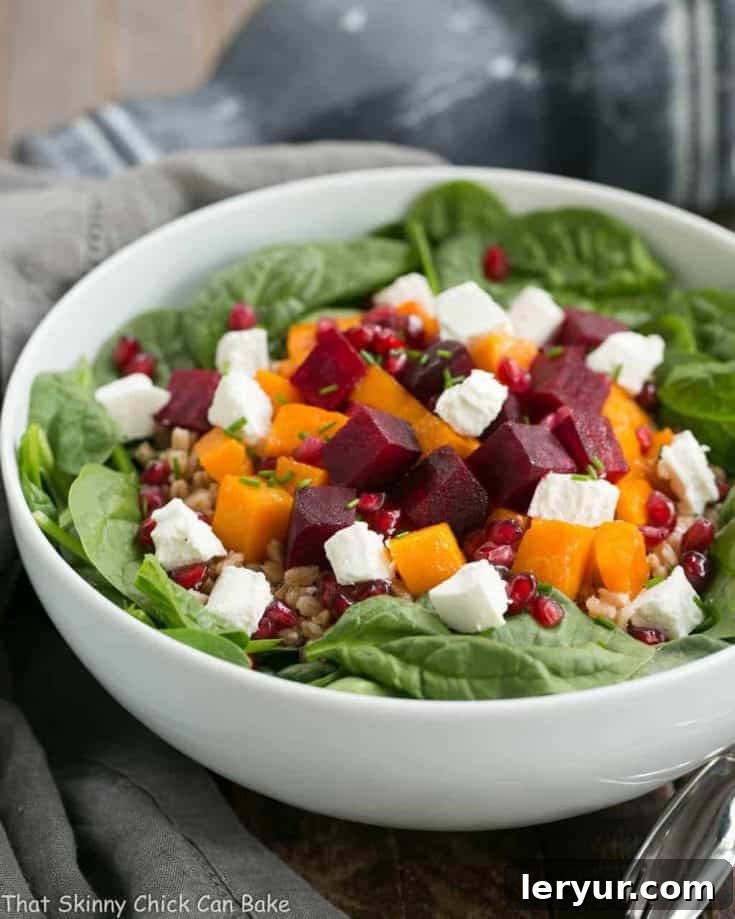
Roasted Fall Vegetable Salad Recipe with Maple Balsamic Vinaigrette
30 minutes
30 minutes
1 hour
6 servings
Add this Roasted Fall Vegetable Salad with Maple Balsamic Vinaigrette to your autumn menu for a delicious, vibrant side dish!
Ingredients
- 2 medium-sized beets
- 1 pound butternut squash, cut into ¾ inch cubes
- 1 tablespoon olive oil
- ¼ teaspoon salt
- 1 tablespoon maple syrup
- ½ cup farro
- 1 ½ cup chicken broth (or vegetable broth/water)
- 5-ounce bag baby spinach
- 2-4 ounces goat cheese, cut into cubes or crumbled
- ¼ cup balsamic vinegar
- 1 teaspoon Dijon mustard
- 1 tablespoon maple syrup
- Pinch of salt
- ¼ cup olive oil
- 1 tablespoon pomegranate arils, optional, for garnish
- Chopped chives, optional, for garnish
Instructions
- Preheat your oven to 400ºF (200ºC).
- Wrap the beets individually in foil and roast in the preheated oven for about 45 minutes, or until they are tender when pierced with a fork. Once cool enough to handle, peel the beets (the skin should slip off easily) and cut them into ¾-inch chunks.
- While the beets are roasting, place the butternut squash chunks on a separate sheet pan. Drizzle them with 1 tablespoon of olive oil, 1 tablespoon of maple syrup, and ¼ teaspoon of salt. Toss to coat evenly. Add the sheet pan with the squash to the oven alongside the beets. Roast the squash for 15 to 20 minutes, turning once halfway through, until it’s tender and slightly caramelized.
- Cook the farro according to package instructions. Typically, this involves simmering it in chicken broth (or salted water) until tender. Drain any excess liquid and allow the farro to cool to room temperature.
- Prepare the vinaigrette: In a small bowl, whisk together the ¼ cup balsamic vinegar, 1 teaspoon Dijon mustard, 1 tablespoon maple syrup, and a pinch of salt. Slowly drizzle in the ¼ cup olive oil, whisking constantly until the mixture is emulsified and creamy.
- Add a few tablespoons of the prepared vinaigrette to the cooled farro, just enough to moisten it and infuse it with flavor. Toss gently and set aside.
- To assemble the salad, place half of the baby spinach in a large salad bowl. Layer with half of the seasoned farro, half of the roasted beets and squash, and half of the goat cheese.
- Repeat the layering with the remaining ingredients. If desired, garnish with pomegranate arils and chopped chives for extra color and flavor. Drizzle the remaining vinaigrette over the salad and toss gently just before serving. Enjoy immediately!
Notes
Feel free to adjust the amount of goat cheese to your liking. For a vegan option, omit the goat cheese and use vegetable broth for the farro.
Nutrition Information:
Yield:
6
Serving Size:
1
Amount Per Serving:
Calories: 303
Total Fat: 20g
Saturated Fat: 7g
Trans Fat: 0g
Unsaturated Fat: 12g
Cholesterol: 19mg
Sodium: 576mg
Carbohydrates: 23g
Fiber: 4g
Sugar: 10g
Protein: 10g
HOW MUCH DID YOU LOVE THIS RECIPE?
Please leave a comment on the blog or share a photo on Pinterest