
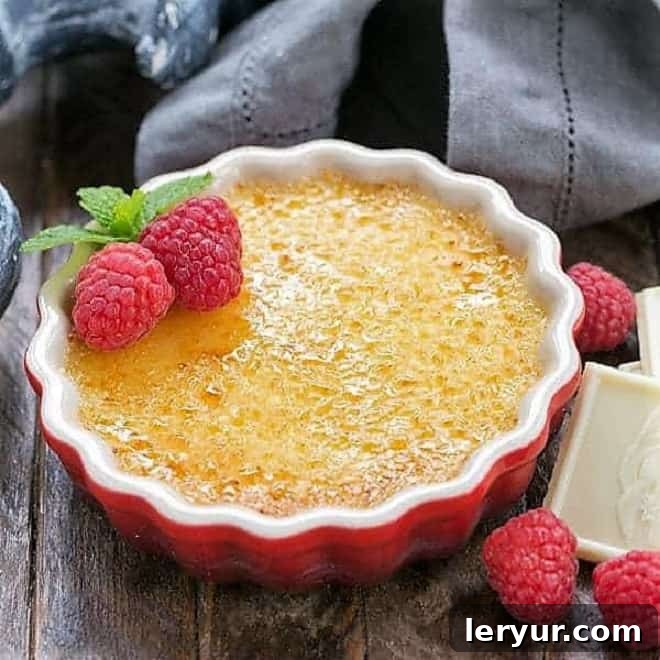
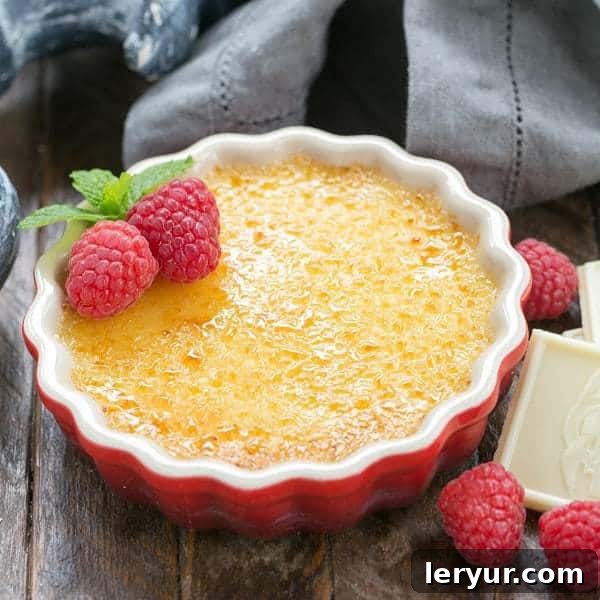
Indulge in an exquisite twist on a beloved classic with this luxurious White Chocolate Crème Brûlée. This isn’t just any dessert; it’s a masterpiece of culinary delight, transforming the traditional silky custard into an even more decadent experience with the rich, sweet notes of white chocolate, all crowned with that signature crisp, caramelized sugar topping. Perfect for any special occasion, from an intimate dinner party to a grand holiday feast, this White Chocolate Crème Brûlée promises to be a show-stopping finish that will leave your guests utterly captivated.
Are you ready to elevate your home baking game? Learning How to Make Crème Brûlée might seem daunting, but with our detailed guidance, you’ll be serving this restaurant-worthy dessert right from your own kitchen. Prepare to impress with a dessert that embodies elegance, flavor, and a touch of sweet sophistication.
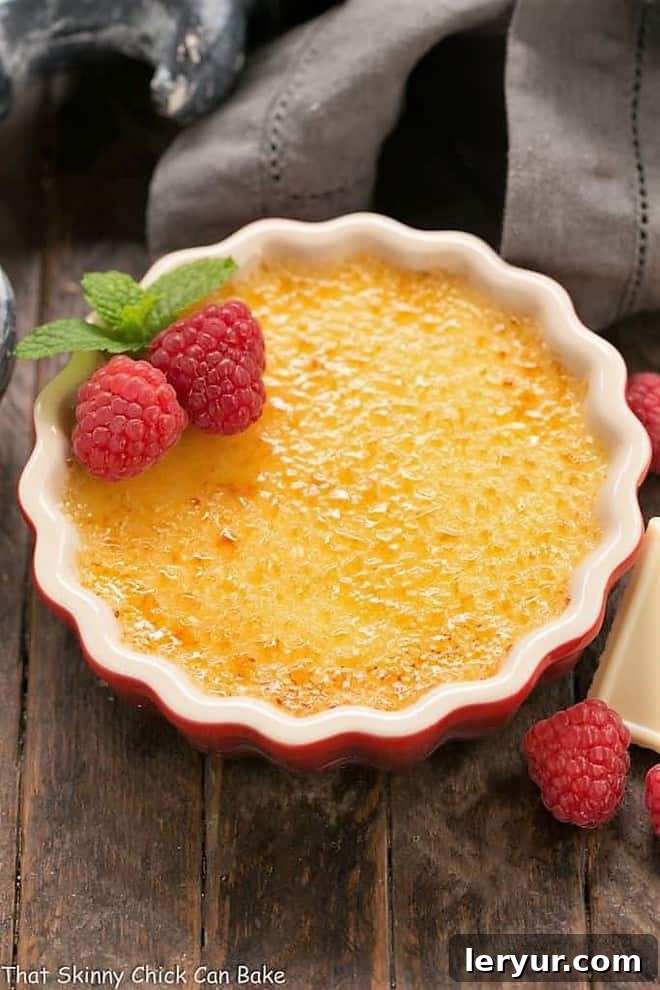
Why This White Chocolate Crème Brûlée Will Be Your New Favorite Dessert
This isn’t merely a recipe; it’s an invitation to create something truly extraordinary. Here’s why you absolutely must try your hand at this White Chocolate Crème Brûlée:
- Unbelievably Creamy & Rich: Prepare your taste buds for an unparalleled velvety texture that melts in your mouth. The addition of white chocolate lends an extra layer of richness and a subtle, sweet complexity that elevates the classic crème brûlée to new heights. Each spoonful is a symphony of smooth, sweet custard contrasted by the satisfying crunch of the caramelized sugar.
- A Recipe Rivaling the Best Restaurants: This recipe is meticulously adapted from the acclaimed Le Cirque’s version, renowned for its flawless execution. My husband, a self-proclaimed crème brûlée connoisseur, declares this homemade rendition superior to any he’s sampled in fine dining establishments. This isn’t just a dessert; it’s a testament to the fact that gourmet quality is achievable right in your own home.
- The Ultimate White Chocolate Experience: For all white chocolate lovers, this dessert is a dream come true. It beautifully showcases the unique flavor profile of white chocolate, infusing it throughout the custard for a delicate yet distinct taste that is both comforting and luxurious. It’s a wonderful, sophisticated way to celebrate the sweet nuances of this beloved confection.
The first time I ventured into making this dreamy White Chocolate Crème Brûlée, it was quite an adventure! While carefully removing one of the custards from its warm water bath, I inadvertently ended up with a surprise “crème brûlée facial.” Despite the unexpected drenching, the sheer delight of the final product made it unequivocally worth repeating – though, ideally, without the splash! We had a small stash in the fridge, and my husband, Bill, was quick to declare how utterly fabulous it tasted. I wholeheartedly concurred! That moment solidified this recipe’s place as a cherished favorite in our home, reminding us that sometimes, the most memorable culinary journeys come with a dash of unexpected fun.
Mastering Crème Brûlée: Essential Expert Tips for a Flawless Dessert
Having made classic crème brûlée countless times for my husband, Bill, who considers it his absolute favorite dessert, I’ve gathered a wealth of knowledge and perfected several techniques over the years. These expert tips are designed to guide you through the process, ensuring your White Chocolate Crème Brûlée turns out perfectly smooth, rich, and utterly irresistible every single time.
- PRO-Tip: The Art of Tempering Eggs – Slow and Steady Wins the Race. The most crucial step to achieving a silky-smooth custard is slowly incorporating the hot cream into the egg mixture. This process, known as tempering, gently raises the temperature of the egg yolks without scrambling them. Begin by drizzling just a few drops of the hot cream into the whisked egg yolks, whisking constantly and vigorously. Gradually increase the amount, adding the cream in a thin, steady stream while continuing to whisk. If you rush this step, the heat from the cream will cook the eggs, resulting in curdled bits. These scrambled egg particles will then be discarded when you strain the mixture, robbing your crème brûlée of the very structure it needs to be perfectly set and creamy. Trust me, I’ve been there and learned this lesson the hard way!
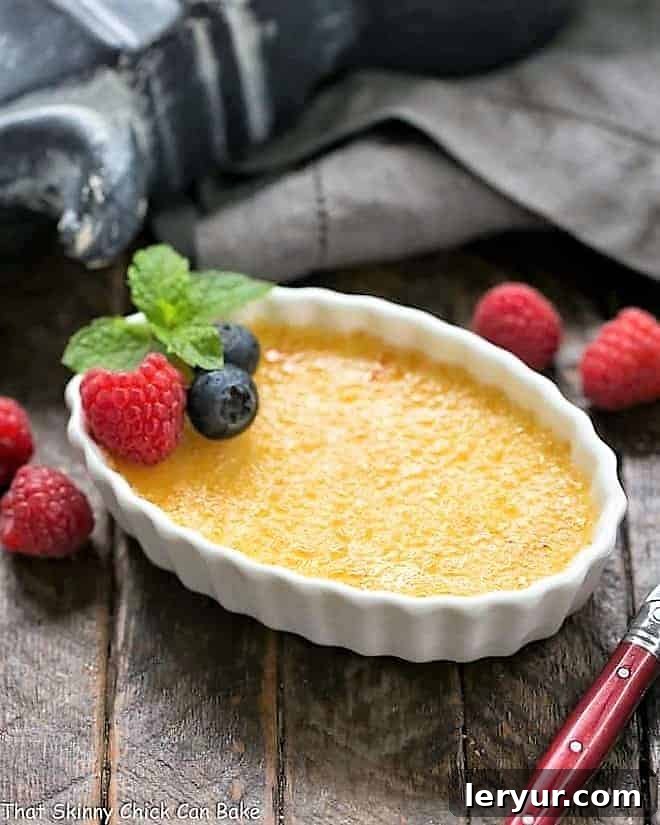
- Choosing the Right Ramekins & Adjusting Baking Times. The type and size of ramekins you use significantly impact the baking time. Deeper, rounder ramekins, such as standard 4 oz. porcelain ramekins, will require a longer baking period because the custard is thicker. In contrast, flatter, oblong crème brûlée dishes, designed for a quicker bake and a larger surface area for caramelization, will cook faster. Always observe the custard’s doneness rather than strictly adhering to a timer; the centers should have a slight jiggle, not a liquid wobble.
- PRO-Tip: The Indispensable Bain-Marie (Water Bath). Baking your custards in a bain-marie, or water bath, is not merely a suggestion – it’s essential for achieving that characteristic silky-smooth texture. A water bath creates a gentle, consistent, and moist heat environment around the ramekins. This prevents the edges of the custard from cooking too quickly and becoming tough or rubbery, ensuring an even bake throughout and a luxurious, creamy consistency from edge to center.
- Setting Up Your Bain-Marie. You don’t need specialized equipment for a water bath. A deep-dish pizza pan or a sturdy roasting pan works perfectly. Simply place your filled ramekins into the pan and then carefully pour hot water into the larger pan, ensuring the water level comes up about 1 to 1 ½ inches around the ramekins. I personally find that using a roaster with handles makes transferring the water-filled pan in and out of the oven much easier and safer.
- Achieving the Perfect Burnt Sugar Topping. For that iconic crackly topping, I prefer using turbinado sugar (also known as sugar in the raw). Its larger crystals caramelize beautifully and create a wonderfully brittle crust. Brown sugar can also be used, but I highly recommend spreading it out on a plate and letting it dry for a few hours before sprinkling it over the chilled custard. This reduces its moisture content, preventing it from steaming and making for a crisper, more even caramelization.
- Broiler Method for Caramelization. If you don’t have a kitchen torch, your oven’s broiler can do the trick. Place the sugared custards on a baking sheet under the broiler. Watch them *very* carefully – this step happens quickly! You want the sugar to melt and turn a light golden brown, not black and burnt. Keep the oven door slightly ajar and stand by, ready to remove them as soon as the desired color is achieved.
- The Precision of a Culinary Torch. For maximum control and the most consistent results, a culinary torch is my preferred tool for brûléeing the sugar. It allows you to focus the heat precisely, melting and caramelizing the sugar evenly without heating the custard beneath. This method provides the most satisfyingly crisp and golden topping.
- PRO-Tip: Don’t Waste Those Leftover Egg Whites! This recipe calls for only egg yolks, leaving you with a handful of precious egg whites. Don’t let them go to waste! Egg whites are incredibly versatile and can be used to create a variety of other delicious desserts. Consider making a delicate pavlova, light and airy meringue cookies, or chewy coconut macaroons. For even more inspiration, explore a wealth of Egg White Recipes to ensure every part of your egg is put to delicious use!
Frequently Asked Questions About Crème Brûlée
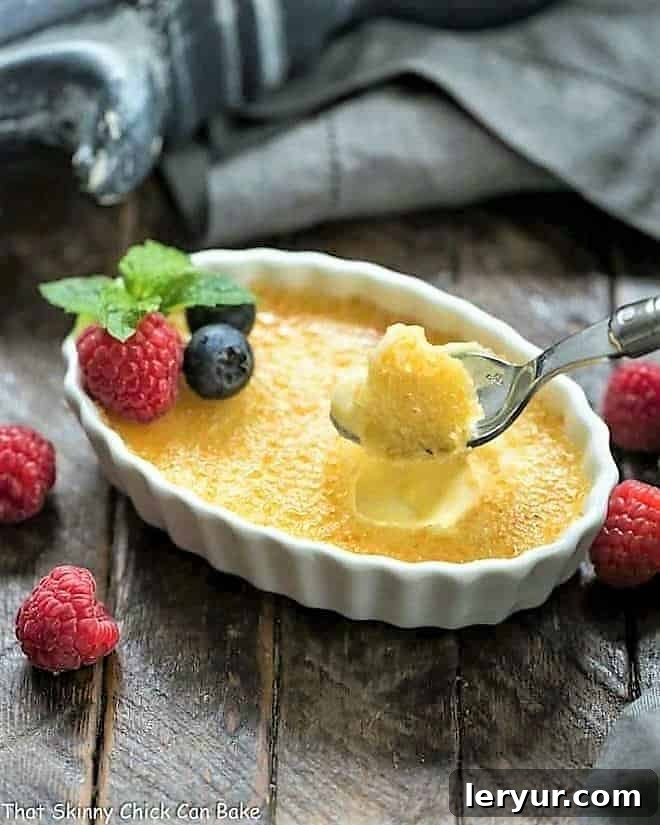
Crème Brûlée, translating to “burnt cream” in French, is a classic French dessert renowned for its elegant simplicity and luxurious texture. At its heart, it’s a rich, baked custard, traditionally flavored with vanilla, characterized by its remarkably smooth, velvety consistency. The true magic, however, lies in its iconic topping: a thin, crisp layer of caramelized sugar that shatters with a satisfying crack when tapped with a spoon. While its exact origins are debated, with similar desserts appearing in Spanish and English culinary history, the first printed recipe distinctly resembling modern crème brûlée appeared in a French cookbook dating back to 1691. It’s said that the chefs at Versailles perfected the technique we still use today, long before the convenience of mini kitchen torches or oven broilers for melting the sugar!
While both custards and puddings are delightful, creamy desserts often made with similar core ingredients like eggs, sugar, and milk or cream, they differ significantly in their preparation methods and resulting textures. Custards are typically baked in an oven, often in a water bath (bain-marie), which provides gentle, even heat, resulting in a firm, smooth, and often flat-topped dessert. Their thickness comes primarily from the coagulation of egg proteins. Puddings, on the other hand, are generally cooked on the stovetop and frequently include starches such as flour or cornstarch in addition to eggs, which act as thickening agents. This difference in preparation and ingredients typically gives puddings a softer, often fluffier, and sometimes looser consistency compared to the denser, more structured nature of custards.
Crème Brûlée is wonderfully versatile and can be served warm, at room temperature, or chilled, depending on personal preference. When I first discovered the Le Cirque crème brûlée recipe many years ago, it quickly became a beloved family favorite. For both the classic vanilla and this white chocolate version, we invariably opt to serve them cold. The chilled custard provides a refreshing contrast to the freshly caramelized, still slightly warm sugar topping. For an extra touch of elegance and flavor, consider garnishing your crème brûlée with fresh berries, a sprig of mint, or a dusting of cocoa powder. Pairing it with a strong espresso or a dessert wine can further enhance the dining experience.
An “eggy” or sulfuric taste in crème brûlée is a common issue, almost always a result of overcooking. When custard is baked at too high a temperature or for too long, the egg proteins can denature excessively, leading to that undesirable eggy flavor and sometimes a curdled texture. The key to prevention lies in precise temperature control and recognizing the perfect moment of doneness. Remove your ramekins from the oven when the very center of the custards still shows a slight, gentle jiggle – they should not be completely liquid, but they shouldn’t be rigidly set either. Remember that there will be carryover cooking from the residual heat of the ramekins and the cooling process, which will allow the custard to firm up beautifully. Aim for an internal temperature no higher than 175°F (80°C) for the ideal, delicate flavor and smooth consistency. Undercooking is preferable to overcooking, as a slightly undercooked custard will firm up upon chilling, whereas an overcooked one cannot be salvaged.
Explore More Decadent Dessert Recipes
If you’ve fallen in love with the creamy indulgence of this White Chocolate Crème Brûlée, you’re in for a treat! Here are more delightful dessert recipes that share a similar luxurious appeal, perfect for expanding your culinary repertoire and satisfying your sweet cravings:
- Custard Peach Pie from Christina’s Cucina – A comforting classic with a sweet, fruity twist.
- Italian Chocolate Pudding – Rich, smooth, and deeply satisfying for chocolate lovers.
- Blueberry Peach Custard Pie – A harmonious blend of fruit and creamy custard in a flaky crust.
- Apple Crumble with Custard – The quintessential cozy dessert, elevated with a silky custard.
- Vanilla Flan – Another exquisite baked custard, known for its caramel topping and delicate texture.
- Plus, you’ll absolutely adore this Crème Brûlée Cheesecake! – A heavenly fusion of two iconic desserts.
- Discover all my Best Dessert Recipes for endless sweet inspiration!
Stay connected with us across social media platforms! Follow us @ Instagram, Facebook, and Pinterest. Don’t forget to tag us when you share your delicious creations! If you’re thrilled with the results of our recipes, please show your support by giving a 5-star rating in the recipe card below. Your feedback means the world to us!
White Chocolate Crème Brûlée Recipe
15 minutes
55 minutes
1 hour 10 minutes
4
A decadent twist on the classic crème brûlée, infused with luxurious white chocolate for an unforgettable dessert experience!
Ingredients
- 4 egg yolks
- ¼ -⅓ cup granulated sugar (white chocolate is very sweet, so you may prefer the smaller amount of sugar to balance the sweetness)
- 2 cups heavy cream
- 4 ounces white chocolate, finely chopped
- ½ teaspoon vanilla extract
- Turbinado sugar (or sugar in the raw) for caramelization
- Fresh berries and mint sprigs to garnish (optional, but highly recommended for presentation)
Instructions
- Preheat your oven to 300ºF (150ºC). Prepare a baking pan for a water bath.
- In a medium bowl, whisk together the egg yolks and granulated sugar until well combined and slightly lighter in color. In a separate saucepan, gently heat the heavy cream until it reaches a simmer (do not boil). Remove from heat, add the chopped white chocolate, and whisk continuously until the chocolate is completely melted and the mixture is smooth.
- Slowly drizzle a few tablespoons of the warm cream and chocolate mixture into the egg yolks, whisking constantly to temper the eggs and prevent them from scrambling. Once tempered, gradually add the remaining cream mixture and vanilla extract to the yolks, whisking until everything is thoroughly combined.
- Strain the liquid through a fine-mesh sieve into a large glass measuring cup. This step removes any potential cooked egg bits or unmixed ingredients, ensuring an incredibly smooth custard. Carefully pour the strained mixture into four 6-ounce ramekins. Place the filled ramekins into your prepared baking pan. Pour hot water into the baking pan until it reaches 1 to 1 ½ inches deep around the ramekins, creating a bain-marie.
- Bake for 45-55 minutes, or until the edges of the custards are set, but the centers still have a slight, delicate jiggle when gently moved. This slight movement indicates perfect doneness. Carefully remove the ramekins from the water bath (use tongs or an oven mitt to avoid burns). Allow them to cool completely at room temperature, then refrigerate for at least 4 hours, or preferably overnight, until thoroughly chilled and set.
- To serve, generously sprinkle a layer of turbinado sugar over the top of each chilled custard. You can either use your oven’s broiler for 3-4 minutes (watching constantly to prevent burning) or, for more control, melt the sugar with a kitchen torch until it’s caramelized to a deep, golden-brown and forms a crisp crust. Garnish with fresh berries and mint, if desired, and serve immediately to enjoy the satisfying crack of the sugar topping.
Notes
This recipe is an adaptation inspired by the renowned Ghirardelli method for its luscious qualities.
For best results, ensure all ingredients are at room temperature before you begin, except for the heavy cream which will be heated. This helps in achieving a smoother emulsion. When refrigerating, cover the ramekins loosely with plastic wrap to prevent a skin from forming on the custard’s surface.
If you don’t have turbinado sugar, regular granulated sugar can be used, but it might melt and caramelize faster under the torch/broiler, so watch it even more closely.
Recommended Products
As an Amazon Associate and member of other affiliate programs, I earn from qualifying purchases.
- OXO Good Grips 11-Inch Better Balloon Whisk
- Cuisinart Fine Mesh Strainers
- 8-ounce ramekins
Nutrition Information:
Yield:
4 Servings
Serving Size:
1 Ramekin
Approximate Amount Per Serving:
Calories: 698Total Fat: 56gSaturated Fat: 34gTrans Fat: 1gUnsaturated Fat: 18gCholesterol: 325mgSodium: 64mgCarbohydrates: 43gFiber: 3gSugar: 38gProtein: 9g
HOW MUCH DID YOU LOVE THIS RECIPE?
Please leave a comment on the blog or share a photo on Pinterest