
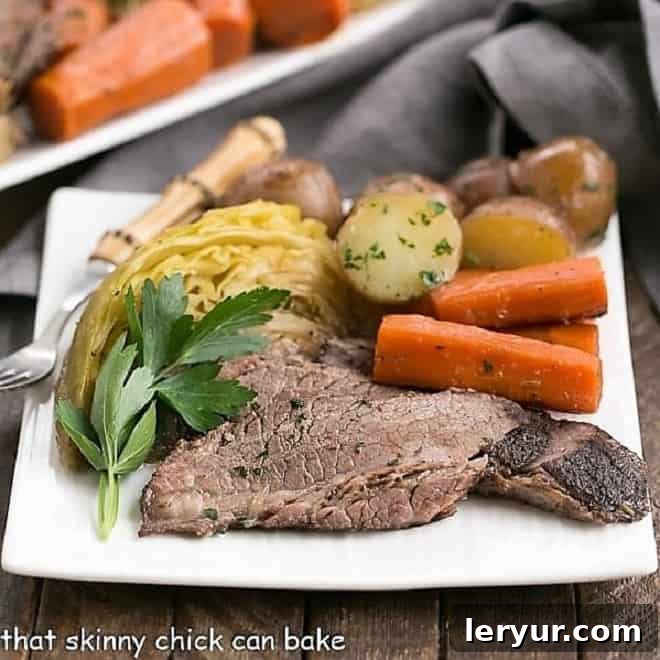
Experience a Fresh Take on a Classic: Braised Corned Beef and Cabbage with Uncured Brisket. Forget the pre-seasoned packages; this exceptional recipe begins with a pristine, uncured brisket flat. By meticulously seasoning and slow-cooking it with the quintessential Irish vegetables, we unlock an unparalleled depth of flavor, transforming your St. Patrick’s Day celebration into an extraordinary culinary event. Prepare for an Irish corned beef and cabbage recipe that redefines tradition!
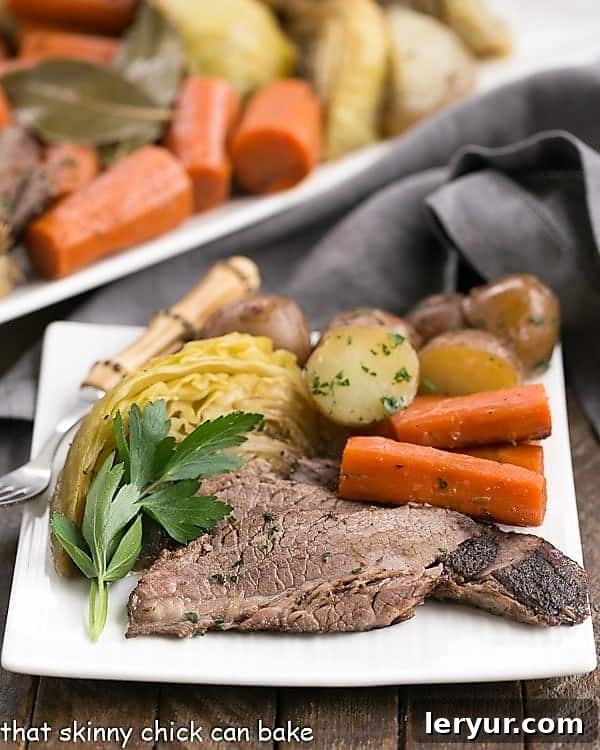
Why You Must Make This Unforgettable Irish Dish
Every St. Patrick’s Day, the aroma of corned beef and cabbage fills homes, signaling a cherished tradition. However, for some, the distinctive taste and texture of traditionally cured corned beef can be a hurdle. This recipe offers a brilliant solution, inviting everyone to partake in the festive spirit with a dish that’s both familiar and wonderfully novel. Here’s why this particular braised brisket recipe is an absolute must-try:
- A Revelation for the Discerning Palate: If you or your loved ones find regular corned beef’s cured flavor or sometimes firm texture less appealing, this recipe is your game-changer. We utilize a plain, uncured beef brisket, allowing the natural, rich beef flavor to shine through, beautifully complemented by our homemade spice blend.
- Embrace the Essence of St. Patrick’s Day: You won’t miss out on the traditional Irish experience! This dish features all the beloved vegetables—tender cabbage, sweet carrots, and hearty potatoes—slow-cooked in a savory broth infused with classic corned beef seasonings. It delivers that comforting, festive taste profile that defines the holiday, but with a fresh twist.
- Year-Round Comfort, Elevated: While perfectly suited for a St. Patrick’s Day feast, this braised brisket and cabbage transcends seasonal boundaries. Its hearty, soul-satisfying qualities make it an ideal comfort food for chilly evenings, family gatherings, or whenever you crave a deeply flavorful, home-cooked meal. It’s a versatile addition to your culinary repertoire, ready to be enjoyed any time of year.
My petite, 100% Irish mother-in-law faithfully prepared corned beef and cabbage every St. Patrick’s Day. It was a ritual, a culinary cornerstone of our annual celebration. Yet, much to my chagrin, my usually adventurous husband, the pickiest eater in his family, was never a fan of the traditional version. I recall making my one and only attempt at classic corned beef many years ago, only for him to opt for a peanut butter sandwich instead! The memory was etched in my mind, and I was determined that this time, with this innovative approach, my Irish-inspired braised brisket would finally win him over.
Braised Brisket: A St. Patrick’s Day Masterpiece
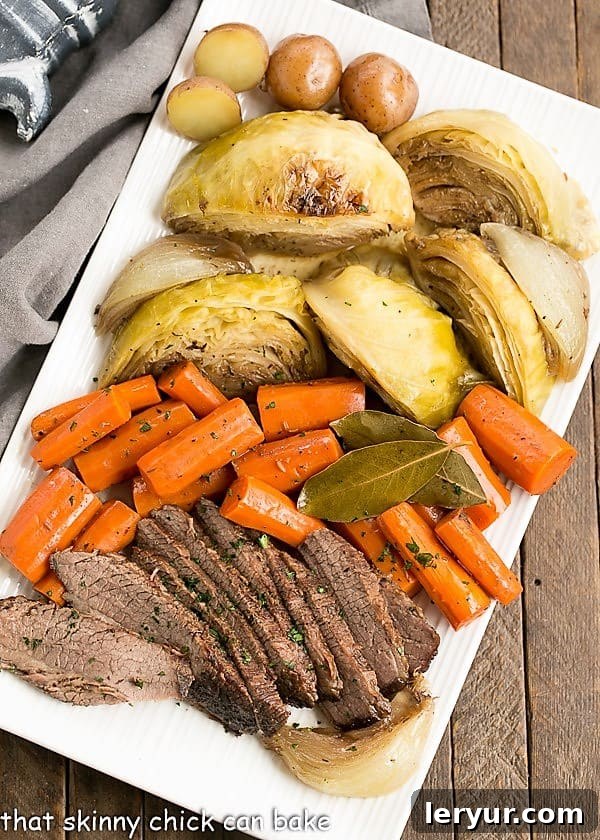
My first bite of this braised brisket left me initially skeptical, a faint echo of past culinary disappointments. However, a generous drizzle of the rich, savory “au jus” over the tender brisket slices transformed the experience entirely. The succulent meat, now glistening with flavor, was utterly magnificent. The vegetables, having slow-simmered in the same aromatic broth, had absorbed all the delicious juices, becoming incredibly flavorful and tender. As a dutiful wife, I gently suggested to my husband that he try the flavorful sauce with his meat. His immediate, almost instinctive reply was, “I have ketchup.” I can’t say I was entirely shocked, given his history.
But armed with renewed confidence in this dish, I persisted, convincing him to give the au jus a chance. To my delight (and slight surprise), he loved his braised corned beef! He agreed it didn’t taste like the cured version he’d always avoided, but he wholeheartedly praised it as a truly wonderful mid-March meal. This recipe proved that you can reinvent a classic without losing its heart. While this braised brisket is undeniably superb, I still find myself occasionally craving the good old-fashioned cured corned beef and cabbage. Perhaps next year, I’ll brave that culinary adventure again, but for now, this uncured braised brisket stands as a triumph.
The Art of Braising and Why It’s Perfect for Brisket
Braising is a cooking method that involves first searing meat at high temperature, then simmering it in a small amount of liquid in a covered pot over low heat for a prolonged period. This technique is especially well-suited for tougher cuts of meat like brisket, transforming them into incredibly tender, fall-apart delights. For our Irish Braised Corned Beef, braising achieves several crucial goals:
- Unrivaled Tenderness: The slow, moist heat breaks down tough connective tissues in the brisket, resulting in meat that is unbelievably tender and easy to slice or shred.
- Deep Flavor Infusion: As the brisket simmers, it absorbs the rich flavors from the beef stock, aromatic vegetables (carrots, onions, garlic, cabbage), and our carefully selected “corned beef” spice blend (coriander, caraway, black pepper, thyme, cloves, salt). This ensures every bite is packed with complex, savory notes.
- Juicy Results: The covered cooking environment prevents moisture loss, keeping the brisket incredibly juicy and succulent. The cooking liquid also transforms into a flavorful broth or “au jus” that can be drizzled over the finished dish, enhancing its overall appeal.
By opting for an uncured brisket, we gain full control over the seasoning, allowing us to replicate the essence of corned beef without the inherent saltiness and processed nature of the pre-cured variety. The combination of searing for a flavorful crust and slow braising for tenderness makes this recipe a true celebration of beef.
Frequently Asked Questions About Corned Beef and Braised Brisket
Traditionally, corned beef is a cut of beef, most commonly brisket or round, that has been cured in a seasoned brine. The term “corn” actually derives from British English, referring to the large grains of salt—the “corns” of salt—used in the brining process. This curing method gives the meat its characteristic rosy red color and distinct flavor. It is typically braised or boiled and served with cabbage, especially for St. Patrick’s Day.
While modern corned beef generally contains less sodium than versions from decades past, it is still a processed red meat. It offers a good source of protein, iron, and Vitamin B12. However, like other processed red meats, frequent consumption has been linked to increased risks of certain health issues, including some cancers and heart disease. Our braised brisket recipe offers a potentially healthier alternative, as it uses uncured beef, allowing you to control the sodium and seasonings entirely, providing a fresher, less processed option.
Beyond the classic trio of cabbage, potatoes, and carrots—which are wonderfully cooked alongside the brisket, absorbing all the savory flavors—there are many delicious ways to complete your meal. Consider serving this Irish Braised Brisket with a slice of rustic Irish Soda Bread or a hearty Brown Bread to soak up the delicious juices. For an extra touch, a dollop of horseradish sauce or a grainy mustard can add a delightful zing. And don’t forget a pint of your favorite stout to truly round out the experience!
Tips for the Perfect Braised Irish Brisket
Achieving a truly spectacular braised brisket isn’t difficult, but a few key tips can elevate your dish from good to unforgettable:
- Choose the Right Brisket: A flat cut brisket is ideal for even cooking and slicing. Look for one with a decent fat cap on one side, as this will render during cooking, adding moisture and flavor.
- Don’t Skimp on Searing: Searing the brisket on all sides before braising is crucial. This step creates a rich, brown crust through the Maillard reaction, which adds immense depth of flavor to the final dish and the cooking liquid.
- Spice it Up Right: Our unique spice blend (coriander, caraway, black pepper, thyme, cloves, kosher salt) is designed to mimic the flavors of traditional corned beef. Ensure the brisket is evenly coated for consistent flavor.
- Tight Seal is Key: When braising, make sure your roasting pan or Dutch oven is tightly covered with foil or a lid. This traps the moisture, allowing the brisket to steam and become incredibly tender in its own flavorful juices.
- Patience is a Virtue: Braising is a slow process, and rushing it will compromise the tenderness. Allow the brisket to cook for the full recommended time, or until it’s fork-tender.
- Rest Before Slicing: Once cooked, remove the brisket from the oven and let it rest, still covered, for 10-15 minutes. This allows the juices to redistribute throughout the meat, resulting in a more succulent and flavorful slice.
- Slice Against the Grain: Always slice brisket against the grain of the meat. This shortens the muscle fibers, making each slice much more tender and enjoyable to eat.
- Utilize the Broth: The cooking liquid is pure gold! It’s flavorful and perfect for drizzling over the sliced brisket and vegetables. You can also thicken it slightly if you prefer a richer gravy.
You May Also Like: Other Irish-Inspired Recipes
- For a classic experience, try Traditional Corned Beef and Cabbage from House of Nash Eats.
- Need it fast? This Pressure Cooker (Instant Pot) Corned Beef and Cabbage from Pressure Cooking Today is a lifesaver.
- Combine two favorites with this Instant Pot Corned Beef and Reuben Sandwich from Your Home Based Mom.
- A quintessential side: Colcannon (Creamy Mashed Potatoes with Cabbage or Kale) from Amanda’s Cookin’.
- Explore more St. Patrick’s Day delights, including Sauteed Cabbage with Mustard.
- If you love a good sandwich, don’t miss our Smoked Salmon Reuben Sandwich.
- Perfect for parties, try these savory Corned Beef Sliders.
- Plus, discover More of the Best Holiday Recipes to celebrate every season.
Stay connected and share your culinary adventures with us! Follow @thatskinnychickcanbake on Instagram, Facebook, and Pinterest. Don’t forget to tag us when you recreate one of our recipes! Your feedback is invaluable, and if you adore the results, please consider leaving a 5-star rating in the recipe card below to help other home cooks discover this delicious dish.
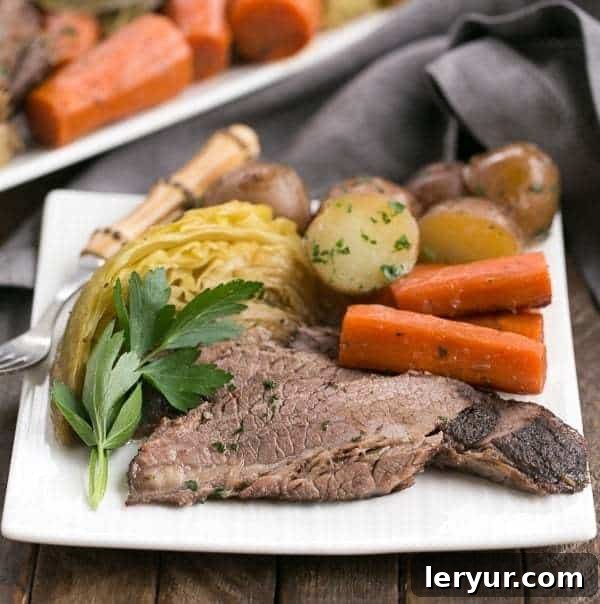
Irish Braised Corned Beef
20 minutes
2 hours
2 hours 20 minutes
6 servings
A tender brisket slow-cooked to perfection with a carefully selected flavor palate reminiscent of traditional corned beef. This recipe is slightly adapted from Certified Angus Beef’s Irish Braised Corned Beef Brisket, offering a fresh, uncured alternative.
Rating: 5 out of 5 stars (based on 3 reviews)
Ingredients
- 4 pounds uncured beef brisket flat (check local Market District or Meijer stores for quality cuts)
- 2 teaspoons ground coriander
- 1 teaspoon caraway seeds
- 1 teaspoon coarse ground black pepper
- 1 teaspoon dried thyme leaves
- 1/4 teaspoon ground cloves
- 2 teaspoons kosher salt
- 2 tablespoons olive oil
- 1 pound carrots, peeled and cut into 1-inch chunks
- 2 medium onions, sliced
- 6 peeled garlic cloves, cut in half lengthwise
- 1/2 head green cabbage (approximately 2 pounds), cut into 8 wedges
- 4 bay leaves
- 1 1/2 cups good quality beef stock
- 1 1/2 pounds small round potatoes (an optional but highly recommended addition for a complete meal)
- 1-2 tablespoons unsalted butter
- 2 tablespoons coarsely chopped fresh parsley, for garnish (optional)
Instructions
- Prepare the Brisket: Remove the uncured beef brisket from its packaging. Rinse it thoroughly under cold water and pat it completely dry with paper towels. Cut the brisket into two equal pieces to fit more easily into your roasting pan and ensure even cooking.
- Preheat Oven: Preheat your oven to a steady 325°F (160°C). This low and slow temperature is crucial for tender braising.
- Craft the Spice Blend: In a small mixing bowl, combine the ground coriander, caraway seeds, coarse ground black pepper, dried thyme leaves, ground cloves, and kosher salt. Mix well to create a uniform spice blend, then set it aside.
- Sear the Brisket: Heat the olive oil in a large, heavy-bottomed skillet or Dutch oven over medium-high heat until shimmering. Carefully place the brisket pieces in the hot oil and sear until deeply browned on all sides, about 3 minutes per side. Searing locks in flavor and creates a beautiful crust.
- Braise the Brisket and Vegetables: Transfer the seared brisket pieces to a large roasting pan or back into the Dutch oven. Evenly coat all sides of the brisket with the prepared spice blend. Arrange the carrots, sliced onions, halved garlic cloves, cabbage wedges, and bay leaves evenly around and on top of the brisket. Pour the beef stock over everything. Cover the pan tightly with heavy-duty foil or a secure lid. Place in the preheated oven and braise for 2 hours, or until the brisket is incredibly tender and easily pierced with a fork.
- Cook the Potatoes: While the brisket is braising, boil the small round potatoes in generously salted water until they are fork-tender. Drain well, then toss them with 1-2 tablespoons of butter until melted and coated. Garnish with fresh parsley if desired.
- Serve: Once the brisket is tender, remove it from the oven and let it rest for a few minutes. Slice the brisket thinly against the grain (this is important for tenderness). Serve the sliced beef immediately with the flavorful braised vegetables and a generous spoonful of the savory cooking broth (“au jus”). Garnish with fresh parsley, if using, for a final touch of color and freshness.
Nutrition Information:
Yield:
6 servings
Serving Size:
1
Approximate Amount Per Serving:
Calories: 1135Total Fat: 65gSaturated Fat: 25gTrans Fat: 0gUnsaturated Fat: 31gCholesterol: 331mgSodium: 1066mgCarbohydrates: 42gFiber: 8gSugar: 9gProtein: 94g
Thatskinnychickcanbake.com occasionally offers nutritional information for recipes contained on this site. This information is provided as a courtesy and is an estimate only. This information comes from online calculators. Although thatskinnychickcanbake.com attempts to provide accurate nutritional information, these figures are only estimates. Varying factors such as product types or brands purchased can change the nutritional information in any given recipe. Also, many recipes on thatskinnychickcanbake.com recommend toppings, which may or may not be listed as optional and nutritional information for these added toppings is not listed. Other factors may change the nutritional information such as when the salt amount is listed “to taste,” it is not calculated into the recipe as the amount will vary. Also, different online calculators can provide different results. To obtain the most accurate representation of the nutritional information in any given recipe, you should calculate the nutritional information with the actual ingredients used in your recipe. You are solely responsible for ensuring that any nutritional information obtained is accurate.
HOW MUCH DID YOU LOVE THIS RECIPE?
Please leave a comment on the blog or share a photo on Pinterest
Disclaimer: I am a Certified Angus Beef® Brand Ambassador. I receive compensation for this role which includes social sharing and blog posts featuring this brand. All opinions are my own.